
B2B customer relationship management software is evolving faster than ever. New technologies are emerging (advanced automation, machine learning…) and they are transforming B2B CRM uses and practices.
What all these new trends have in common is the focus on maintaining a lasting, durable customer relationship that stretches over time. Customer relationship management has always taken a medium- to long-term view, but new technologies and new uses make it possible to push this underlying trend even further.
Let’s take a look at the TOP 10 B2B CRM trends together.
1. The rise of subscription business models (from acquisition to retention)
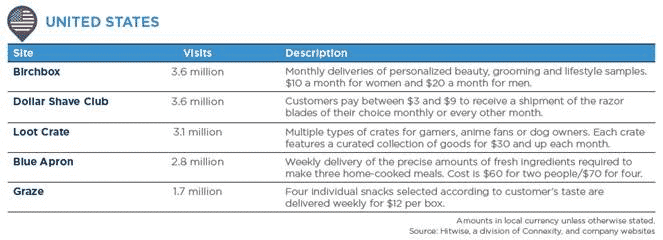
The old model built on one-shot sales is changing. The goal is no longer to maximize sales at a given moment, but to build a lasting customer relationship that leads to repeat purchases over time. The focus is now on looking ahead, on lifetime value and on subscription business models becoming the norm. The cloud, where software is sold on subscription, carries more and more weight: in 2017, IDC forecast that worldwide public cloud spending would grow from $67 billion in 2015 to $162 billion in 2020. In the US, there were already 5.7 million subscription box subscribers in 2017. The subscription model has already moved beyond its original territory: media and services. Every economic sector is being hit by the subscription wave.
This trend makes the sales process more complex than ever. Generating revenue is no longer just the salespeople’s business. Every department is now concerned by this preoccupation, this goal: from marketers to product teams. Every function in the company, through its activity, has an impact on the bottom line:
- The marketing team, through its production of educational content designed to answer customers’ problems and speed up their progress through the conversion funnel.
- The Customer Success Team, whose entire activity aims to keep customer churn as low as possible and to maximize revenue through cross-sell and upsell.
- Product teams, who seek to design products with a one-of-a-kind user experience that generates word of mouth.
Everyone in the company takes part in the customer relationship. Sales strategies are no longer driven solely by the goal of acquiring customers. The real engine of growth, from now on, is retention. We are done thinking that more customers = more revenue. Revenue growth comes from existing customers more than from new ones.
Read alsoDiscover 20 high-potential lead generation techniques.
2. From the CRM as a sales cash register to the CRM as a tool for holistic customer relationship management
Since retention has become a major issue, sales processes are getting more complex. Collecting leads, moving them through the pipeline, waiting for them to convert: this linear process has become too simplistic. The sales processes of the future will be cyclical. They will require repeated, rich, dense interactions with customers. They will unfold over months, over years after the first sale. The performance of sales strategies will be measured less by the data generated (lead scores, conversion rates, deal volume) than by the quality of the experience generated. This will require broader skills from salespeople and a deeper understanding of customers. Being comfortable on the phone and a good seller will no longer be enough.
3. B2B CRM will become the tool of every employee in contact (direct or indirect) with customers
Everyone in the company is potentially in contact with customers, closely or from afar, directly or indirectly. But historically, CRM software has been designed and thought of as the sales force’s tool. In the coming years, we are going to see CRM systems break out of their silos. CRM systems will become customer relationship management software in all its dimensions, in all its phases. The CRM will make it possible to share all customer information with every employee in the company. Integration technologies will multiply, making it possible to bring all customer data and a wider set of features into the CRM. CRMs will become more interactive. Reporting features will get richer.
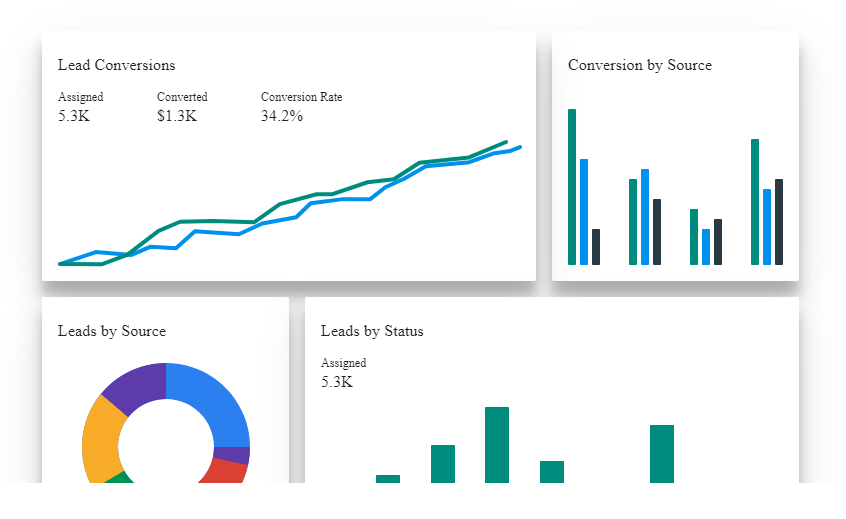
Sharing data between marketing and sales teams, through reporting, will strengthen relationship and sales performance. B2B CRM will become the operator of the integration and alignment of marketing and sales.
Read alsoNot equipped yet? Discover our comparison of the best B2B CRM tools.
4. More conversations, fewer forms
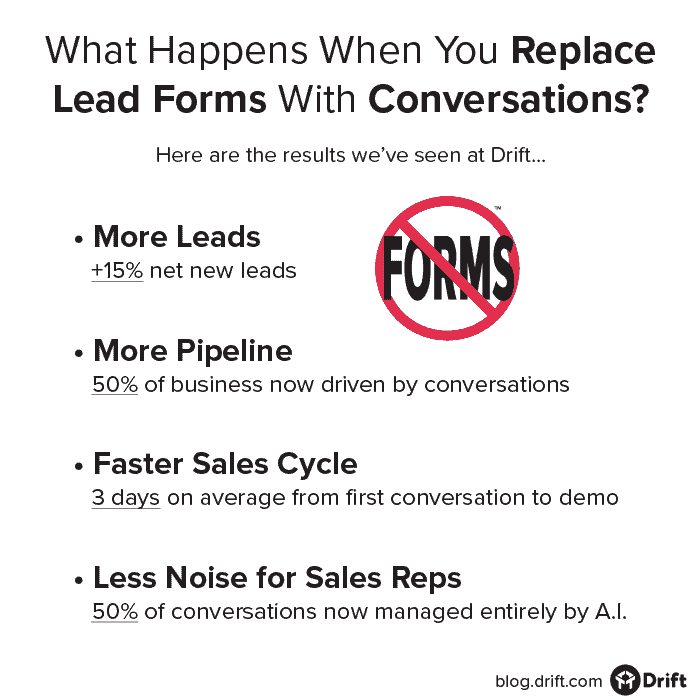
Lead generation processes today all look a bit alike and follow the same pattern: offer high-value content (white paper, ebook, infographics…) in exchange for filling in a form. Content for data. There is something absurd about this approach: you ask your prospects to give you information (often a lot of information), you bombard them with questions before you have even offered them anything, before you have even answered their questions. In the coming years, strategies will evolve. Companies will try to give more information before asking for any, through chatbots for example. Forms, cold, inert and aggressive, will be replaced by conversations. It will be customers who decide whether or not to enter the conversion funnel.
Read alsoDiscover our 20 tips to become really good at phone prospecting.
5. The B2B CMS will centralize the data generated by content marketing
In a world where information is a click away, online resources (blog posts, case studies…) play a fundamental role in the buying decision. Producing this kind of content lets you learn a lot more about your prospects, identify their problems and their needs. For example:
- If a prospect reads and rereads a blog post about customer acquisition costs, chances are they are spending too much money on acquiring new customers.
- If another prospect downloads a case study comparing your product with those of your closest competitors, they would surely benefit from a phone call from you.
The problem is that the data generated from online resources is often scattered across dozens of applications and channels: blog post analytics are available in Google Analytics while case studies are stored in Google Drive… Even your communication with prospects is fragmented: social networks, live chat, email…
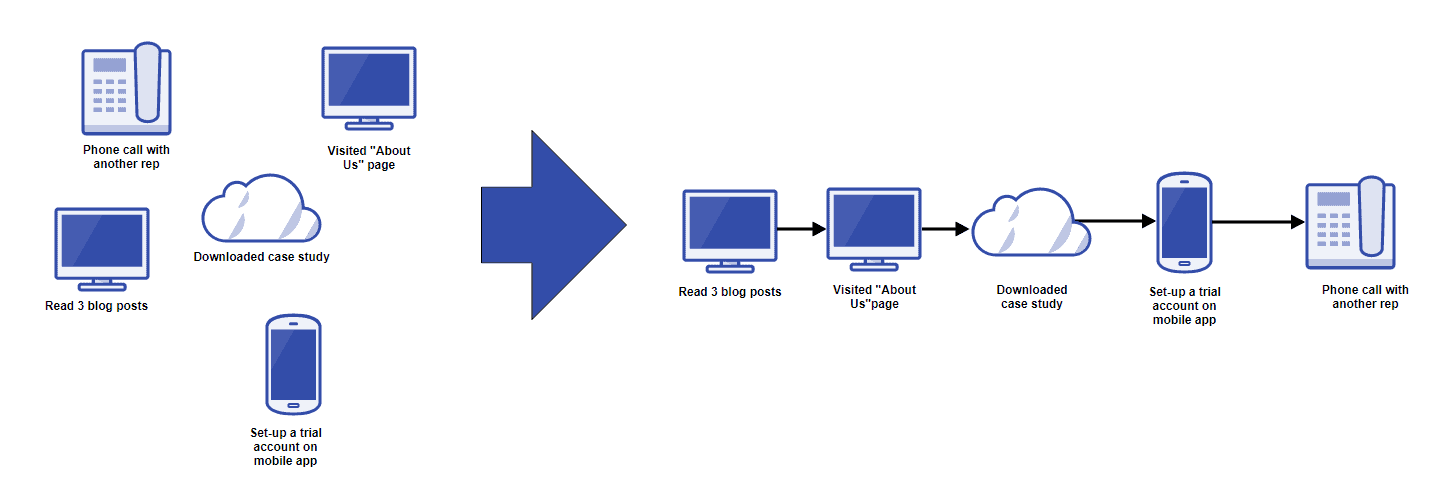
The more content you create, the harder it is to analyze and understand how people actually behave. To avoid this situation, you need to set up real content management. That means:
- Creating a “sales CMS”: organizing content production using sales criteria: stage in the conversion funnel, customer segment, product line…
- Tracking how prospects engage with the content: seeing which emails are read, which links are clicked…
- Identifying the best-performing resources, the ones that generate the most engagement at the start of the sales relationship.
Rather than sending classic email sequences, salespeople will, in the future, make greater use of current customer data to create more personalized emails and share articles and case studies identified as high-performing during the lead generation phase.
Read alsoDiscover the B2B lead generation strategies that work best.
6. Less information gathering during prospecting calls, less manual data entry
Prospecting and qualification phone calls are a source of frustration for prospects and salespeople alike. Salespeople need to fill the rows of their spreadsheet with information such as company size, the contact’s seniority, their job title, the company’s budget, etc. Prospects, for their part, want information about the product and often feel harassed by the sometimes insistent questions of the person on the other end of the line. The two sides want different things. As a rule, nobody comes out of a prospecting call satisfied.
Technological progress makes it possible to fix this situation and set up a more flexible, smoother lead qualification process. Most of the information salespeople need to qualify leads is available on the internet (Google, LinkedIn…), whether it is company size, the job title of the representative of the company you are getting in touch with, etc. Web tools, such as Clearbit (acquired by HubSpot at the end of 2023), can retrieve all this information automatically. There are even tools that feed this information directly into the contact records in the CRM. These new tools both reduce the time spent on data entry and limit the number of questions to ask prospects during calls.
7. Video messages arrive in prospecting emails
It has become harder than ever to get prospects to engage. With inboxes overloaded, prospects (almost) no longer read prospecting emails. Warm emails (sent after a specific interaction: a sign-up, a purchase, a request for information…) are read more. Even for campaigns sent to subscribers, the average click rate measured by Mailchimp hovers around 2.6% (data from December 2023). Sending shorter, more personalized emails improves the performance of email campaigns. But to get truly significant results, bigger changes are required.
One of the big trends right now is video messages. With tools like Wistia, it has become very quick and easy to record short video messages and embed them in emails in one click. This format lets you really stand out from your competitors.

While video messages are a new format, the topics they cover are fairly close to those of classic emails:
- Introducing the sales rep.
- Explaining why the person is being contacted.
- CTA (for example: proposing a meeting).
Videos make it possible to humanize part of the sales process.
Read alsoDiscover how to set up and promote webinars to generate more leads.
8. The unstoppable growth of automation in B2B CRM
Answering an email, scheduling a meeting, sending sales proposals: all these tasks are time-consuming and eat up time that would be better spent elsewhere. More and more of these repetitive, low-value tasks will be automated in the coming years. It is the B2B CRM that will take care of personalizing emails and choosing the best way to send them.

This will free up time for salespeople, who will be able to spend more time with prospects and work on listening and communication.
Read alsoDiscover 30+ tools to automate your sales prospecting.
9. Pipeline management will become predictive
Managing your sales pipeline well is still hard. Having to track thousands of leads is a monstrous task, made harder by the often rather limited reporting features offered by CRM software. In the future, more and more companies will put predictive models in place for pipeline management, and use machine learning algorithms to proactively identify and solve problems in the pipeline.
“No company can perfectly predict how much revenue it will make in a given month… There are too many variables to take into account. But perfection is not the goal. Predicting means getting close enough to make the right decisions” (Clearbit blog)
While it is impossible to make perfect predictions, you can make the B2B CRM “smart” enough to make the right decisions.
That means:
- Bringing consistency to all the intent signals sent by prospects, to move them through the conversion funnel at the right time.
- Predicting revenue and predicting how many prospects will turn into customers.
- Pulling up-to-date lead data into reports in a few clicks.
Pipeline management, in the future, will stop being a “reactive” process. Salespeople will manage to turn customer data into sales actions.
10. The birth of the unified sales stack
For a few years now, we have been seeing the technology landscape fragment. Tools are multiplying, driven in particular by the growth of SaaS software. There used to be a handful of all-in-one CRM suites. Today there are thousands of specialized vendors.
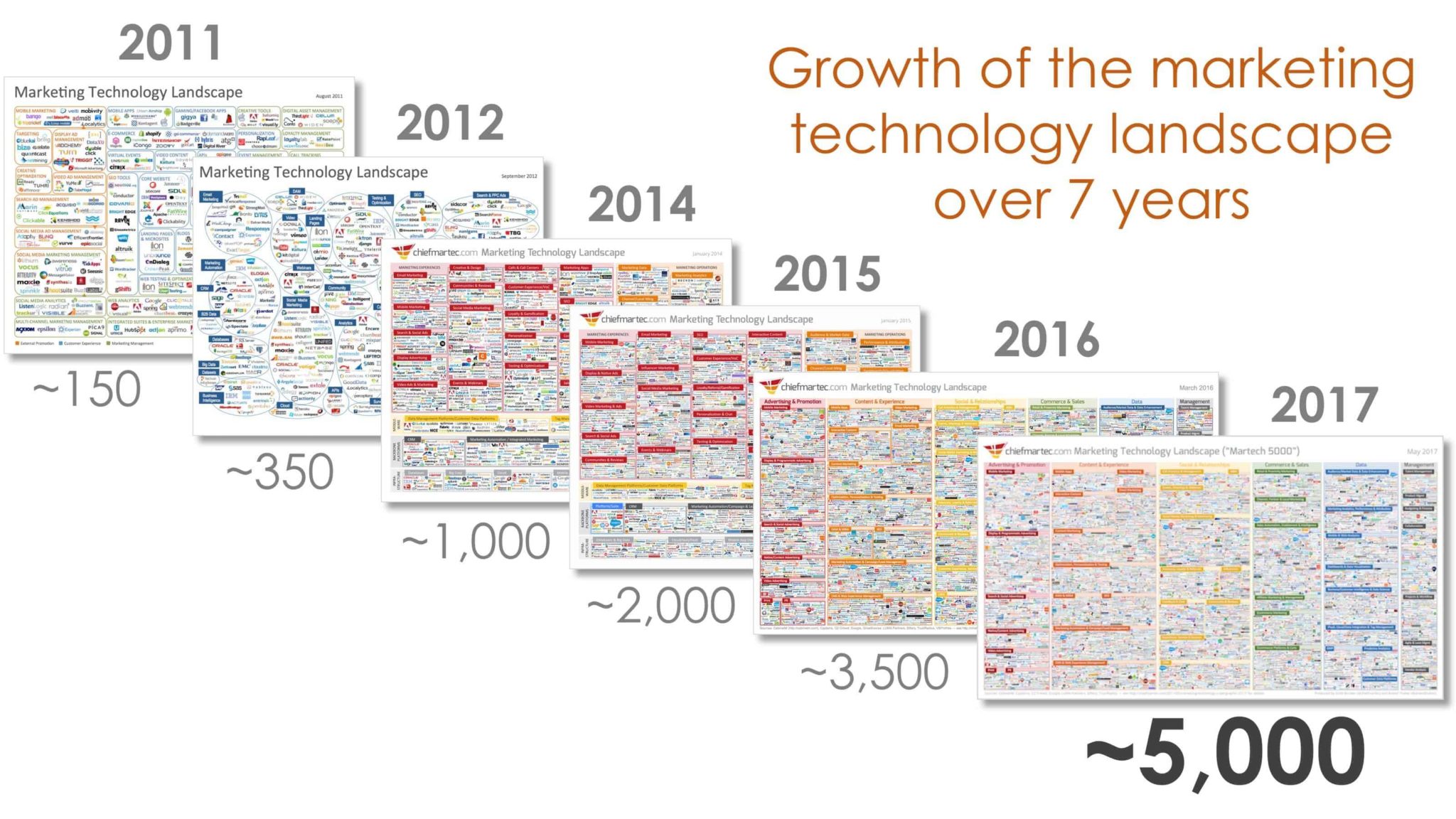
Faced with such a choice, sales teams try to build coherent stacks, to select the best tools in their field (best of breed) and to create connections between them. But this way of organizing things raises problems. Each tool has its own interface, its own processes, its own data. Data is scattered. There are too many applications to manage. We are witnessing big changes in the technology landscape: a process of unification. We see more and more tools building in CRM features, for example. Some companies, for example, choose to use the Google suite to manage their CRM (through Gmail, Google Drive, Chrome…).
All these trends have one thing in common, they pursue the same goal: strengthening the B2B customer relationship. It is a groundswell. Faced with frantic competition, the only way to stand out lies in the ability to offer prospects and customers a strong relationship that no longer means being bombarded, but personalization, listening, relevance. A customer relationship built to last. New B2B CRM tools and practices all point in this direction.