Pardot, the B2B marketing automation platform from Salesforce, has had a makeover and is now Marketing Cloud Account Engagement.
What is Marketing Cloud Account Engagement worth? What kinds of companies is the platform built for? What are its main features? What about pricing? We answer all your questions.
The goal of this article is simple: help you decide whether Marketing Cloud Account Engagement is the right solution to roll out your B2B marketing automation strategy.
Pardot becomes Marketing Cloud Account Engagement
If you work in the Salesforce ecosystem, you have probably heard of Pardot, the B2B version of Marketing Cloud. Pardot, Salesforce’s B2B marketing automation platform, is now called Marketing Cloud Account Engagement.
Behind this name change lies Salesforce’s intention to tighten Pardot’s integration within its ecosystem, and in particular to create more synergies with its CRM and its other Marketing Cloud solutions.
Marketing Cloud Account Engagement keeps every feature that made Pardot successful: an intuitive interface, advanced lead nurturing tools, an advanced marketing automation journey builder and very thorough reporting.
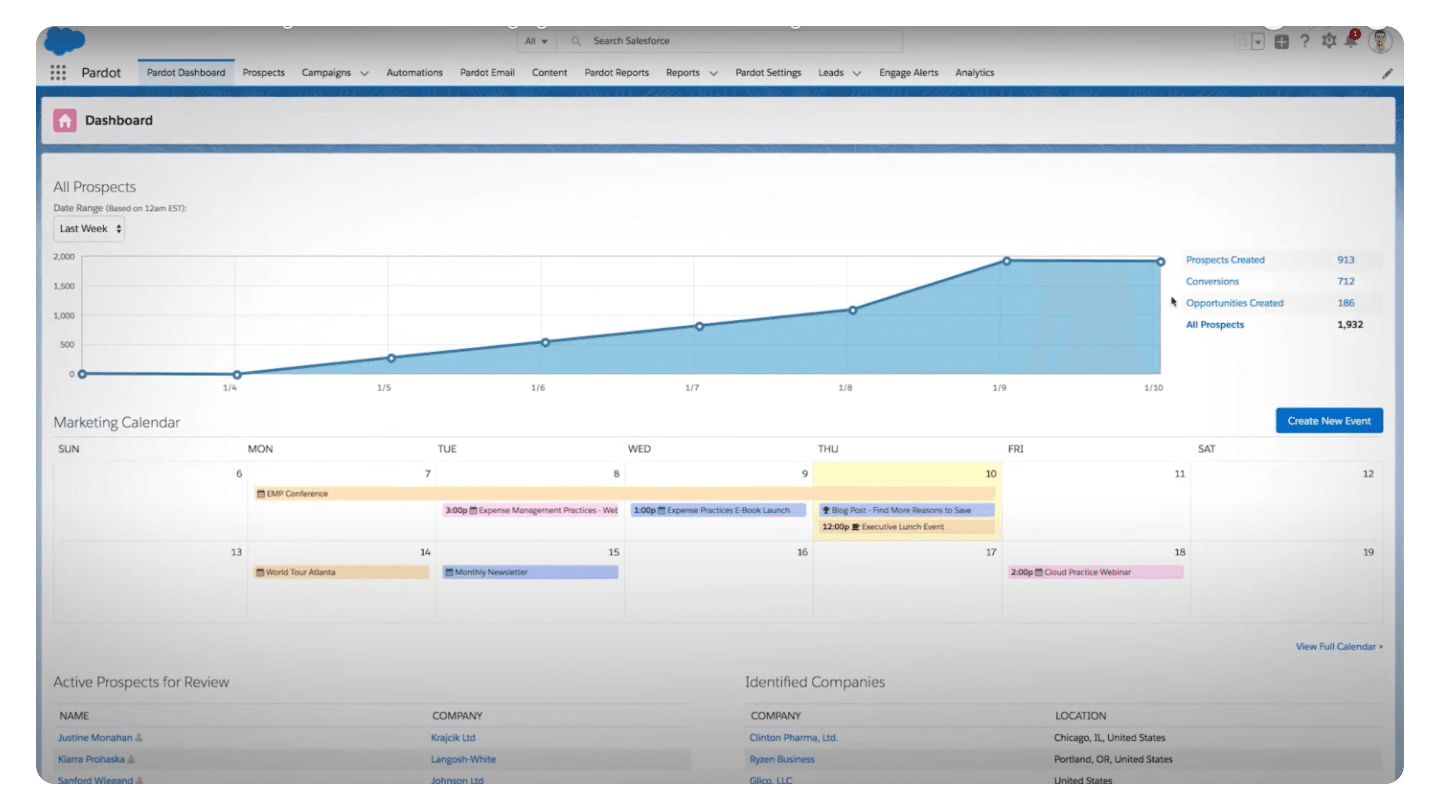
Functional scope of Marketing Cloud Account Engagement
Email marketing and landing pages
Let’s start with the fundamentals: email and landing pages, the backbone of B2B marketing. Suffice to say Marketing Cloud Account Engagement is fairly well equipped here.
On the email campaign side, you get everything you are entitled to expect: a fairly intuitive responsive template editor, advanced personalization options, even if it stays a notch below HubSpot on this point, and testing and preview tools to make sure your messages display properly on every device and every email client.
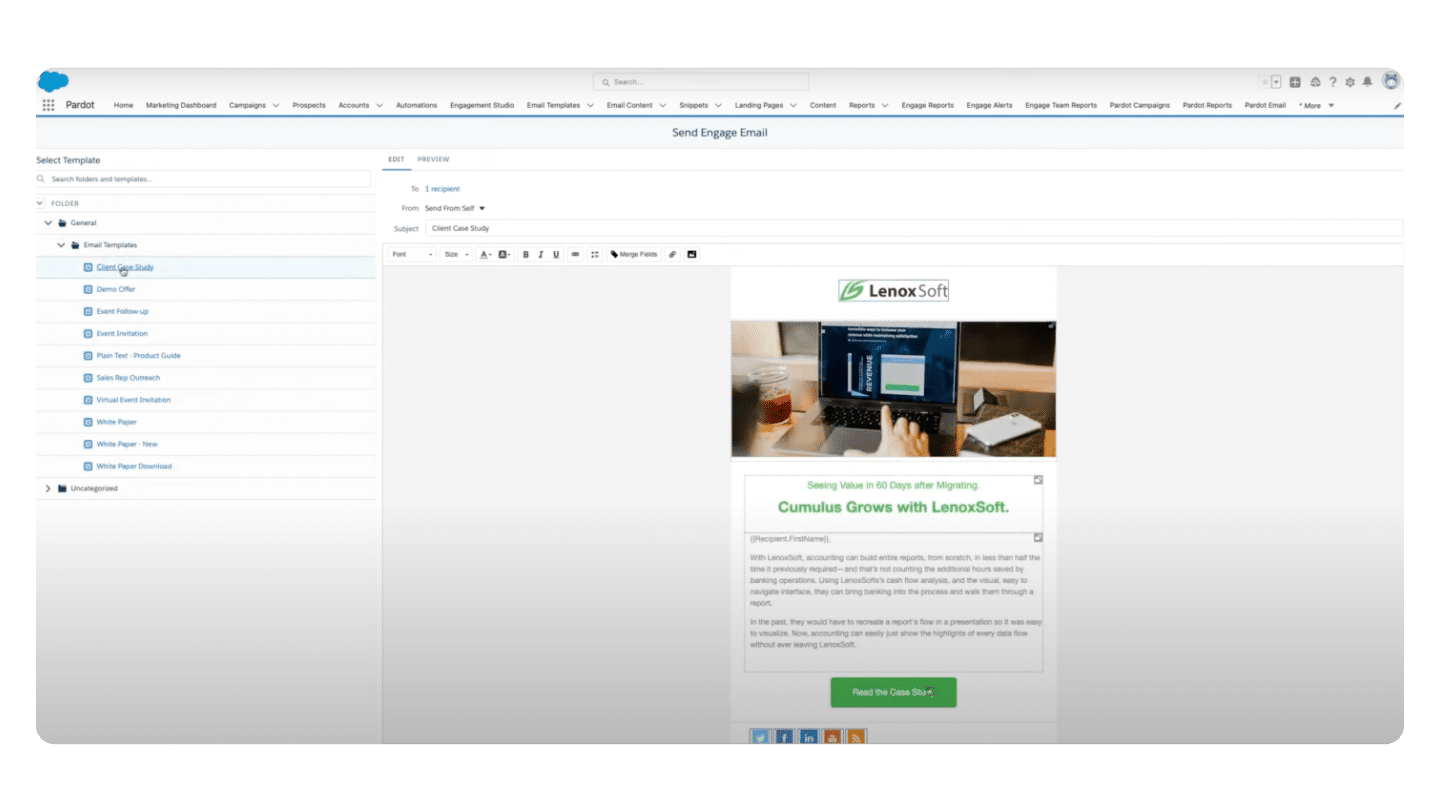
For landing pages, same story. The builder is easy to pick up and offers a good level of customization, both in design and content. We also like the advanced features such as pre-filled forms and A/B testing to optimize your conversion rates. One small drawback, though: advanced design options are somewhat limited, and you can quickly get frustrated if you have specific needs.
Lead management and lead scoring
This is where we get to the heart of the engine. Lead management, and above all the famous lead scoring, is more or less the tool’s signature. And there is no denying that Salesforce went all in on this point.
Creating lead scores is child’s play, with a points system assigned according to the prospect’s actions and profile. Everything is fully customizable to your business criteria. The bottom-of-funnel Engagement scoring model is a must for spotting the hottest prospects at a glance.
On lead management, it is classic but solid. Segmentation, nurturing, routing to sales reps: it is all there, and the seamless integration with Sales Cloud multiplies the possibilities. Sales reps can follow their prospects’ progress through the funnel in real time and adjust their approach accordingly.
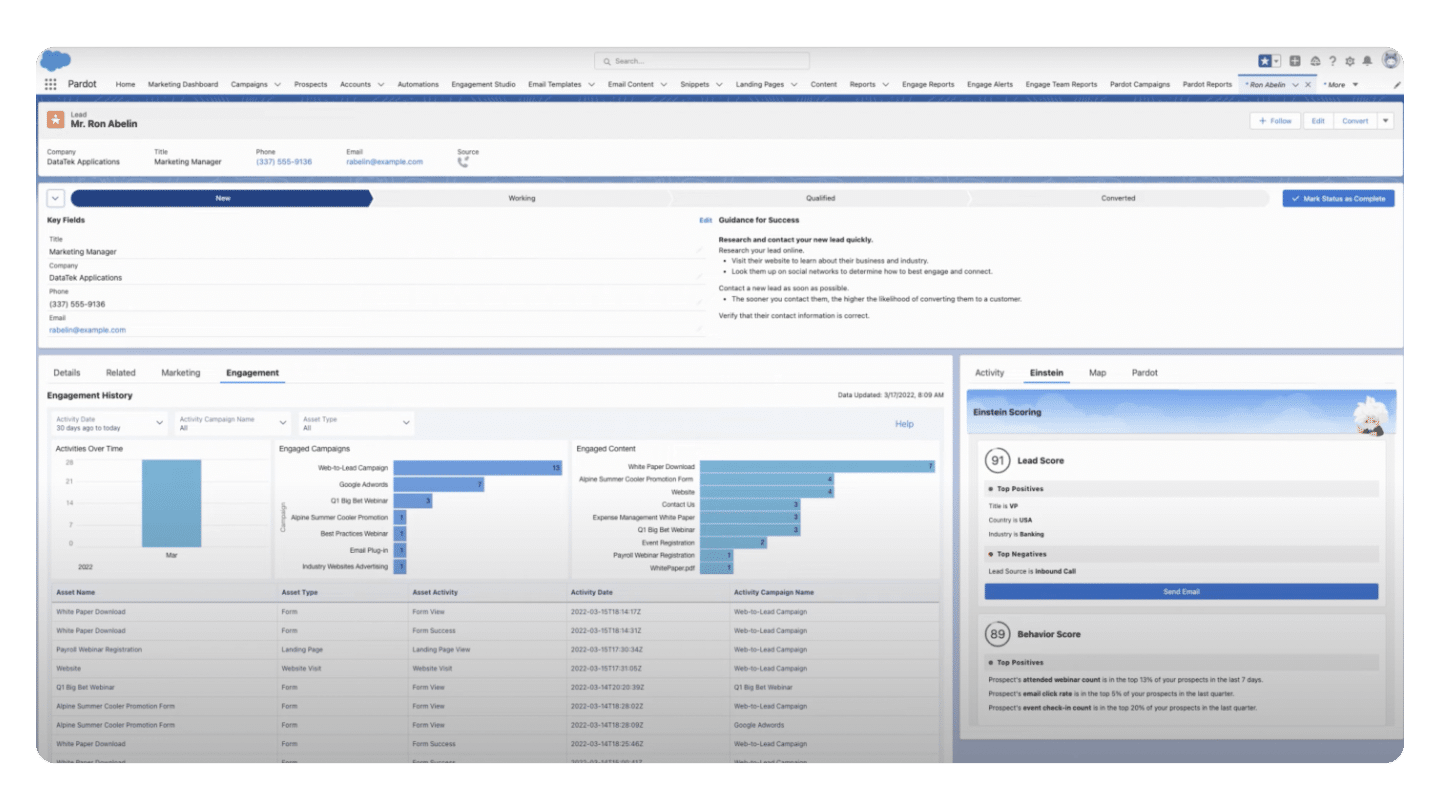
In short, on lead management and scoring, Marketing Cloud Account Engagement is clearly one of the market benchmarks.
Campaign automation and workflows
Salesforce Marketing Cloud Account Engagement offers a complete marketing automation journey builder.
You get all the usual suspects: triggers based on prospect actions, conditions, wait times, branches. In short, everything you need to build highly personalized journeys without tearing your hair out.
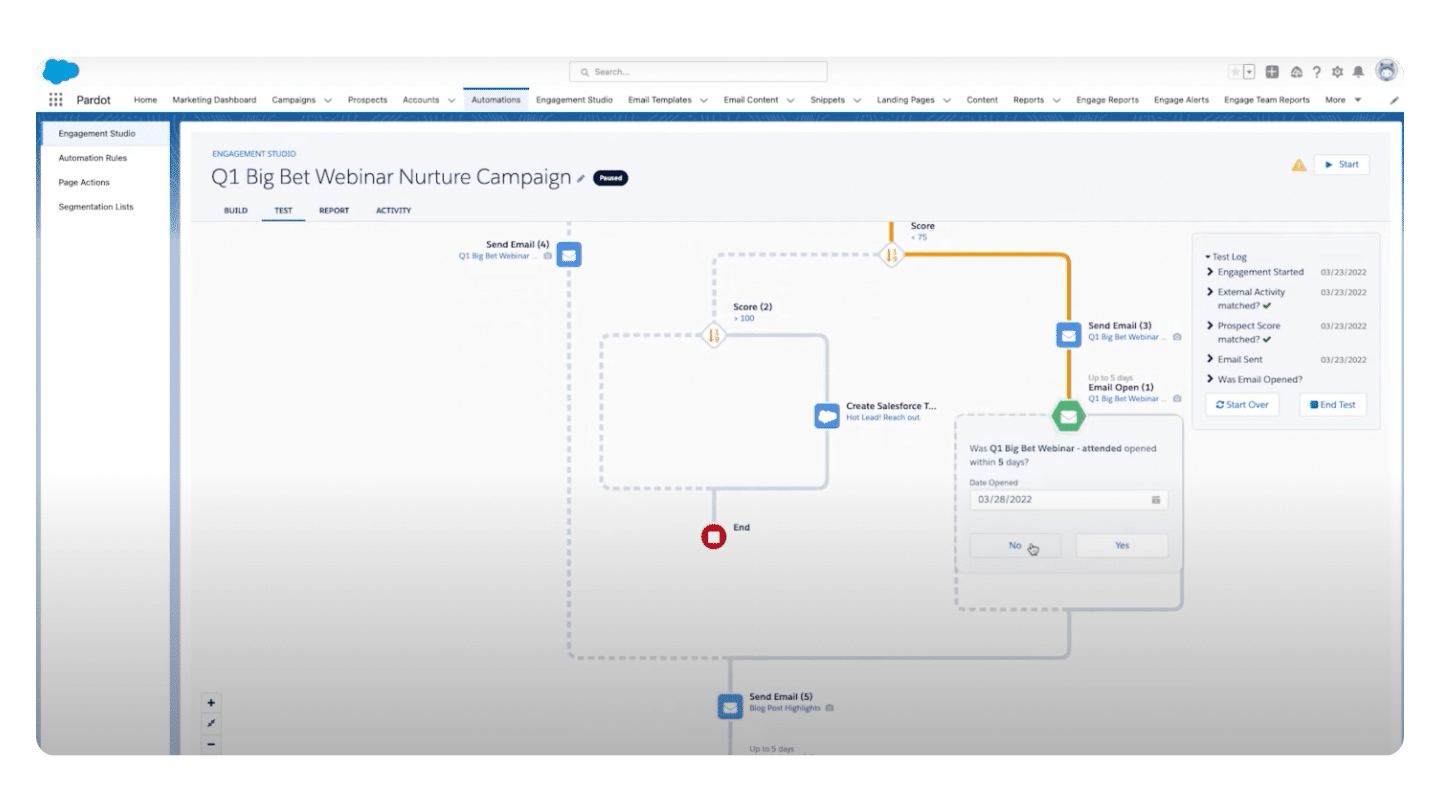
The big plus is the fully visual, drag-and-drop interface. No more hours spent trying to figure out how to build a workflow: here everything is child’s play. It can get a bit laborious on very complex programs, but overall it is a real pleasure to use.
Segmentation and personalization
Segmentation and personalization are pretty much the lifeblood of B2B marketing automation. And on this front, Marketing Cloud Account Engagement holds up rather well.
All prospect and customer data is centralized in one place, which lets you build very precise segments by combining a large number of criteria: demographic data, behavioral data, purchase history. The possibilities are almost endless.
On personalization, you get all the usual variables to inject dynamic content into your emails and landing pages. Here again, the deep integration with Sales Cloud is a real plus, since you can easily pull in sales data to push personalization even further.
Product recommendations, on the other hand, remain fairly basic. If your product catalog is central to your marketing automation strategy, you will probably be a little frustrated. But for most B2B use cases, the tool does the job on personalization.
Social media marketing
Let’s wrap up this overview with social media marketing, the somewhat poor relation of Marketing Cloud Account Engagement.
Granted, the fundamentals are there: you can publish on the main social networks, include share buttons in your emails and landing pages, and track the social engagement generated. But the features remain fairly basic, a far cry from a dedicated tool like Hootsuite or Sprout Social.
Nothing that lets you manage a large-scale social presence effectively, or really tap the potential of social networks in your automation campaigns. For occasional use it can help out, but marketers with a real social media strategy will need to turn to a complementary tool.
This is more or less the Achilles’ heel of Marketing Cloud Account Engagement in general: on certain specific channels such as social or advertising, capabilities remain limited. SMS and WhatsApp are now built in natively, but they run on credits you have to buy on top.
Reporting in Marketing Cloud Account Engagement
Reporting is clearly one of the strong points of Marketing Cloud Account Engagement. And for good reason: Salesforce went all in to give its users an extremely thorough tracking and analysis tool.
The heart of the system is B2B Marketing Analytics. This suite of tools lets you track all marketing activity closely, from campaign engagement all the way to pipeline and revenue generation. All with impressive granularity: you can track performance at the level of each campaign, each piece of content, each segment, enough to really understand what works and what does not.
The big plus is how business-oriented these reports are. No more marketing metrics sitting in their own corner: here everything is designed to demonstrate the concrete impact of marketing actions on revenue.
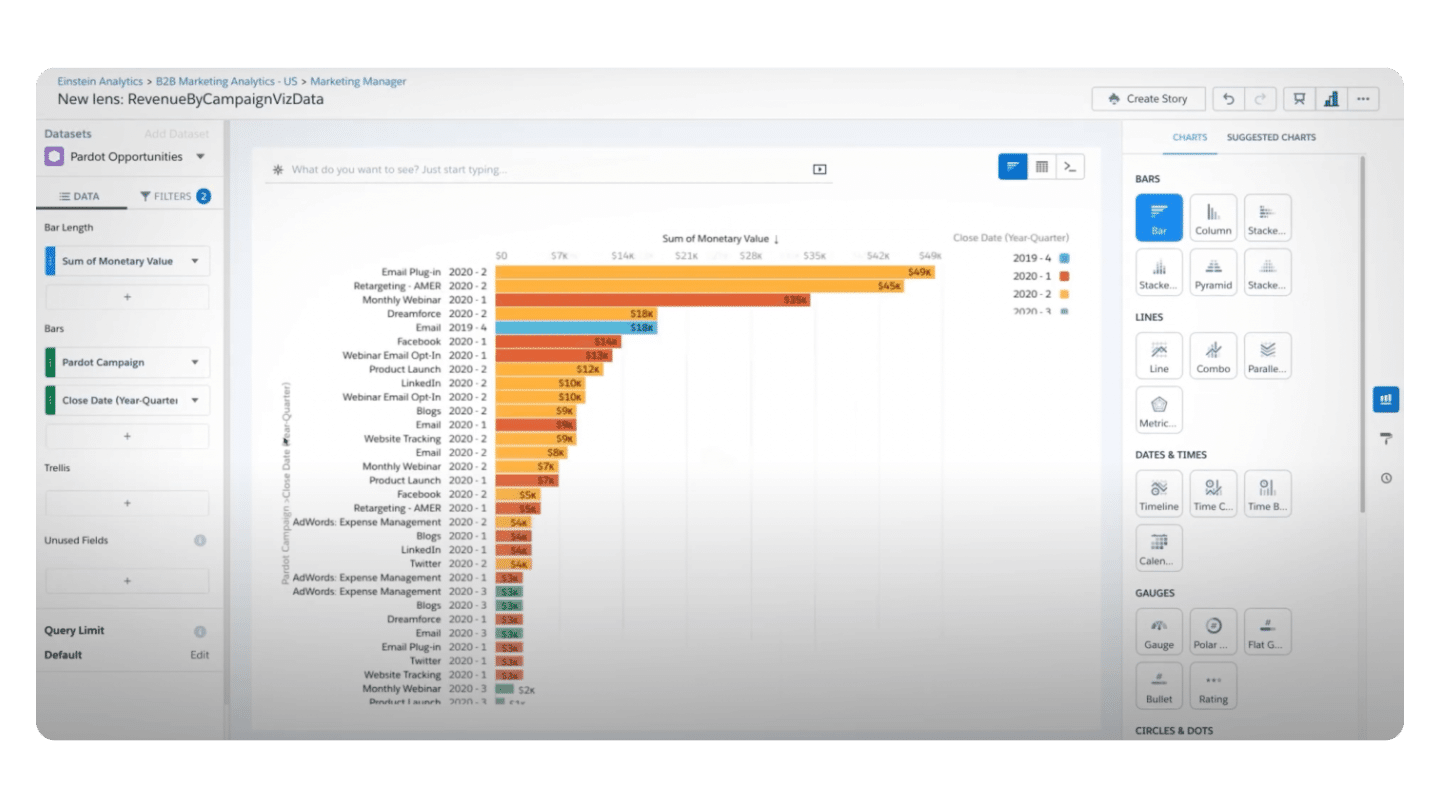
We also like the prepackaged dashboards, which give you an overview of performance at a glance. The Email Performance Dashboard and the Lead Lifecycle Dashboard are the most useful for keeping a constant eye on your key indicators.
One regret is how hard it is for newcomers to get to grips with. Some reports require a bit of configuration and can prove a little obscure for anyone without an analytical profile. But with some practice and guidance, the whole thing remains accessible and above all very thorough.
If you are looking for a tool to truly measure and demonstrate the value of your marketing automation actions, you will feel right at home with Marketing Cloud Account Engagement. The tool clearly stands as one of the benchmarks in this area.
Marketing Cloud Account Engagement integrations
A marketing automation tool is only as good as its ability to integrate smoothly with the rest of the information system. And that is precisely where Marketing Cloud Account Engagement stands out, at least if you work within the Salesforce ecosystem.
Let’s start with the obvious: the integration with Sales Cloud, Salesforce’s CRM software, is simply perfect. You sometimes get the feeling the two tools are one and the same. Syncing data, custom fields, actions: everything happens transparently and instantly. Everything is designed to align marketing and sales.
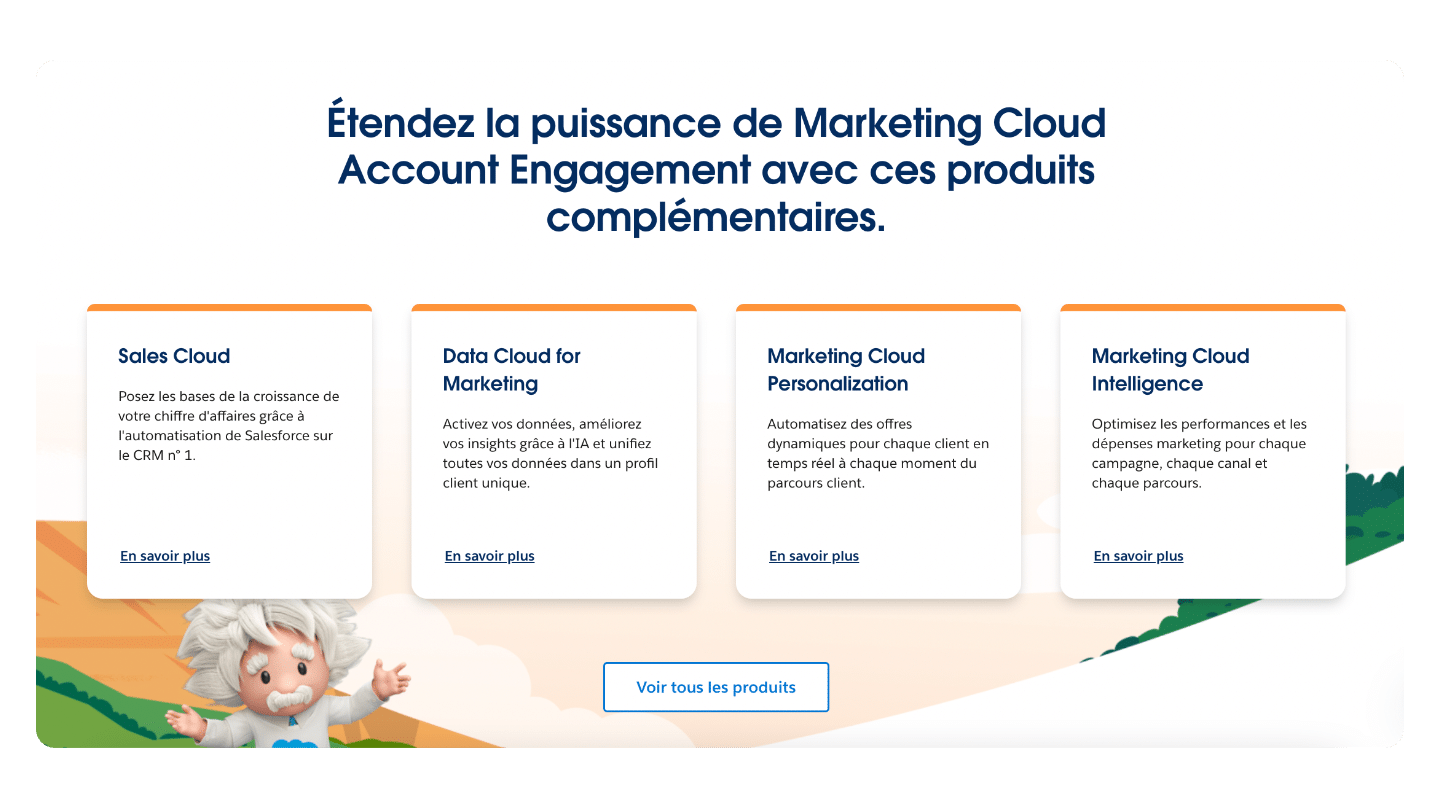
Same story with the other building blocks of the Salesforce galaxy. Whether it is Service Cloud for after-sales management, Experience Cloud for customer and partner engagement, or Commerce Cloud for e-commerce, all the bridges are already in place and work wonderfully. Enough to build a very smooth end-to-end customer journey.
The high point of this deep integration: Salesforce Einstein, the in-house artificial intelligence tool. With it, you can push automation and personalization even further, with predictive models and recommendations tailored to each profile. And since the arrival of Marketing Cloud Next, Agentforce lets you create campaigns, emails and segments from simple natural-language prompts.
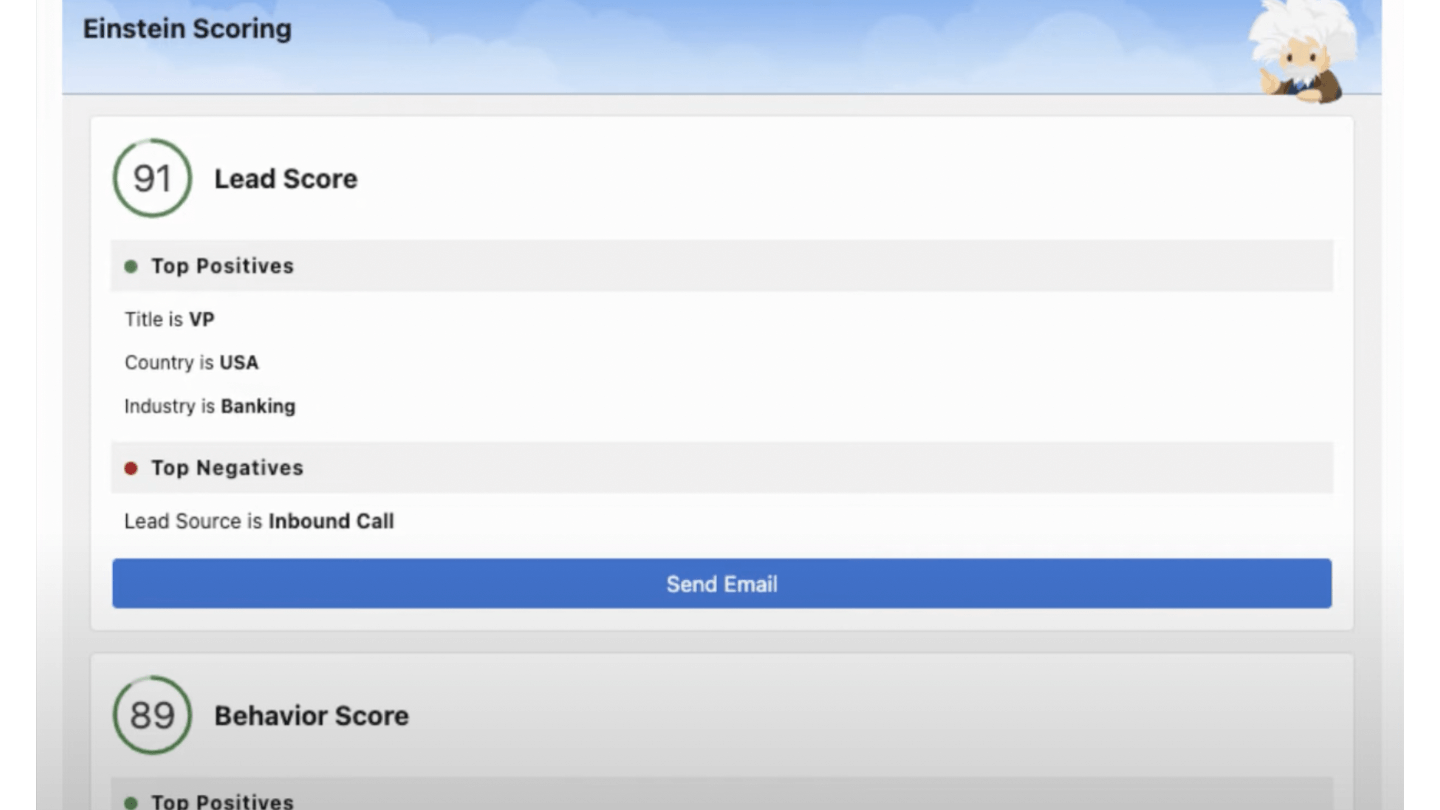
But this strength is also a weakness. Outside the Salesforce universe, things get complicated. Granted, you will find connectors for most of the major tools on the market, Zapier or Workato, via the AppExchange, but you are far from the level of integration offered natively. It will often require some custom development.
This is particularly glaring with social networks. While tools like HubSpot offer native integrations with the main platforms, here you are reduced to cobbling together connections through third-party tools. Frustrating if social is at the heart of your marketing strategy.
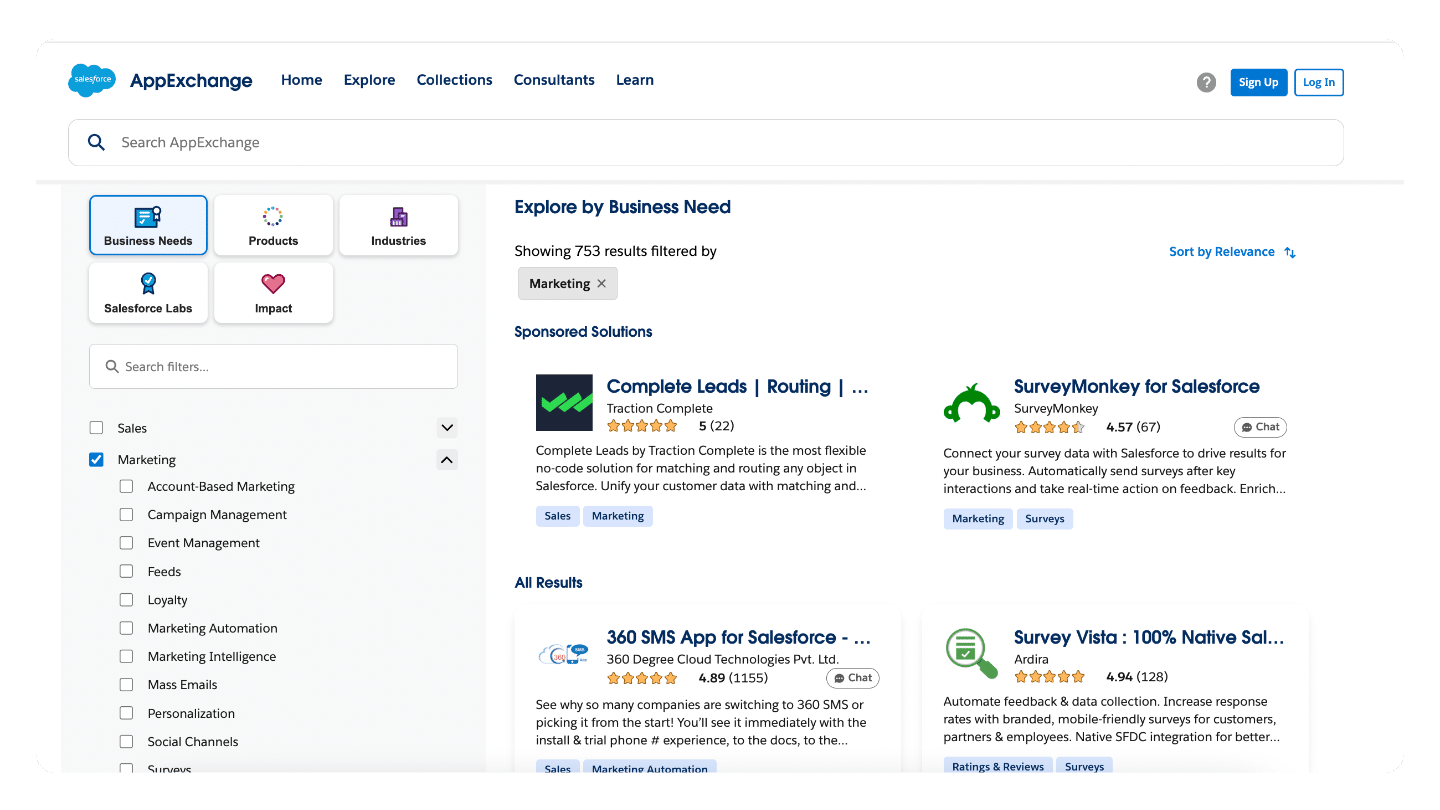
In short, if your tech stack is entirely Salesforce, you will be in heaven with Marketing Cloud Account Engagement. But if you use a lot of third-party tools, be ready for some compromises and manual work.
Marketing Cloud Account Engagement pricing
Let’s be honest, Marketing Cloud Account Engagement does not come cheap. Salesforce clearly positions its offering at the top end of the market, and it shows in the prices. But let’s look at it in more detail.
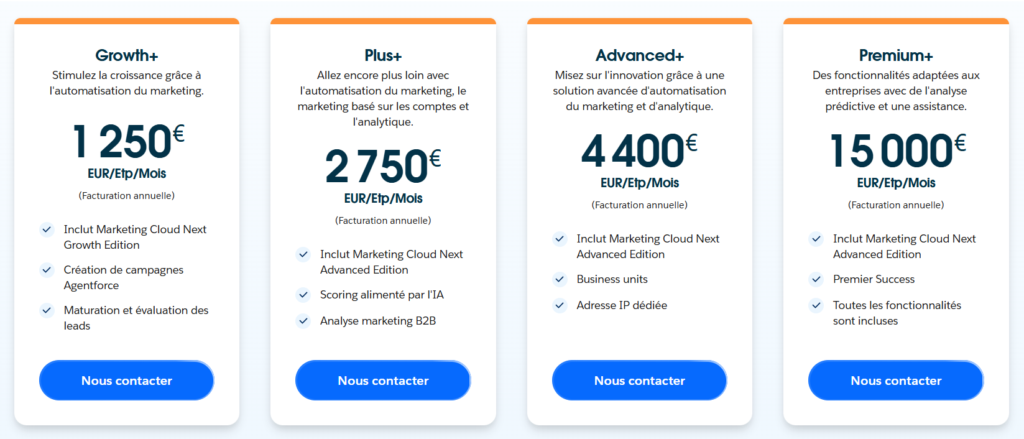
Salesforce offers 4 plans for Marketing Cloud Account Engagement, all billed annually:
- Growth+: from €1,250 per month for 10,000 contacts. This plan includes the fundamentals of lead nurturing, scoring and reporting, as well as campaign creation with Agentforce. But be careful: you will be limited to 50 automation rules, 50 landing pages and 50 forms.
- Plus+: from €2,750 per month, still for 10,000 contacts. Here you move up a gear with AI-powered scoring and B2B marketing analytics. Landing pages and forms become unlimited, and automation rules go up to 100.
- Advanced+: from €4,400 per month for 10,000 contacts. This plan adds a dedicated IP address, 150 automation rules and up to 2 separate business units.
- Premium+: from €15,000 per month for 75,000 contacts. The cream of the crop, with all the features of the previous plans, Premier Success support included and the ability to manage up to 5 business units.
Note that Salesforce pricing is quoted excluding taxes. And of course, the bigger your contact database, the higher the bill: count $100 per month for each additional block of 10,000 contacts.
Watch out for extra costs too. The new features from Marketing Cloud Next (AI, SMS, WhatsApp) run on credits you buy according to your usage. And Premier Success support, included only in Premium+, represents 30% of the license cost on the other plans.
So yes, it can look prohibitive, especially for small businesses. But these prices should be seen as an investment. For a company with a complex sales cycle and high stakes in marketing automation, the return on investment can come quickly.
Marketing Cloud Account Engagement remains a premium tool with a high entry price. That is the price to pay for a high-end platform, perfectly integrated with the Salesforce ecosystem. It is up to you to decide whether it is worth it given your stakes and your resources.