At the end of May 2026, Sarbacane disappeared. Not just a name change: the Lille-based brand founded in 2001 was replaced by Positive User, which is actually User.com, a Polish platform the group bought in 2023 and then repainted in the house colors.
The entry price hasn’t moved, it is still listed at €69 per month. The billing model, on the other hand, has changed completely: you no longer pay by sending volume but by seat and by channel.
Will your Sarbacane account be shut down? Should you migrate now or take your time? And what is this platform really worth compared with what Sarbacane did?
Sarbacane wasn’t updated, it was replaced
The nuance looks theoretical. It isn’t at all.
On May 26, 2026, Mathieu Tarnus announced on LinkedIn the end of the brand he had founded twenty-five years earlier in Hem, in the Lille metropolitan area. The group’s communication talks about a merger between User.com v2 and Sarbacane v8. In practice, what you open today when you create an account is User.com.
The interface confirms it immediately. A black icon column on the left, module-based navigation, a drag-and-drop automation canvas: none of these elements come from Sarbacane. Even the application’s URLs are built on the user.com domain. And sarbacane.com now redirects to user.com.
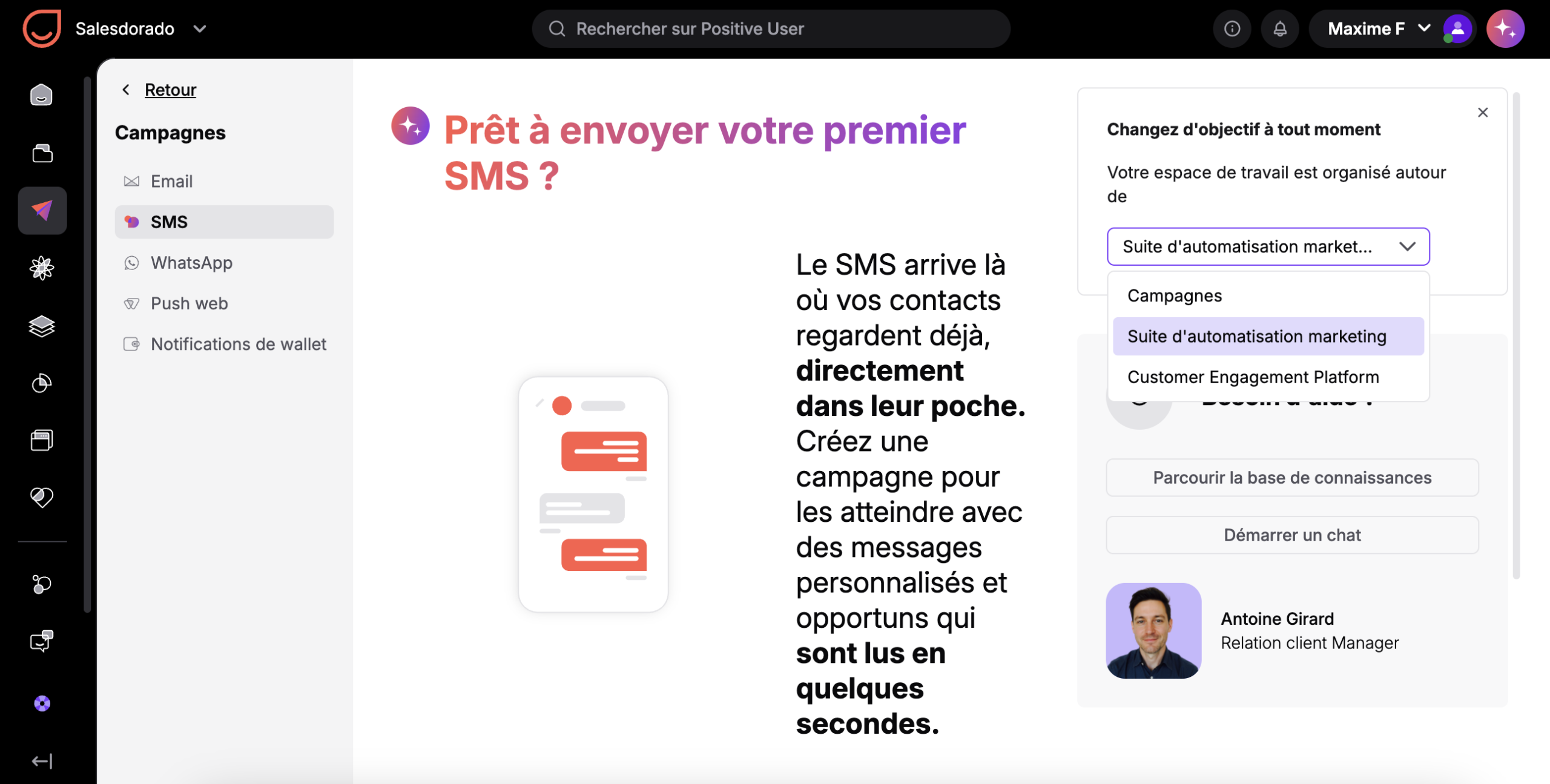
The drop-down menu at the top right reveals an interesting product choice. Your subscription doesn’t unlock boxes in a single interface, it reconfigures the entire workspace. Campaigns, Marketing Automation Suite, Customer Engagement Platform: these are exactly the three names in the price list.
So you don’t spend your time staring at greyed-out menus, and you can switch from one workspace to another to see what a higher plan would give you.
If you are a Sarbacane customer considering the switch, don’t think of it as an upgrade. Think of it as a change of tool. Your teams won’t find any familiar landmarks, and you need to budget the relearning time just like the subscription.
Are you a Sarbacane customer? What changes and what doesn’t
This is the first question customers still on the old application are asking. Here are the answers, in the order in which they matter.
Will my Sarbacane account be shut down?
No. Sarbacane still exists and remains fully supported for current customers. You log in as before, with the same credentials, and you find your data, your settings and your campaigns.
Only the storefront has changed. The redirect from sarbacane.com to user.com concerns the website, not the application.
Will I be forced to migrate?
No, and this is the point the group has communicated about the most. No action is required from existing customers, no timetable has been imposed and the migration terms will be specified later.
The switch will be voluntary, with campaign history, contacts and segmentation carried over.
Will my price go up?
No. Current Sarbacane subscriptions remain unchanged. Positive User applies a different plan structure while keeping the same listed entry price.
For many multi-user accounts, staying on Sarbacane is therefore not nostalgia. It’s a rational calculation, and we come back to it in the pricing section.
Can I test Positive User without touching my current account?
Yes. You create a separate Positive User account, and the two environments coexist without interfering. That’s the right way to go about it: you measure the usability gap in real conditions before deciding anything.
Automatic renewal is on by default and turning it off goes through your CSM. Allow 30 days’ notice before the annual renewal date on the Marketing Suite, 90 days on the Data and Activation Suite and 3 business days on a monthly subscription. No refund is provided, you simply keep access until the end of the current period. A 90-day notice period is worth putting in your calendar on the day you sign.
Sarbacane vs Positive User: the point-by-point comparison
Before going into the modules in detail, here is what concretely separates the old tool from the new one.
| Criterion | Sarbacane | Positive User |
|---|---|---|
| Software origin | Developed in Lille, heir to the desktop application launched in 2001 | User.com code base, Polish vendor acquired in 2023 |
| Channels | Email and SMS | Email, SMS, WhatsApp, web push, wallet notifications |
| Data structure | Contact lists | Contacts, companies and products |
| Automation | Campaign sequences, A/B testing as an add-on | Journey canvas with conditional branches and built-in A/B split |
| Personalization | Merge fields and attribute-based segmentation | Dynamic content drawing on six attribute sources |
| Email templates | About 70 | 138 |
| Billing model | By sending volume, with public tiers | By seat and by channel, sending allowance shared by all three plans |
| Free trial | 30 days | 7 days, no credit card |
| Hosting | France | France and Germany |
Read line by line, the table tells the story of a clear step up on the product and a tightening of the commercial terms. You gain three channels, a real database and an automation engine in another league. You lose twenty-three days of trial and the readability of the volume tiers.
Positive User in the Groupe Positive ecosystem
Understanding what Sarbacane has become means looking at the house that shelters it.
The group was called Groupe Sarbacane until the end of 2022. A €110 million funding round changed the game, the holding company renamed itself Groupe Positive and lined up acquisitions at a sustained pace. Six companies bought in three years, then an acceleration in 2026 with a new brand platform in February and the acquisition of Iconosquare in May.
Today, six products make up the ecosystem and all carry the group’s prefix.
- Positive User, formerly Sarbacane, for customer engagement and marketing automation
- Positive Surfer, for SEO and visibility in AI-generated answers
- Positive Signitic, for email signature management
- Positive Iconosquare, for social media management and analytics
- Positive rapidmail, the German email marketing specialist
- Positive noCRM, for sales prospecting
The group claims €70 million in recurring revenue, 45,000 customers and 800,000 active users across Europe. It is ISO 27001 certified and is part of the French Tech 120 cohort.
Two practical consequences for you:
- The first is about sovereignty, and it isn’t a hollow argument in this specific case. The platform is designed, developed and hosted in Europe, with data stored in France and Germany and teams spread across five countries. If you work in a regulated sector or bid on public tenders, your risk analysis becomes simpler. It’s the main differentiator against the American suites.
- The six products remain six separate subscriptions. The group does offer bundles and a shared AI assistant, but deep integration between the building blocks is still largely to be built. Don’t count on advanced native synchronization between Positive User and noCRM, for example, even though they belong to the same house.
For the details of the rebranding, we have published a full breakdown of the move from Sarbacane to Positive User.
The communication channels handled by Positive User
Sarbacane did email and SMS. Positive User lines up five channels in a single interface, all connected to the same contact base and driven by the same automation engine.
This point alone justifies the change of category. You no longer compare Positive User with an email marketing tool, you compare it with a customer engagement platform.
#1 Email
The historical core remains solid. The editor works by drag and drop and relies on a library of 138 bundled templates, compared with about 70 at Sarbacane. You can create your own template folders, which quickly becomes indispensable when several brands or entities share the same account.
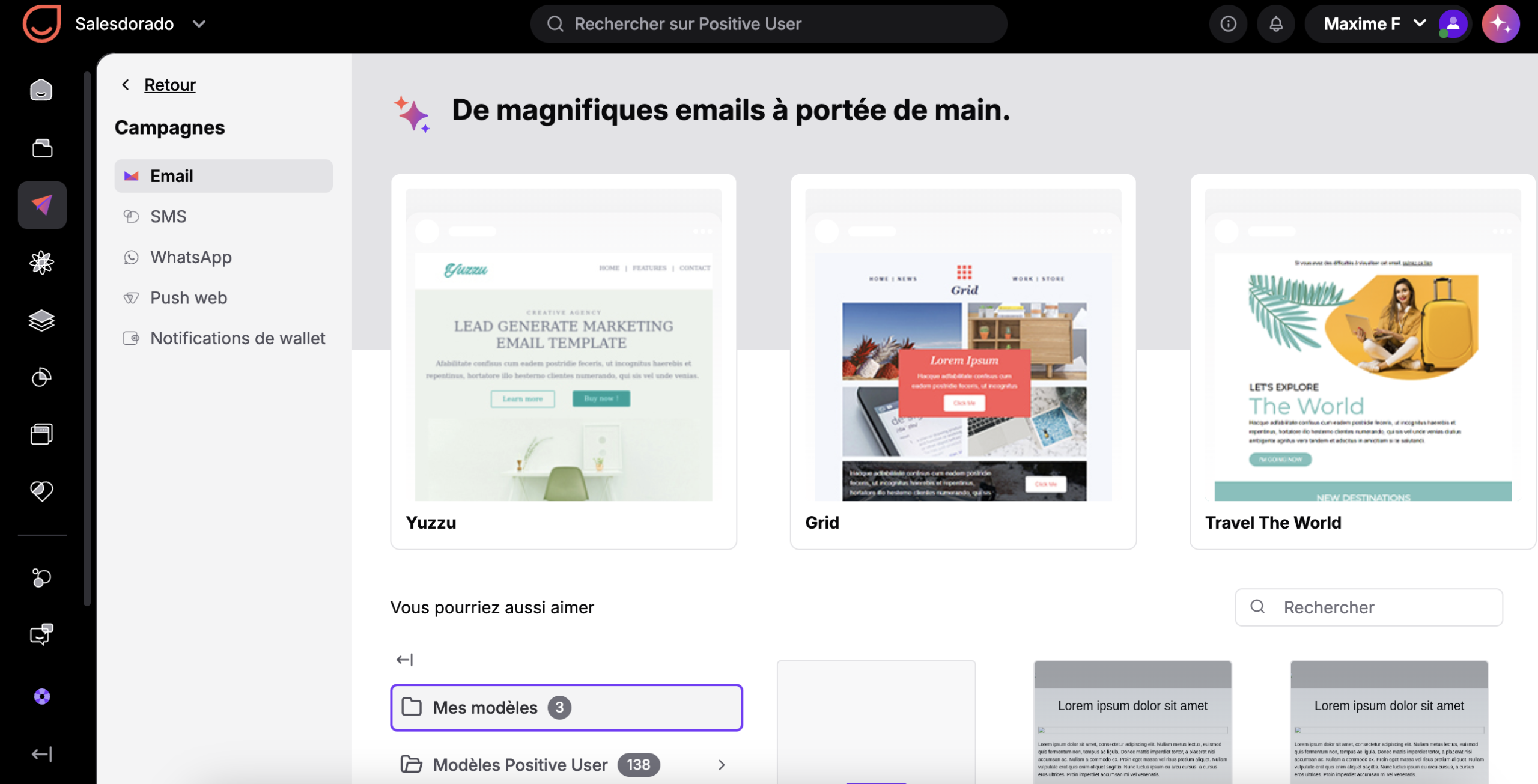
Three features are worth pointing out, because they didn’t exist in this form in the old tool:
- Reusable content sections first. You build a block once, a header or a promotional insert, and a change propagates to all your campaigns.
- Dynamic content next, which we detail further down in the Studio section. It’s no longer just about inserting a first name, but about varying entire blocks according to the recipient’s attributes.
- Finally, the AI content creation agent, available from the first plan, which writes subject lines and message bodies from a short brief.
On volume, the allowance is 60,000 emails per year, or 5,000 per month. And this allowance is identical on all three Marketing Suite plans, which is the most puzzling point of the price list.
#2 SMS
SMS follows the same campaign logic as email: import recipients, write, test, then send. You separate marketing campaigns from transactional notifications, which matters for complying with opt-in rules.
Sarbacane already used it as a differentiator on the French market. The channel hasn’t regressed, it has blended into a larger whole.
#3 WhatsApp
This is the genuinely new channel, and it’s also the one where the plans differ the most.
Included volumes go from 6,000 messages per year on the Campaigns plan to 24,000 on the Marketing Automation Suite, then to 120,000 on Customer Engagement Platform. A factor of twenty between the first and last tier, while the email volume doesn’t budge by a single byte.
This progression says clearly what the vendor is selling. It’s no longer sending capacity, it’s conversation.
WhatsApp plugs into the automation engine like the other channels. So you can build a journey that starts with an email, switches to WhatsApp if it isn’t opened, then raises an alert to a salesperson. That’s exactly the kind of scenario Sarbacane didn’t allow.
#4 Web push and wallet notifications
Web push sends a notification to the browser of a visitor who has accepted your alerts. It’s useful in e-commerce for back-in-stock alerts, more anecdotal in B2B.
Wallet notifications are more interesting: they target contacts who have added one of your cards to their phone’s wallet, and push a message to the lock screen. It’s the natural extension of the loyalty program, covered further down.
Automation, the module that has progressed the most
If you were to remember only one difference between Sarbacane and Positive User, it would be this one. We’ve gone from a campaign sequencer to a real journey editor.
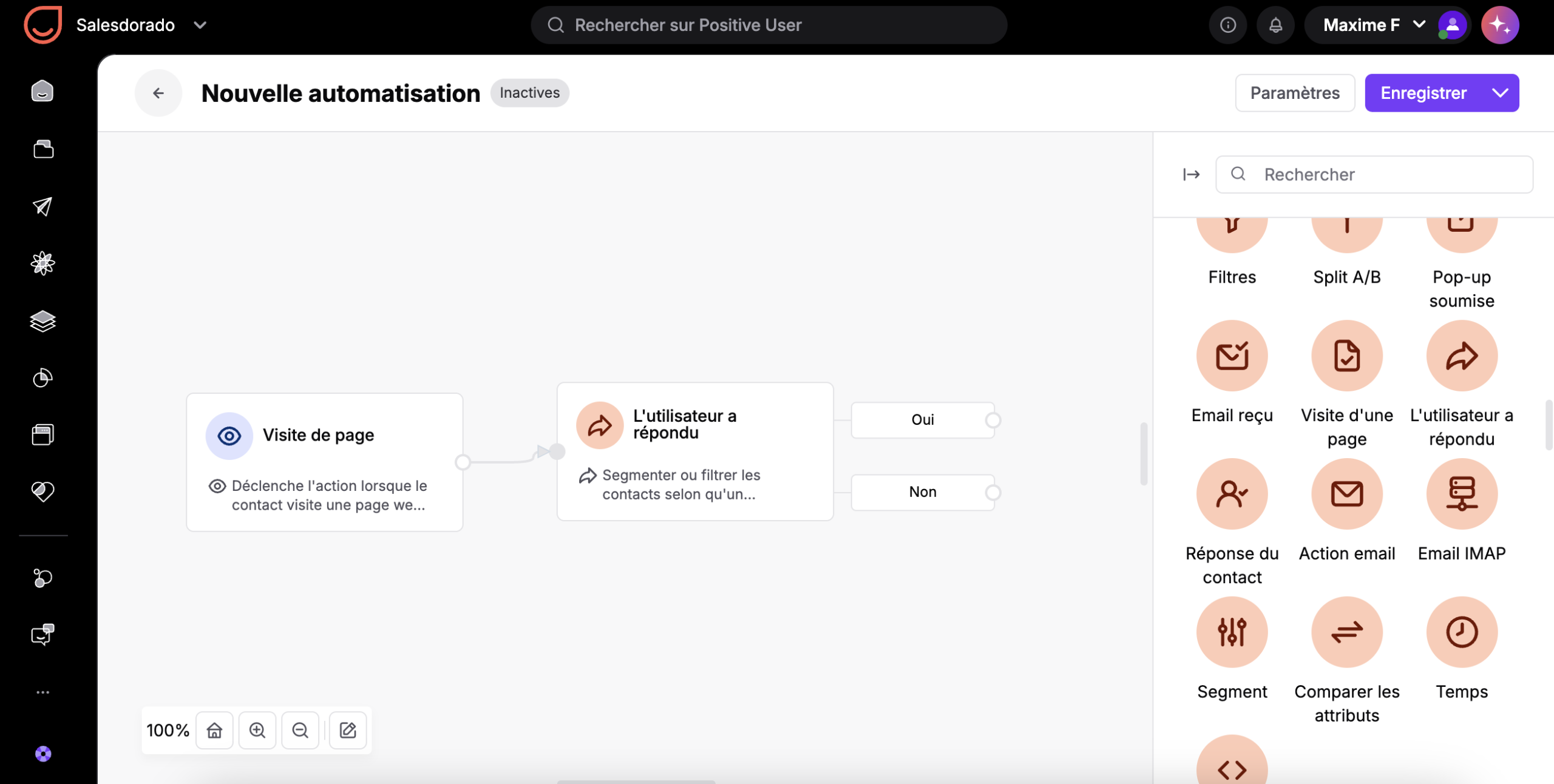
The interface is a canvas into which you drag blocks from the right-hand panel, with zoom, an overview and connectors between steps. The blocks fall into three families.
Triggers
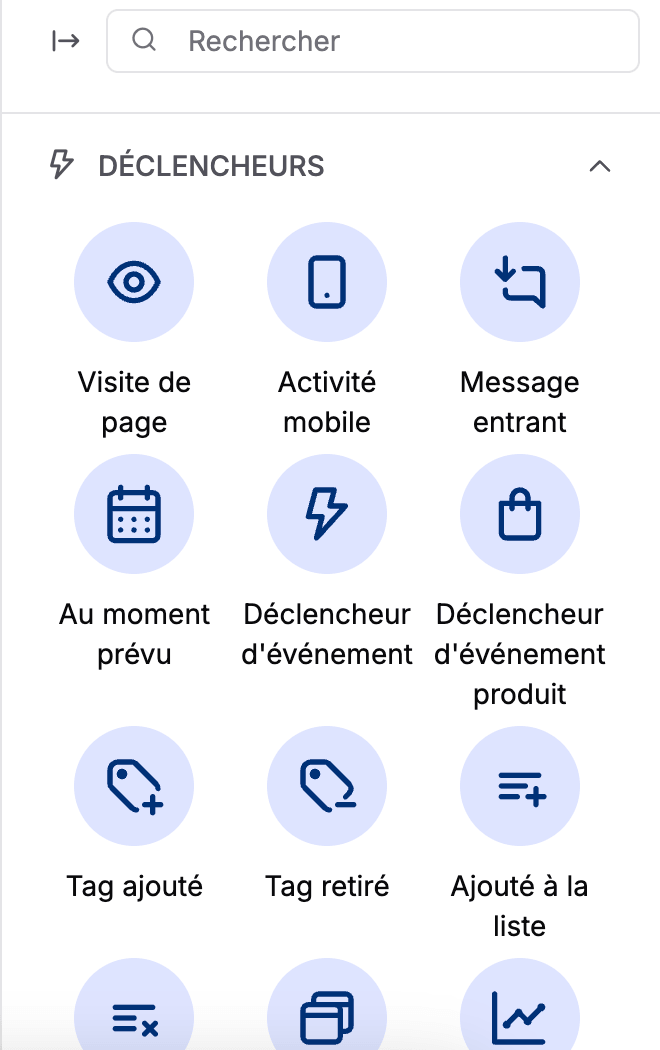
They define entry into the journey, and the library is broad.
You’ll find a web page visit, mobile activity, receipt of an incoming message, a scheduled time, an event trigger, a product event trigger, adding or removing a tag, as well as entry into a list.
The product event trigger opens up the most possibilities in e-commerce: it reacts to an action on a specific product, which lets you build cart reminders. The scheduled time trigger covers more classic uses, from contract anniversaries to renewal reminders.
Conditions and actions
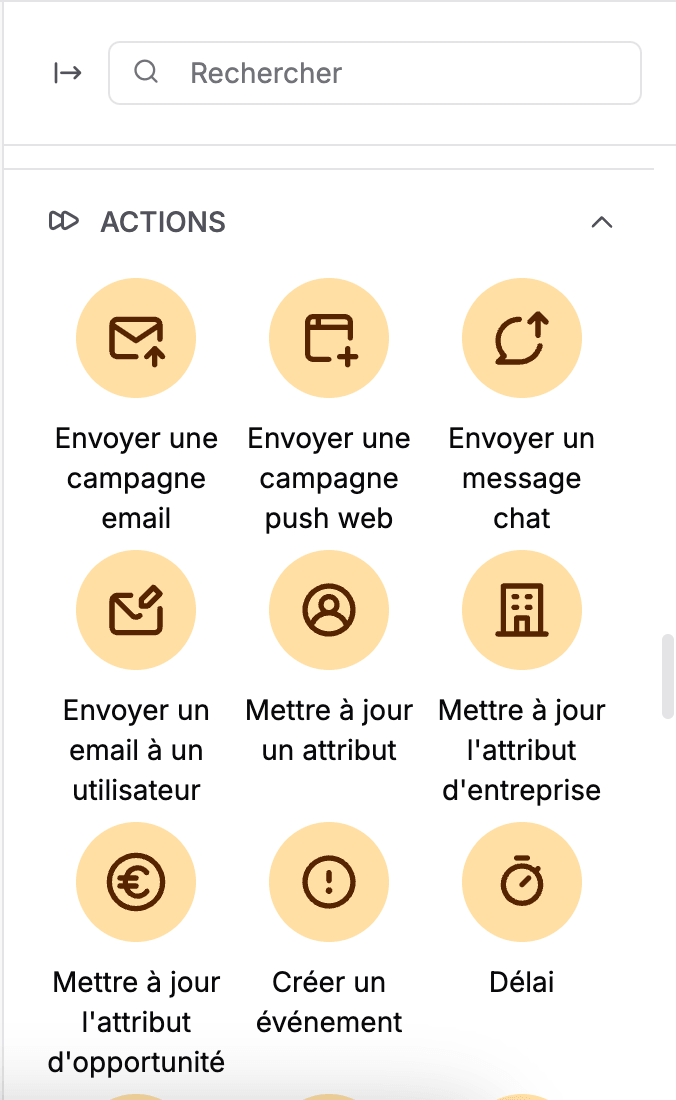
Between two steps, you place conditions that steer the journey. Classic filters on attributes, submission of a form or popup, receipt of an email, a page visit, a contact’s reply, segment membership, comparison of two attributes with each other or a simple wait.
Two blocks stand out:
- The A/B split first, which here is a journey block and not a campaign add-on. The difference is structural. With Sarbacane, you tested two versions of an email. Here, you test two entire branches of a scenario, with different channels and delays on each side.
- The Email IMAP condition next, which lets you plug a real inbox into the journey. You can make a scenario react to a prospect’s actual reply, not just to an open or a click.
On the action side, the range goes beyond sending. You can trigger an email campaign, a web push campaign or a chat message, send an internal notification to a member of your team, update a contact attribute, a company attribute or an opportunity attribute, create an event or insert a delay.
The action that updates an opportunity attribute is the one that best betrays the product’s ambition. It connects marketing to the sales pipeline in the same engine.
Scenario settings
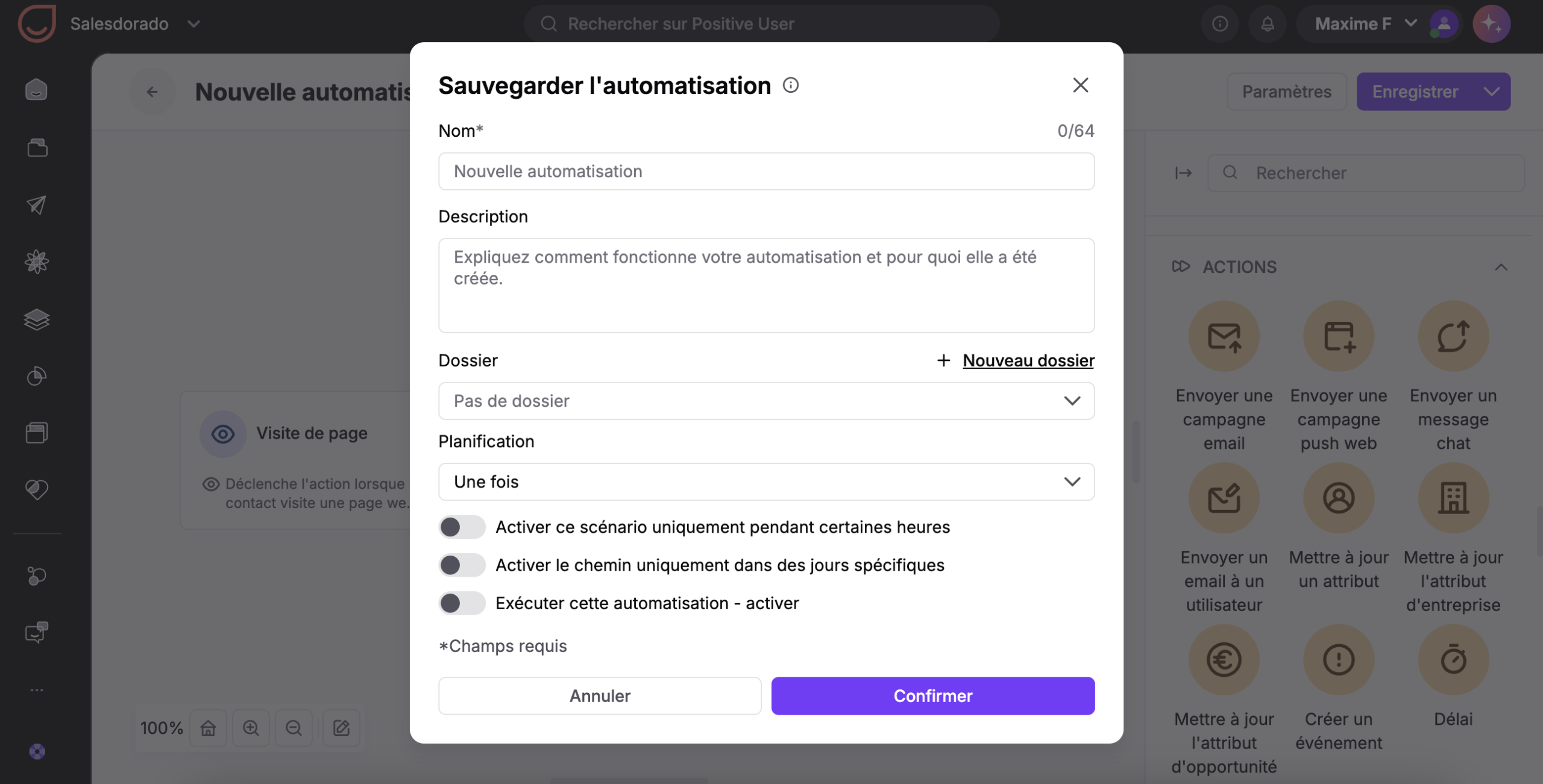
Each automation goes into a folder, which avoids clutter after a few months. You then choose a schedule, and you can restrict execution to certain time slots or certain days of the week.
This setting looks trivial. It isn’t: it’s what stops an automatic follow-up from going out on a Sunday at six in the morning.
A reassuring detail: a scenario is inactive by default. You have to explicitly flip the execution switch, which limits accidents during the build phase.
The cap applies to the number of workflows active at the same time: 5 on Campaigns, 20 on the Marketing Automation Suite, 100 on Customer Engagement Platform. A library of ready-made scenarios is provided to get started faster.
Five active workflows is not much once you industrialize. Count one for welcoming new sign-ups, one for re-engaging inactive contacts and one for each commercial high point, and the Campaigns plan cap is reached within a few weeks. Inventory your existing scenarios before choosing your plan, not after.
The data layer: contacts, companies and products
This is the deepest change, and the least visible.
Sarbacane thought in contact lists. A logic inherited from B2C, which forced you to cobble things together as soon as you addressed several people in the same company. Positive User structures the base around three distinct objects.
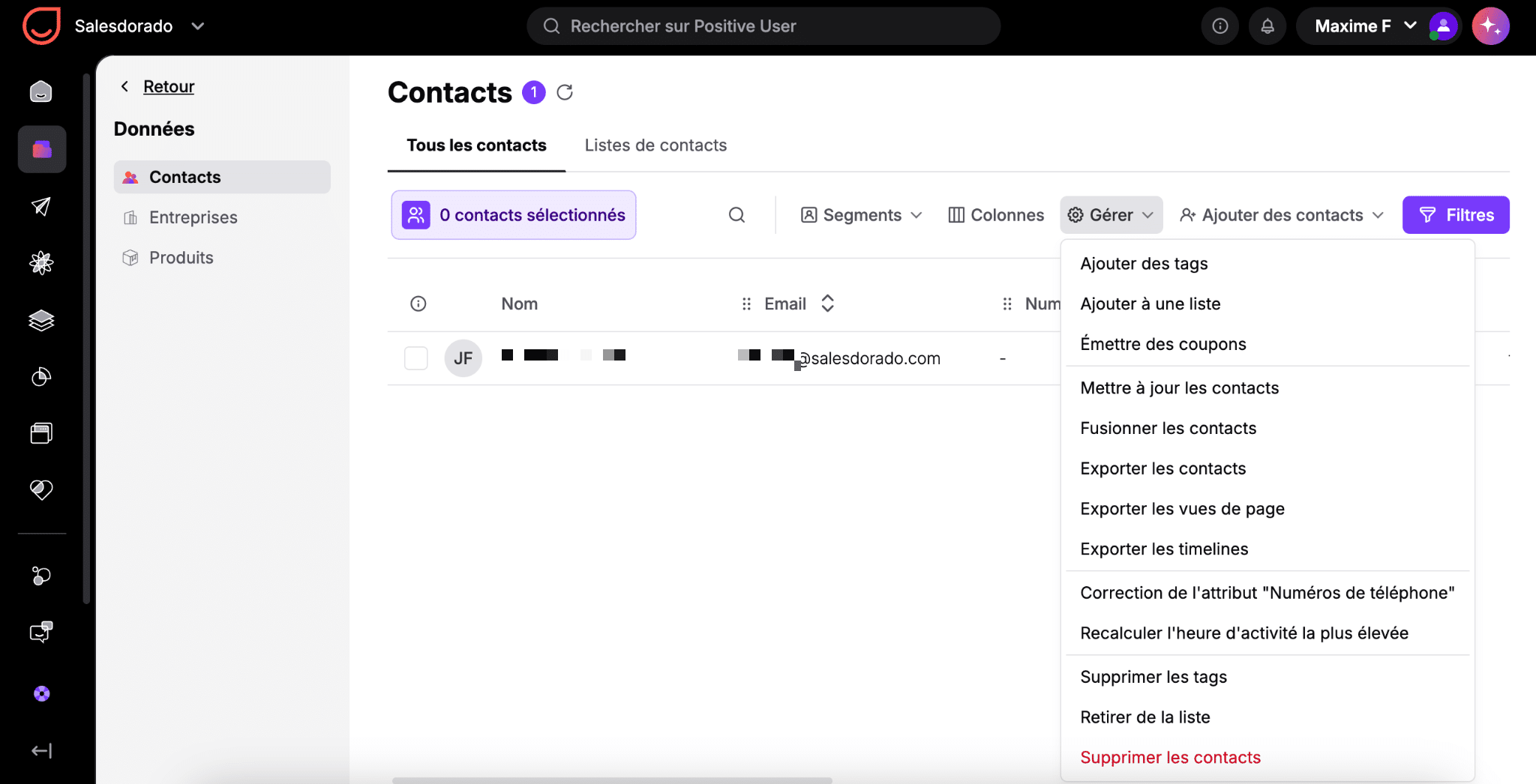
The three objects of the base
- Contacts are the basic building block, with their custom attributes, their tags and their activity timeline.
- Companies group contacts and carry their own attributes. This is what finally makes segmentation by industry, size or account status possible, without duplicating the information on each individual record.
- Products let you attach a catalog to the base and feed both recommendations and product event triggers.
On top of that come global variables and computed attributes, which avoid multiplying manual fields. An engagement score or a last-order date is calculated automatically rather than fed by import.
Bulk management
The Manage menu is particularly well stocked, and several entries deserve a closer look:
- Contact merging and duplicate detection cover routine cleanup. Automatic correction of the phone number attribute puts formats back in order, which determines the deliverability of your SMS and WhatsApp campaigns.
- The recalculate highest activity time entry deserves a special mention: it’s send-time optimization, calculated per contact from their history.
- Export covers contacts, page views and timelines. That last point is useful for answering a data access request under the GDPR.
- Finally, issuing coupons directly from the contact list shows clearly how the modules talk to each other.
Marketing contacts and non-marketing contacts
Here is a distinction Sarbacane didn’t make, and one with direct economic consequences:
- On the Marketing Suite, contacts are unlimited. You don’t pay to store inactive contacts, unlike the model of most American vendors, who bill by database size.
- On the Data and Activation Suite, non-marketing contacts remain unlimited while marketing contacts are capped at 100,000 on the Performance plan. So you only pay for the people you actually reach out to.
Retention also varies by plan: visibility on a contact’s timeline ranges from 30 days on Campaigns to 90 days on Customer Engagement Platform, and 180 days on Limitless. Worth checking if your sales cycles are long.
The Studio and dynamic content
The Studio centralizes three things: templates, the media library and dynamic content.
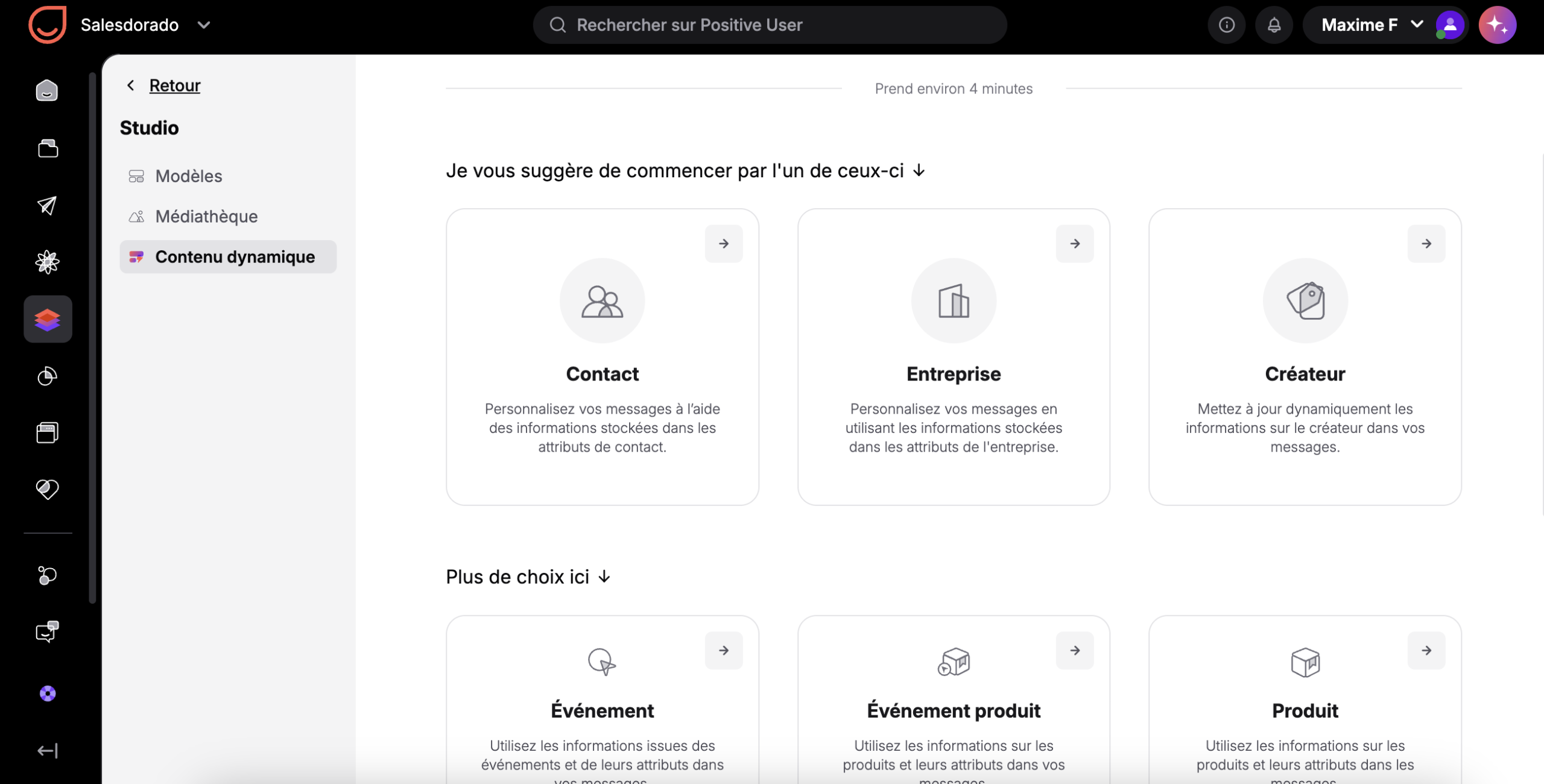
It’s the dynamic content part that changes the game. You no longer personalize with just a first name, you draw on six attribute sources:
- The contact and the company cover classic personalization and B2B personalization. You can display a different pitch depending on the recipient company’s industry, or on its headcount.
- The creator refers to the sender. In practice, this lets you vary the signature, photo and contact details according to the salesperson in charge of the account, without duplicating the email template.
- The product and the product event open up e-commerce personalization: last item viewed, product abandoned in the cart, favorite category.
- Finally, the event lets you bounce off a specific behavior recorded in the contact’s timeline.
An AI design agent completes the set from the Marketing Automation Suite upward. It suggests layouts and visual variations without needing to go through a graphic designer.
On this ground, you definitively leave email marketing for behavioral personalization. It’s precisely the territory the American suites claim, and Positive User arrives there with an argument the others don’t have: data hosted in France and Germany.
The website experience
This module turns your website into a data source and a conversion lever. Six building blocks make it up.
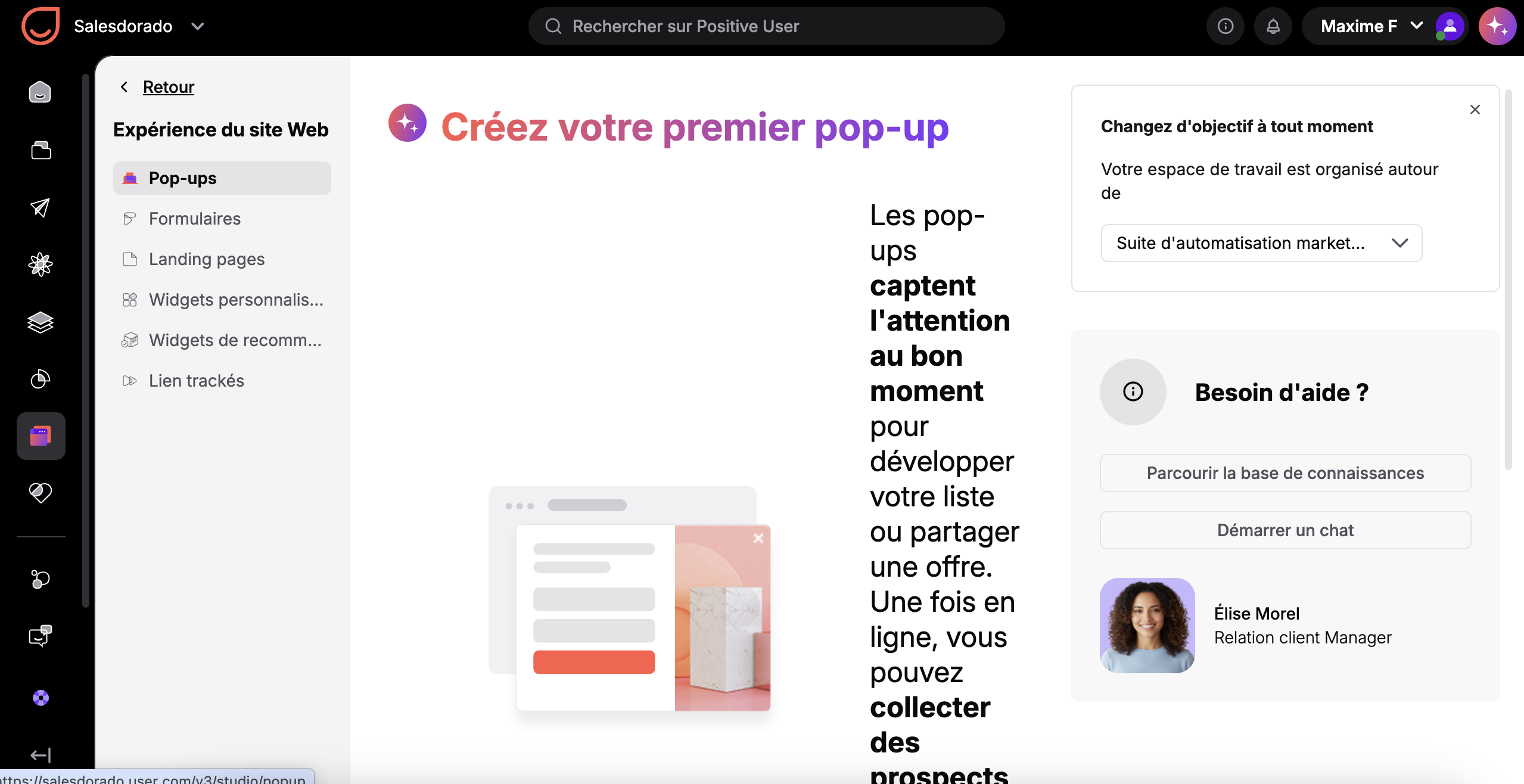
Popups, forms and landing pages
- Popups are built in a visual editor and triggered by visitor behavior. They feed the contact base directly, and a submission can serve as a condition in an automation scenario.
- Forms embed into your existing pages and send their data into the same attributes as the rest of the platform. No connector to configure, no sync to monitor.
- Landing pages let you set up a campaign page without touching your website. Handy for a webinar, a white paper or a seasonal offer.
What’s included varies by plan. On Campaigns, forms and landing pages are offered as add-ons at €49 per month each. They are included from the Marketing Automation Suite, with 50 published forms and 50 published landing pages, then 100 of each on the higher plan. Our landing page builders remain a useful reference if you want to compare this scope with dedicated solutions.
Widgets and product recommendations
Custom widgets display content specific to a given segment. A visitor identified as an existing customer doesn’t see the same message as an unknown visitor.
Recommendation widgets go further, suggesting products calculated from browsing behavior. It’s a built-in recommendation engine, reserved for the Customer Engagement Platform plan.
Visitor tracking and tracked links
Visitor tracking works in real time and feeds each contact’s timeline. It’s what makes page-visit triggers possible in the automation engine. The loop closes: the website feeds the base, the base triggers the scenarios, the scenarios bring back traffic.
Tracked links are measured redirects that you place wherever you want, including outside your campaigns.
Three modules that take Positive User beyond marketing
Beyond campaigns and automation, the platform offers three modules that extend its scope to sales, customer service and loyalty. They are offered as add-ons on the Marketing Suite as well as on the Performance plan, and included by default in the Limitless plan.
This is where Positive User stands out most clearly from a classic email marketing tool.
Sales
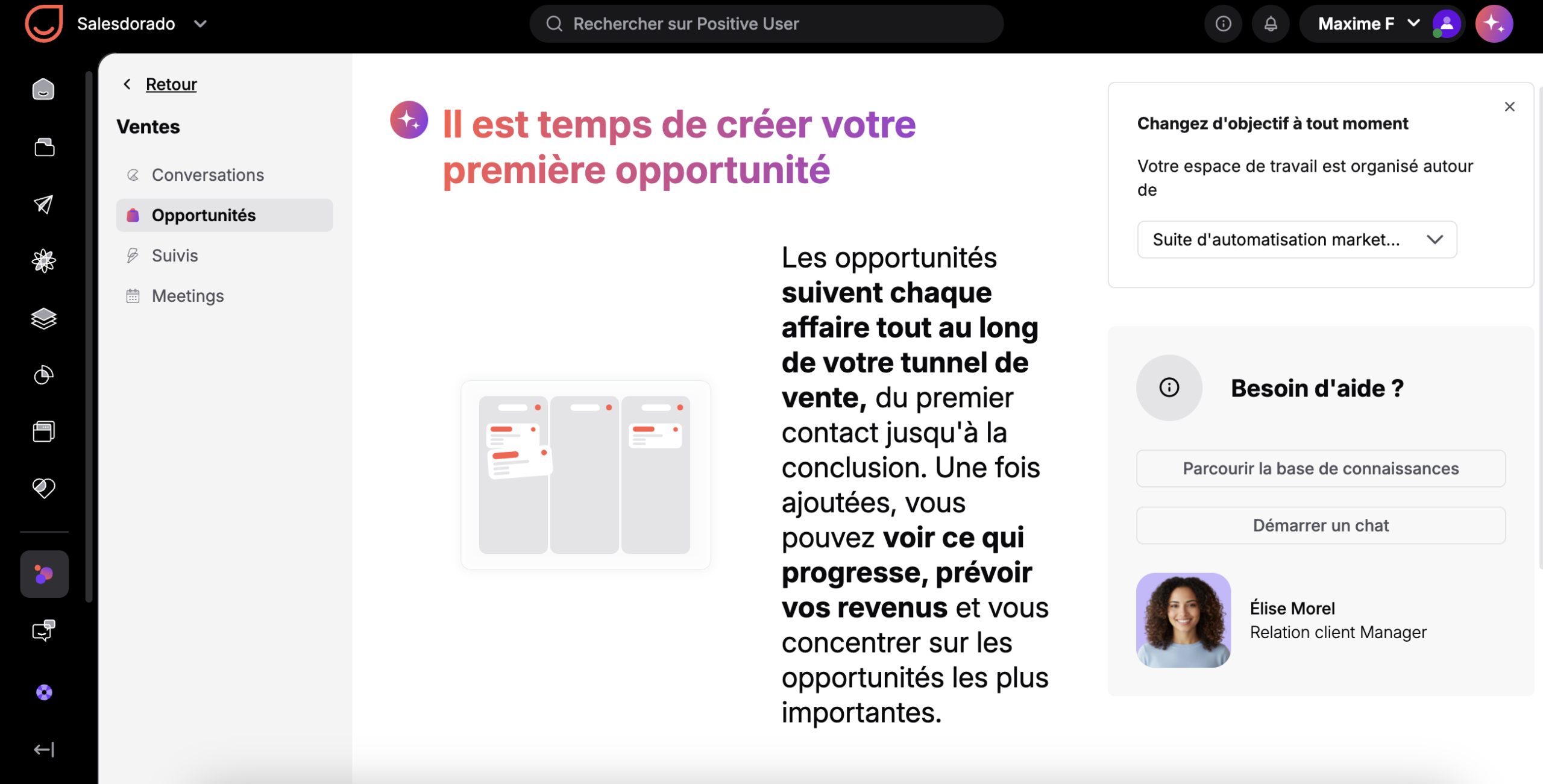
The module is organized around four entries: conversations, opportunities, follow-ups and meetings.
- Opportunities track each deal from first contact to close, with a progress view and a revenue forecast.
- Follow-ups make sure no reminder falls through the cracks.
- Meetings handle appointment booking.
The module’s value doesn’t lie in its feature depth, which is modest compared with a dedicated CRM. It lies in the fact that the pipeline lives in the same base as your campaigns: a scenario can update an opportunity attribute, and an opportunity can trigger a marketing sequence.
It makes sense for a team that runs its pipeline from marketing, with behavioral signals coming from the website. For a sales team that spends its day on the phone, it won’t replace a prospecting tool: see instead our noCRM review, the other Groupe Positive solution, designed for that specific job.
The Sales module is billed €59 per month on an annual commitment.
Customer service
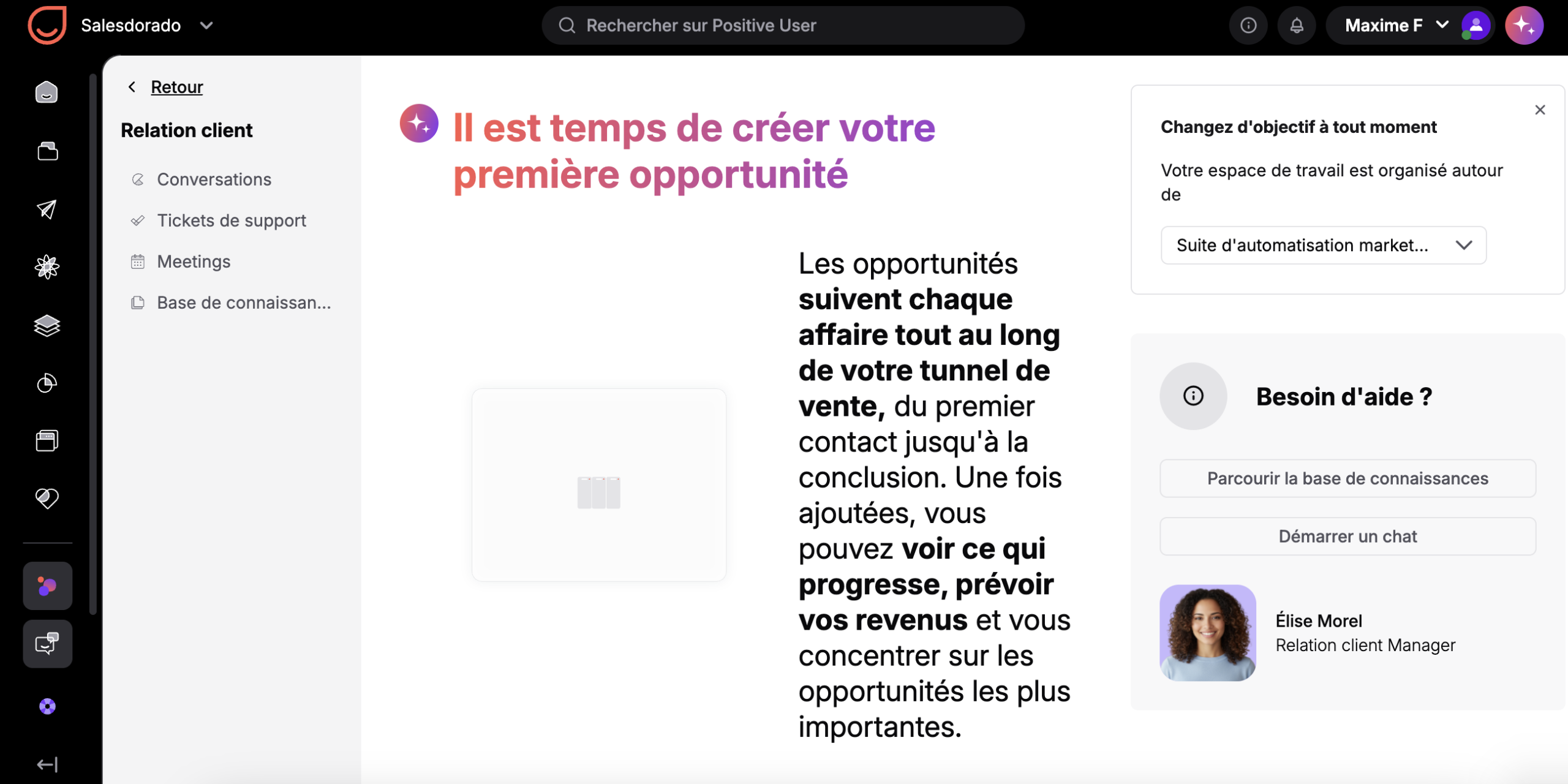
Four building blocks here too: conversations, support tickets, meetings and knowledge base.
- Live chat and the chatbot feed the contact’s timeline, which has a useful consequence: a question asked to support becomes segmentation data. A customer who has opened three tickets on the same subject is not a good candidate for an upsell campaign.
- The knowledge base is published on the customer side and absorbs part of the first-level requests.
- The ticketing system covers the rest, with assignment and tracking.
It’s not an enterprise-grade customer service tool. It’s a module that saves an SMB from adding a third subscription to its stack.
The Customer Service module is also offered at €59 per month.
Loyalty program
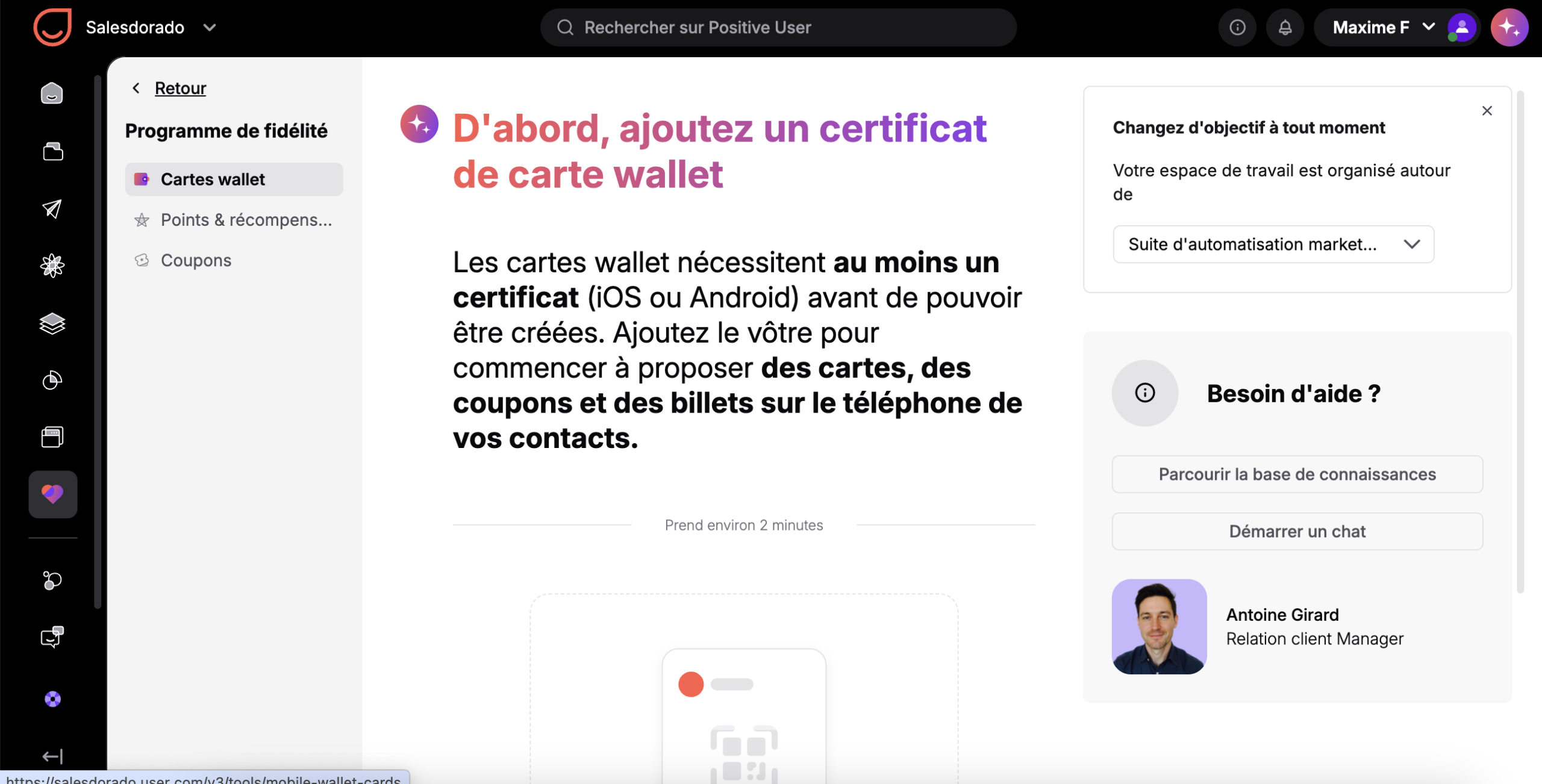
It’s the module furthest from Sarbacane’s DNA, and the most revealing of the group’s ambition. It includes wallet cards, a points and rewards system, and coupon management.
- The wallet card isn’t a gimmick. Once added to the phone’s wallet, it updates remotely and becomes a communication channel in its own right thanks to the wallet notifications mentioned above. The points balance changes, the card updates and you can push a message to the lock screen.
- Coupons are generated in bulk and issued directly from the contact list, which shows how tightly the modules are interlocked.
One technical prerequisite is worth flagging: creating wallet cards requires at least one iOS or Android certificate. It isn’t a box to tick, it’s a process to go through with Apple or Google. The screen announces two minutes of setup, which assumes you already have the certificate in hand.
The Loyalty Program module is billed €199 per month on an annual commitment. It’s the most expensive of the three, and it’s clearly aimed at retail and e-commerce.
Reporting and performance analysis
This is the area where Sarbacane was solid without being brilliant, with classic but well-made email reports. Positive User changes scale on one specific aspect.
The fundamentals are there: open and click reports, comparison between tested versions, data export for reprocessing in your analytics tool. Nothing revolutionary, and that’s just fine.
The interesting addition is revenue statistics. The platform attributes revenue to campaigns, which assumes the Products objects and product events are properly fed. In plain terms, you no longer measure just open rates but the euros generated by a scenario. That’s the difference between a sending tool and an engagement platform, and Sarbacane didn’t allow it.
Custom dashboards appear on the Customer Engagement Platform plan and across the whole Data and Activation Suite. Below that, you make do with the bundled reports.
One point not to overlook: the depth of your analyses depends directly on data retention, and that varies by plan. With 30 days of visibility on a contact’s timeline on the Campaigns plan, you can’t reconstruct a buying journey that spans a quarter. If your cycles are long, this parameter weighs more heavily in the choice of plan than the number of available channels.
Before signing, measure the average time between first contact and signature in your business. If it exceeds the retention window of the plan you’re targeting, you’ll lose the upstream part of your journeys in the analyses. It’s the kind of detail you discover six months too late.
Uma and the AI agents
Uma is the AI assistant shared across Groupe Positive. You find it in Positive User, but also in the group’s other solutions such as Surfer, Signitic and Iconosquare.
The stated approach is not to require any prompt-writing skills. The AI kicks in within the workflow rather than in a separate module you’d have to dig out of a submenu.
Four agents share the roles:
- The content creation agent writes subject lines and message bodies, from the entry plan.
- The design agent suggests layouts and visual variations.
- The onboarding agent guides the initial setup, which matters when the trial lasts only seven days.
- The training agent answers questions about the tool itself and takes over first-level support.
The positioning holds up. Most marketing teams have neither the time nor the desire to become prompt engineers.
Support and customer success
Sarbacane had built a reputation on this ground. Responsive French support, regular webinars, coach-trainers who audited their customers’ email strategy. That was the argument that justified prices above the market.
Good news, the promise has been kept. It’s even the main thread of continuity between the two products.
What’s included in all plans
You get a knowledge base with smart search, a self-service chat available around the clock and backed by an AI agent, email support and live chat with a human.
The reassuring detail, which you find on every screen of the application, is the help panel showing a named person with their role. Not an anonymous form, not a ticket number. The teams are spread across France, Germany, Italy, Spain and Poland, which settles the question of language and time zone.
On the onboarding side, two AI agents round out the setup. One guides onboarding step by step, the other answers questions about the tool itself. Add to that on-demand video tutorials, access to recurring themed training sessions and a best-practices newsletter.
What’s added on higher plans
From the Marketing Automation Suite, you get an onboarding session with a CSM, adoption tracking and regular check-ins.
The Customer Engagement Platform plan gives access to priority email response within eight business hours, a priority queue on live chat and phone, personalized operational recommendations, as well as help setting up Google Tag Manager and support on standard integrations.
Customer success on the Data and Activation Suite
This is where the Sarbacane legacy shows most clearly.
You get a dedicated CSM from day one, an assigned success coach, a tailor-made onboarding strategy, strategic planning and regular business reviews. Add to that proactive risk monitoring, dedicated technical escalation and above all advanced expertise in deliverability.
That last point deserves emphasis. Deliverability was a historical Sarbacane skill, with its address analyzer and its handling of undeliverable mail. The fact that it appears as an identified competency in the support offering shows the subject hasn’t been diluted in the merger.
The 7-day trial doesn’t let you seriously assess the quality of the support, which was nonetheless the main reason to choose Sarbacane over a cheaper competitor. If this criterion is decisive for you, ask for a guided demo rather than settling for the trial account.
Positive User pricing
The price list is split into two suites. The Marketing Suite covers organizations of up to about ten people, the Data and Activation Suite takes over beyond that.
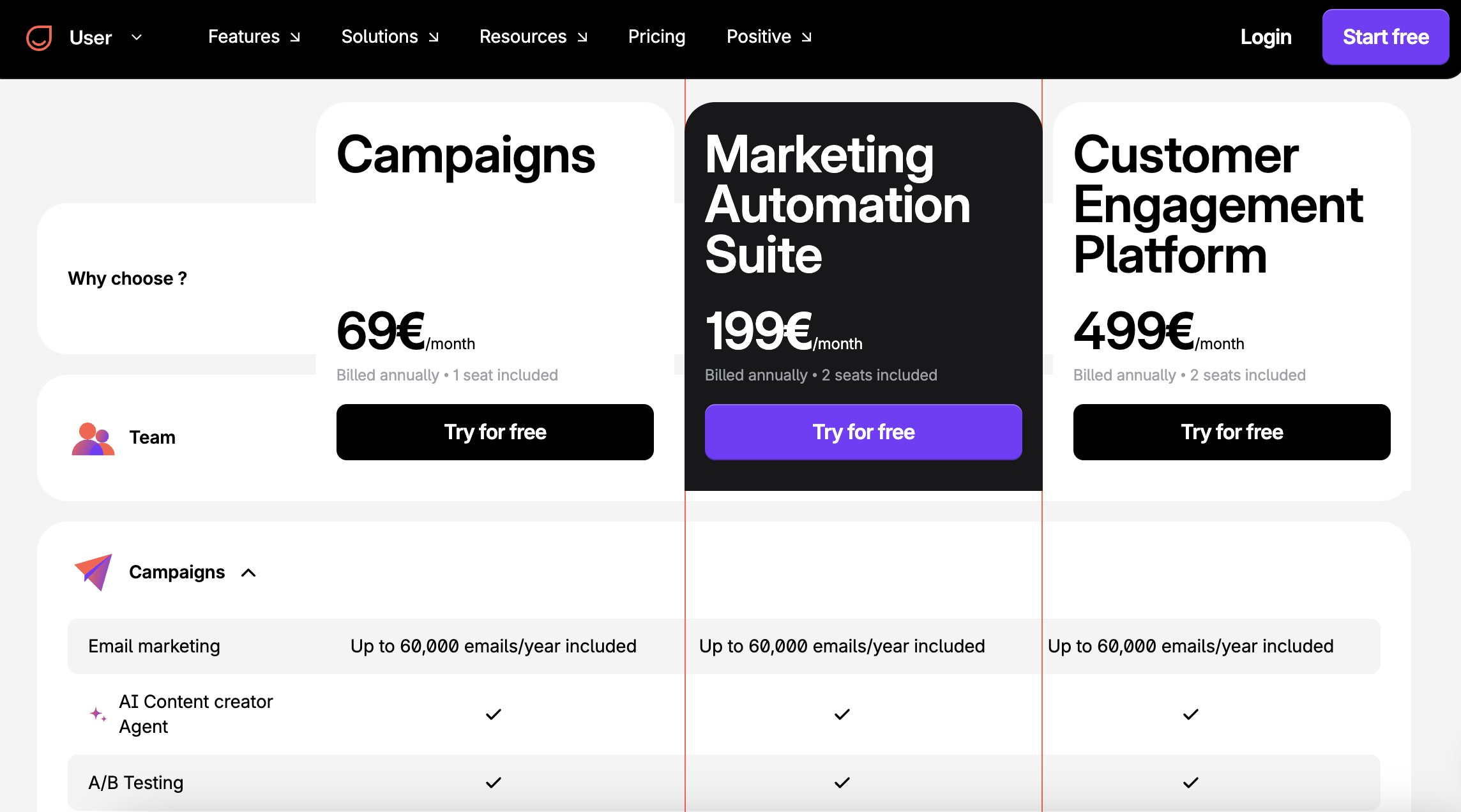
The Marketing Suite
All prices below are for annual billing.
| Plan | Campaigns | Marketing Automation Suite | Customer Engagement Platform |
|---|---|---|---|
| Monthly price | €69 | €199 | €499 |
| Seats included | 1 | 2 | 2 |
| Additional seat | €69 / month | €99 / month | €199 / month |
| Emails included | 60,000 / year | 60,000 / year | 60,000 / year |
| Contacts | Unlimited | Unlimited | Unlimited |
| 6,000 messages / year | 24,000 messages / year | 120,000 messages / year | |
| Active workflows | 5 | 20 | 100 |
| Forms and landing pages | Add-on at €49 / month each | 50 + 50 published | 100 + 100 published |
| Timeline visibility | 30 days | 60 days | 90 days |
One reading jumps out immediately. The email volume is identical on all three plans. You don’t move up to send more, you move up to open channels and gain automation depth.
These 60,000 annual emails are a baseline. The vendor states that the plan can be customized and that you need to contact them to adjust the sending volume.
The contrast with the old price list is striking. A Sarbacane Premium subscriber paid €269 per month for 25,000 emails per month, and the Exclusif plan went up to €449 for 50,000. These tiers were displayed publicly, today they go through a salesperson. Sarbacane nonetheless made pricing transparency an argument against the opacity of enterprise contracts.
Add-on modules
Four modules can be added à la carte on the Marketing Suite, all on an annual commitment.
- Loyalty Program: €199 per month
- Sales: €59 per month
- Customer Service: €59 per month
- Mobile App Marketing: €59 per month
An important methodological point for your budget: the vendor’s FAQ specifies that these modules are billed per seat. Once activated, all users in the workspace have access to them, and the bill follows the number of users.
The Data and Activation Suite
This second suite is aimed at teams of ten users or more, with high sending volumes and stronger support.
- Performance: €999 per month, 10 seats included, additional seat at €199 per month. Up to 300,000 emails per month, unlimited non-marketing contacts and up to 100,000 marketing contacts. The Sales, Customer service, Loyalty and Mobile App Marketing modules remain add-ons, but a dedicated CSM is included.
- Limitless: custom quote. Unlimited seats, unlimited emails, unlimited contacts, unlimited workflows. Add-on modules included. Timeline visibility extended to 180 days.
The modules remain à la carte on Performance and are only included by default on Limitless. The price jump is brutal, but with 10 seats included, a seat works out at about €100 per month.
The real selection criterion is neither the number of features nor the sending volume. It’s the number of people who need access to the tool. Up to two users, the Marketing Suite is consistent and well priced. Between three and ten, the cost of seats, from €69 to €199 each depending on the plan, weighs heavily. Beyond that, the Data and Activation Suite becomes rational again with its 10 seats included.