What is Lemwarm, Lemlist’s warm-up tool, and what is it really worth? To understand why this kind of tool exists, let’s step back and look at the bigger picture. One thing is obvious: it has never been easier to run email prospecting at scale. B2B databases that cost a fortune ten years ago are now available to everyone: tools like La Growth Machine, Lemlist, Apollo or Clay give you access to hundreds of millions of contacts, enriched, verified and ready to be contacted in a few clicks.
So much so that everyone has jumped on cold email, and that is exactly where the problem comes from.
Because Gmail, Outlook and the other mailbox providers saw the wave coming. Faced with the explosion of automated sending, they tightened their filters, refined their algorithms and learned to spot suspicious senders from just a few signals. A brand-new mailbox that suddenly sends fifty emails a day? Straight to spam, no warning. Plenty of people have learned this the hard way, and still do.
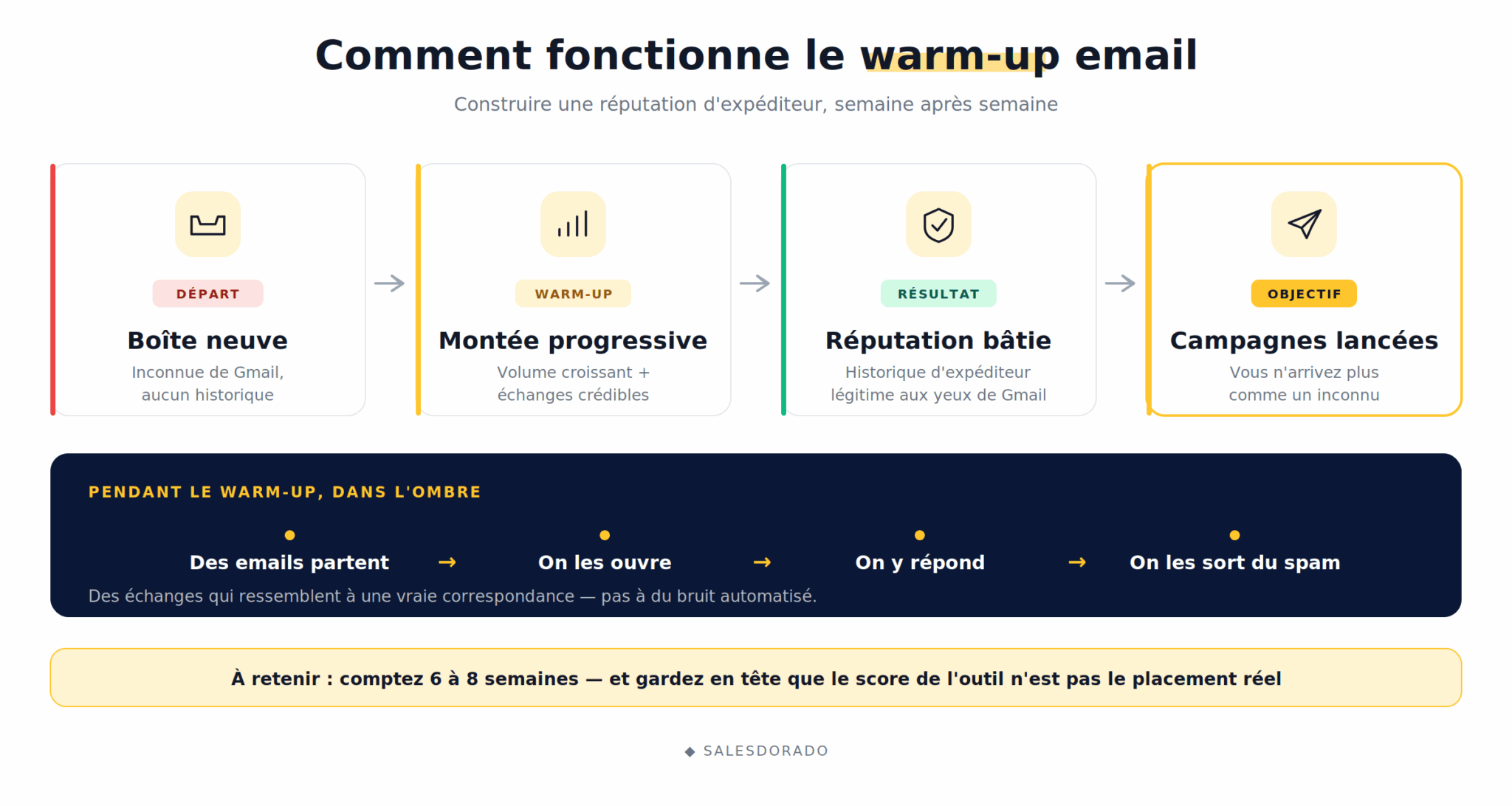
Email warm-up was born to get around this wall. The principle is simple: gradually heat up your mailboxes so they look trustworthy before you launch your real campaigns.
Warm-up in 2026 raises an immediate question: does it still work? Or have the providers learned to detect it too? In this article, we step back and look at the subject as a whole, we tell you what warm-up can and can no longer do in 2026, and we check whether Lemwarm, Lemlist’s tool, is really worth it.
What exactly is email warm-up for?
Before judging Lemwarm, you need to understand the problem it sets out to solve.
When you send a sales email, the recipient’s provider (Gmail, Outlook, Yahoo) doesn’t look at what you write first, it looks at who you are. In practice, it assesses the reputation of your domain and of your sending address. A recent domain (or a mailbox that has never sent anything) has no history. For Gmail, it’s a stranger, and a stranger who suddenly starts sending fifty emails a day looks an awful lot like a spammer.
Email warm-up deals with this problem upstream. The principle: gradually increase the sending volume of a new mailbox by generating exchanges that look like real correspondence. Emails go out, they get opened, they get replies, they get pulled out of spam if they land there. After a few weeks, your domain has built a legitimate sender history. You no longer show up as a stranger on the day you launch your real campaigns.
It’s one part of deliverability, not deliverability as a whole. Warm-up builds reputation, but sloppy DNS authentication, a dirty contact list or dubious content can cancel it all out. We come back to this below, because this is precisely where many users get it wrong.
Does warm-up still work in 2026?
The short answer: yes, but less than before, and never on its own anymore.
You need to understand the recent history. In 2020, automatic warm-up worked remarkably well. Google and Microsoft gave real weight to the engagement signals generated by these tools. A mailbox warmed up for three weeks landed cleanly in the inbox. That era is over. Around 2024, both providers had identified the IP address ranges and network patterns of the main warm-up services and mechanically reduced the weight of those signals.
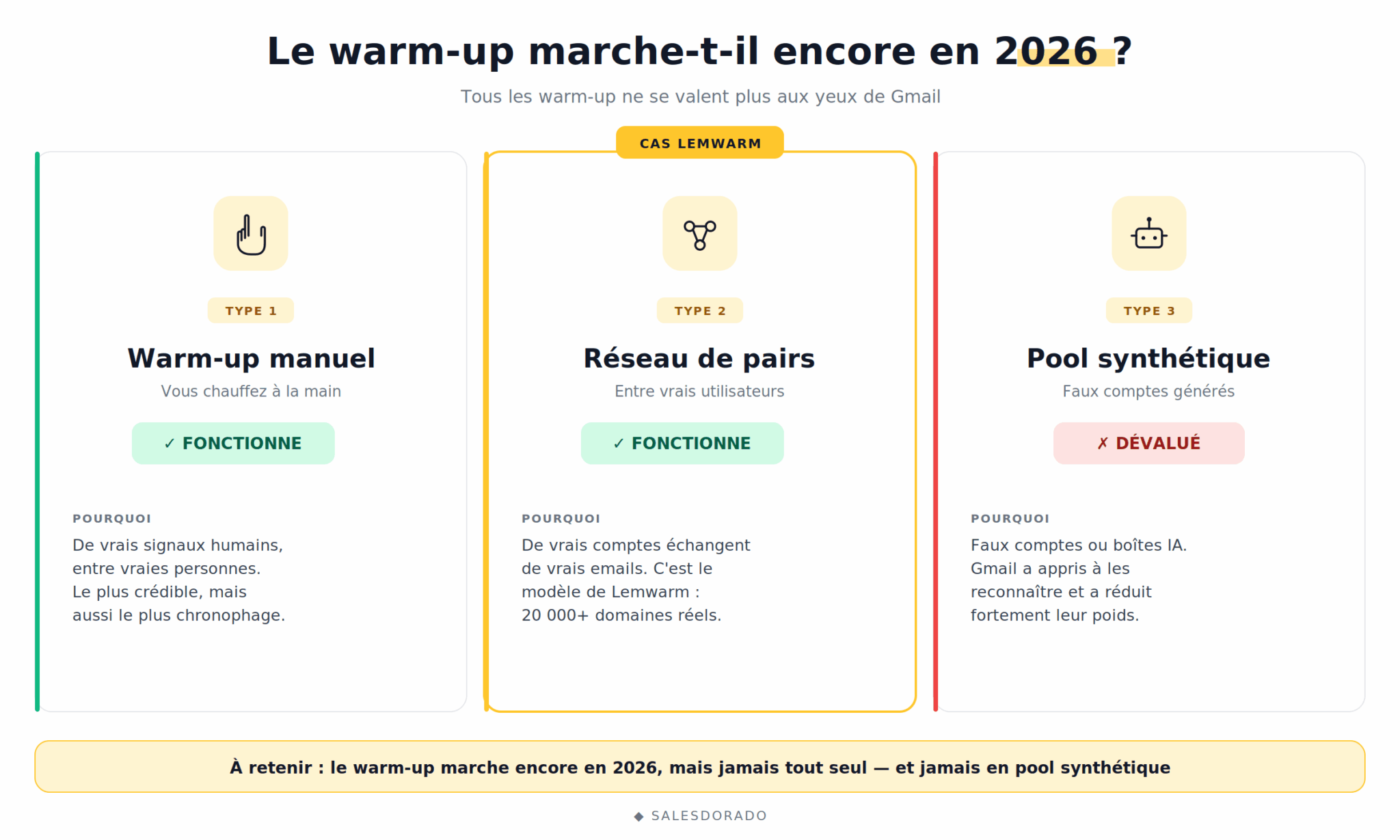
Manual warm-up and peer-network warm-up keep working, because they generate real sending signals between real people. The weak link is synthetic-pool warm-up, those networks of fake accounts or AI-generated mailboxes sold by part of the tools on the market. Gmail has learned to recognize them and discount them.
This distinction works in Lemwarm’s favor, as we’ll see: its network relies on real Lemlist users. But it also forces a conclusion: in 2026, plugging in a warm-up tool and believing the problem is solved is a mistake. The tool is a starting point, not a turnkey solution.
Salesdorado’s takeAutomated warm-up still brings a modest but real benefit. The problem is that it’s sold as comprehensive insurance when it’s an add-on. A warm-up tool plugged into a poorly configured mailbox, with no manual replies and no patience, will give you a nice internal score and poor results in real campaigns. The tool’s score is not real placement.
How Lemwarm actually works
Lemwarm is the warm-up tool developed by lempire, the publisher of Lemlist, one of the most widely installed cold email platforms on the market.
Here is what it actually does once it’s turned on.
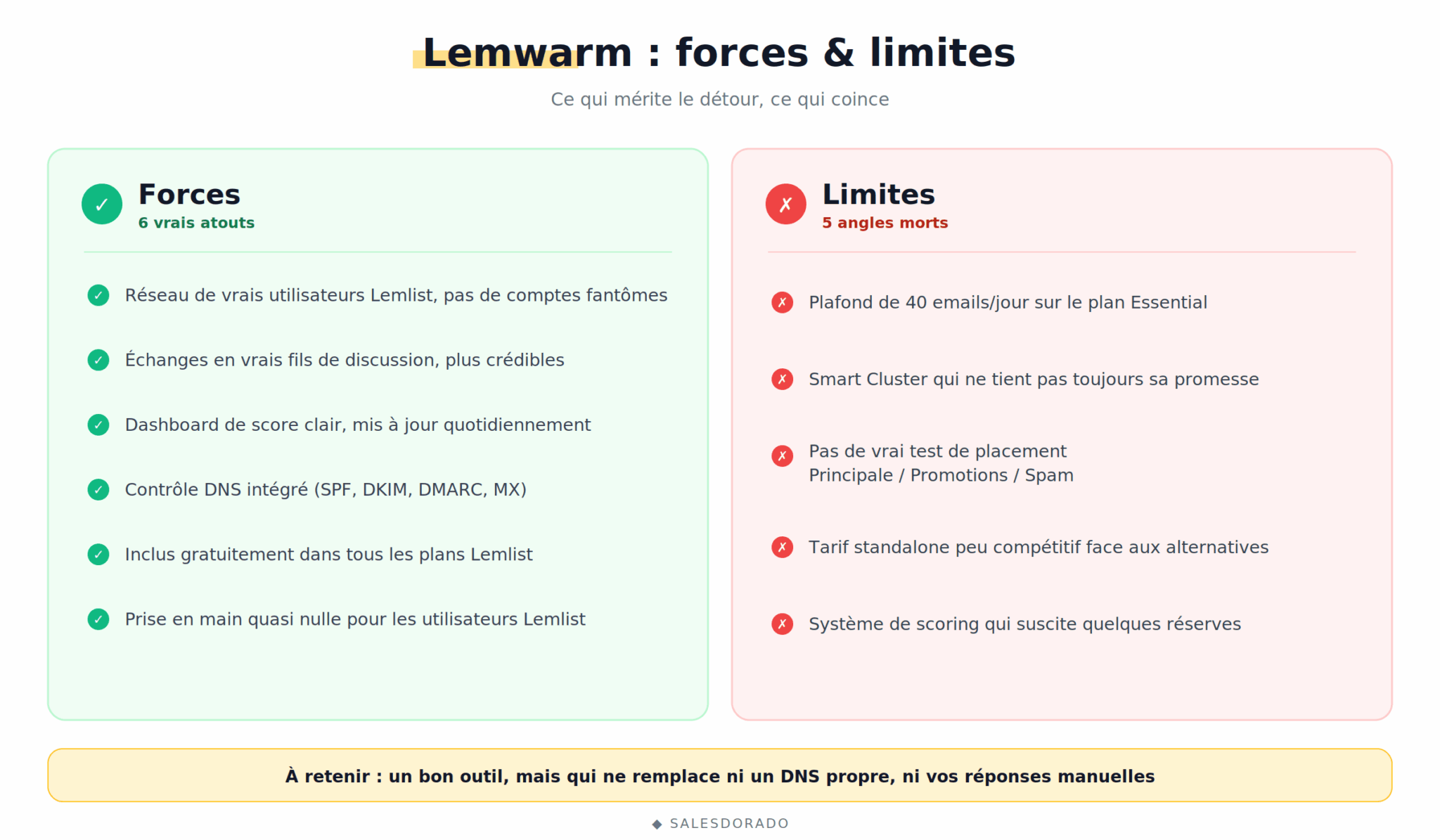
A network of real users, not ghost accounts
This is Lemwarm’s main technical strength, and it follows directly from what we just saw. Where many services use fake accounts to artificially inflate activity, Lemwarm routes your warm-up emails through a network of real, verified Lemlist user addresses. Your messages interact with real recipients, which sends providers a far more credible signal than a synthetic pool.
A detail that matters: the exchanges are not isolated emails that make no sense. Lemwarm structures its conversations as genuine discussion threads, like normal correspondence. This simulates a natural sending pattern, whereas some competitors send replies that don’t even look like real replies. The network covers more than 20,000 domains across more than 150 countries.
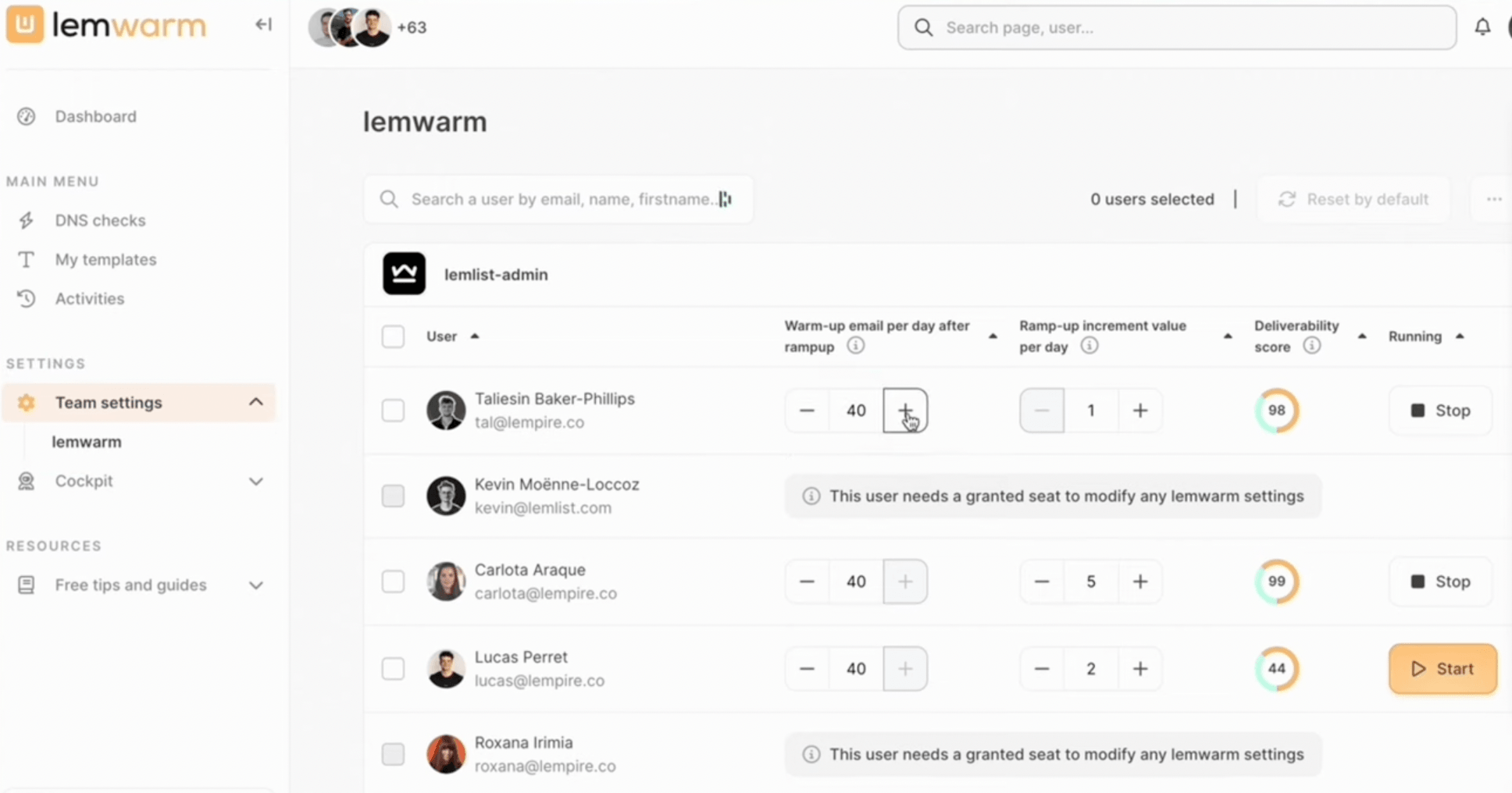
A readable deliverability dashboard
Once Lemwarm is turned on, you track your sender health through a deliverability score from 0 to 100, updated daily and displayed with a clear color code, from red to green. The score is based on warm-up engagement, technical setup and blacklist checks.
Charts show how inbox placement compares with spam over time, so you can see at a glance whether your reputation is improving.
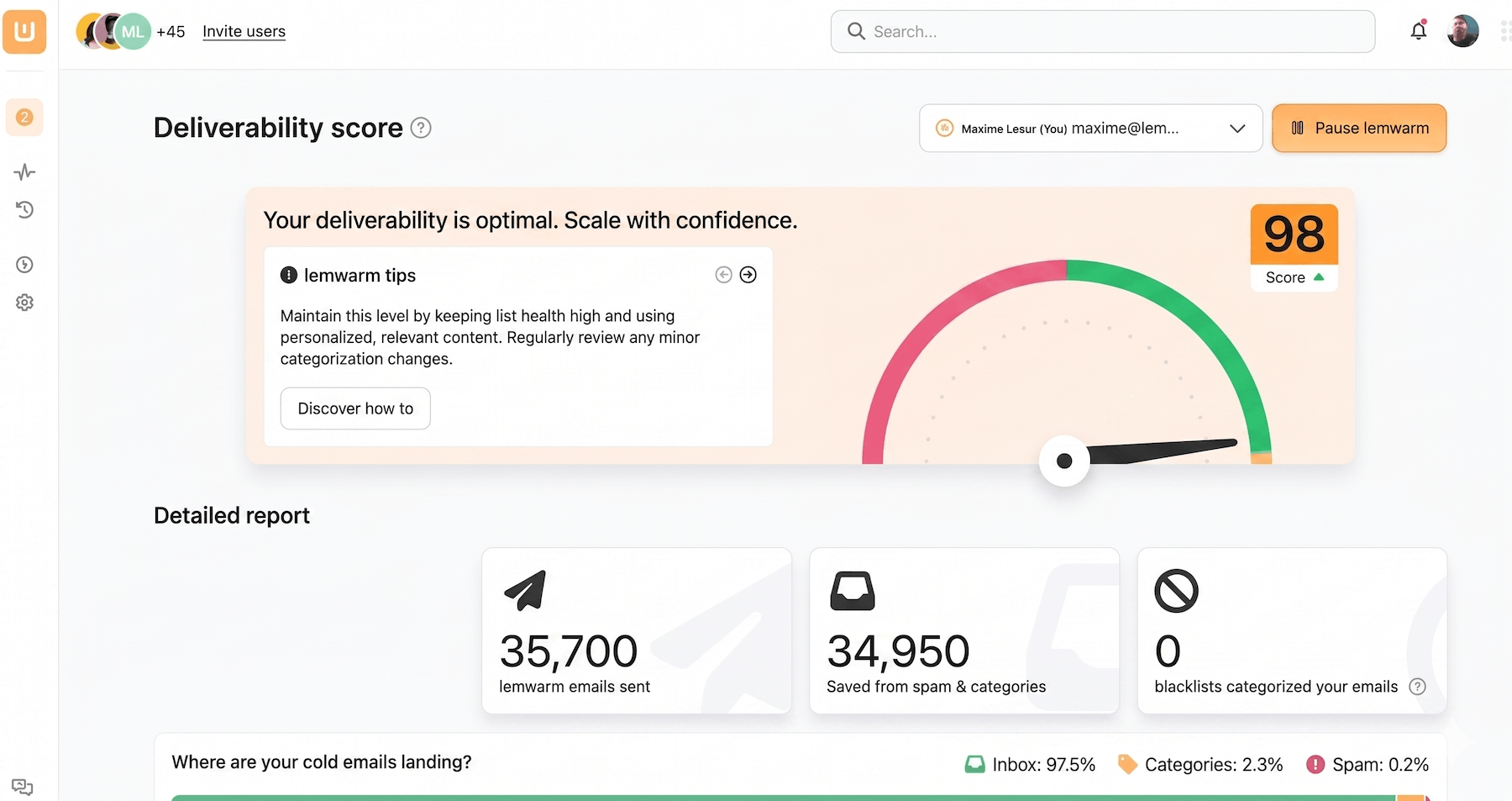
Built-in DNS technical check
Lemwarm checks your technical setup: SPF, DKIM, DMARC, MX records and custom tracking domain. That’s valuable, because this is often where the real deliverability problems lie, well before warm-up itself.
The tool also raises spam risk alerts based on your sending behavior and the content of your emails.
Warm-up on your real templates and Smart Content
Lemwarm lets you warm up your mailboxes with your real campaign templates, not just filler text.
On the higher plan, a content algorithm generates unique subject lines and message bodies for each exchange, shaped by your industry through a questionnaire.
The idea: make warm-up emails look like real prospecting rather than noise.
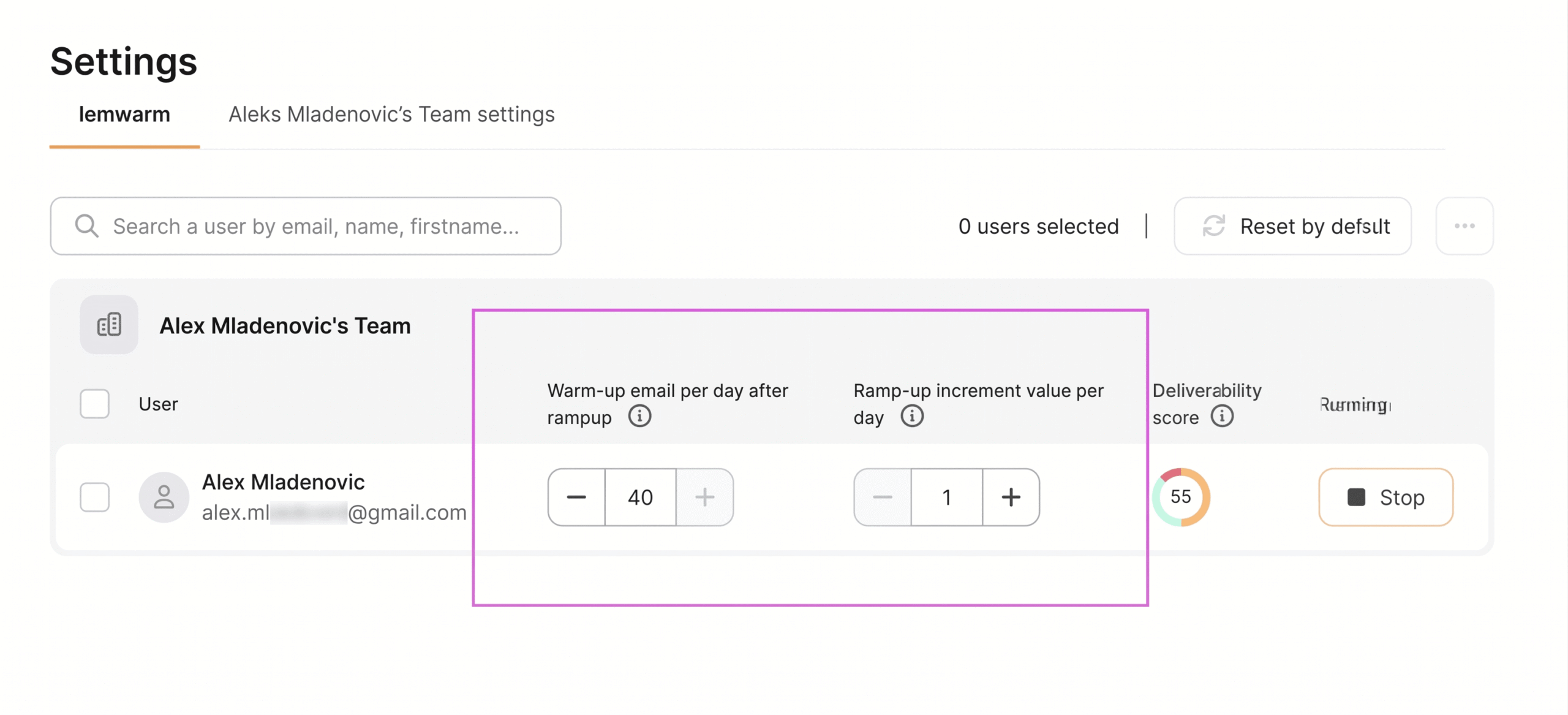
Best practices for warming up your mailboxes properly
Lemwarm, or any warm-up tool, will only deliver good results within a specific framework. Here is what really makes the difference today, and what the tool alone won’t do for you.
A few tips
- Set up DNS first. SPF, DKIM and DMARC must be in place before you launch any warm-up. It’s the foundation, and it’s non-negotiable.
- Combine with manual replies. Reply yourself, from time to time, to your own warm-up emails. Real human signals are worth more than any automated exchange.
- Avoid overly robotic patterns. Random sending times, no sudden volume spikes. A ramp-up that is steady and irregular at the same time, the way a human would do it.
- Be patient. Count on 6 to 8 weeks, not 2 to 3. Rushing is the best way to burn a new domain.
Lemwarm pricing: how much does it cost?
This is where the whole decision is made, because Lemwarm’s price depends on one thing only: are you already a Lemlist customer or not?
Lemwarm standalone
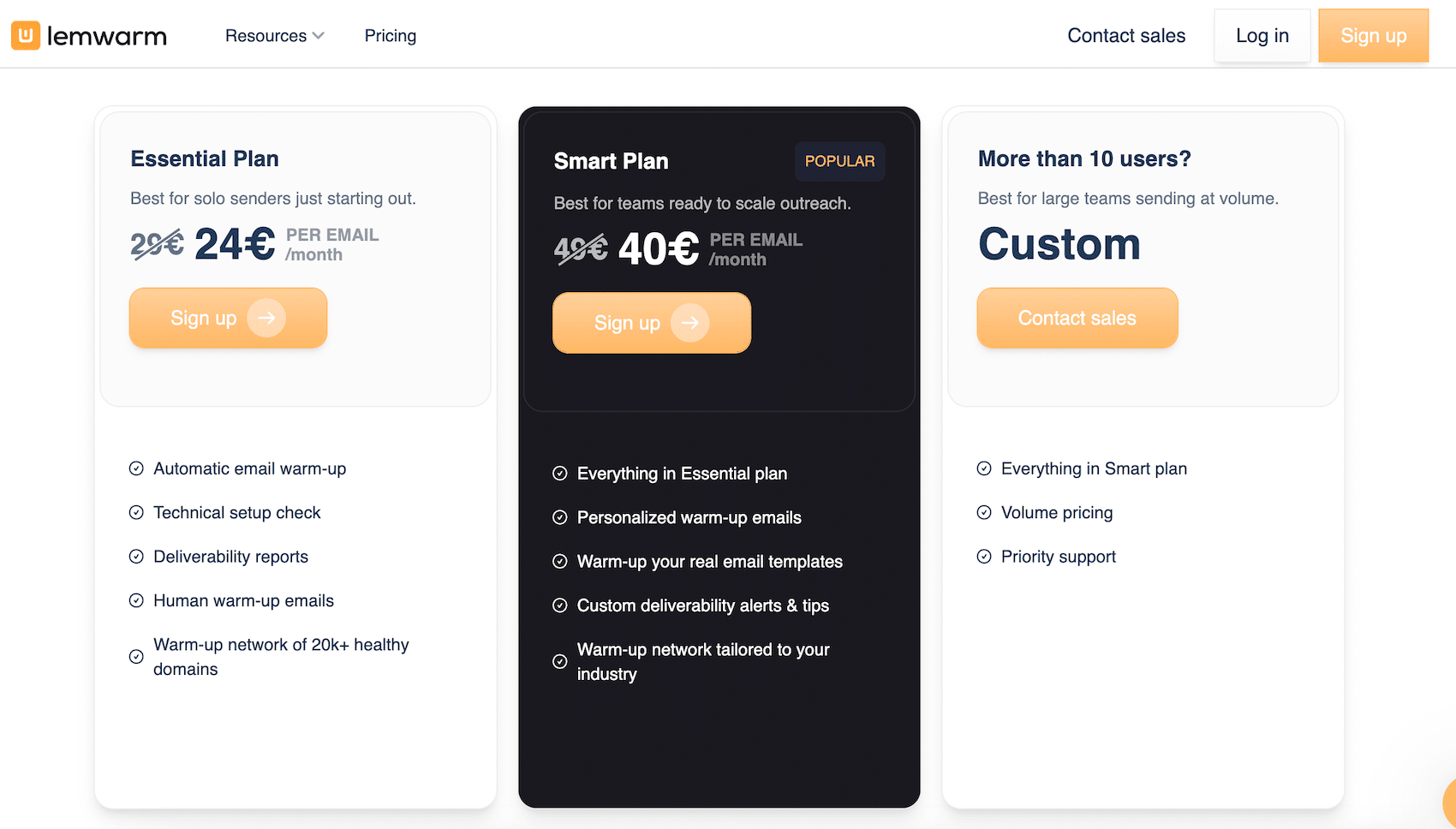
Bought on its own, without a full Lemlist subscription, Lemwarm offers two plans, billed per email address per month:
| Plan | Price (annual) | Who it’s for |
|---|---|---|
| Essential | €24 / email / month | Solo senders starting out: automatic warm-up, technical check, deliverability reports, network of 20,000+ domains |
| Smart | €40 / email / month | Teams stepping up their pace: warm-up on your real templates, content personalized by industry, advanced alerts |
Lemwarm included in Lemlist
If you’re already on Lemlist, the picture changes completely: Lemwarm is included at no extra cost in all paid plans. The Email plan starts at €55 per user per month on annual billing and the Multichannel plan at €87. In both cases, warm-up runs automatically on your connected mailboxes, with no separate setup and no extra line on the invoice.
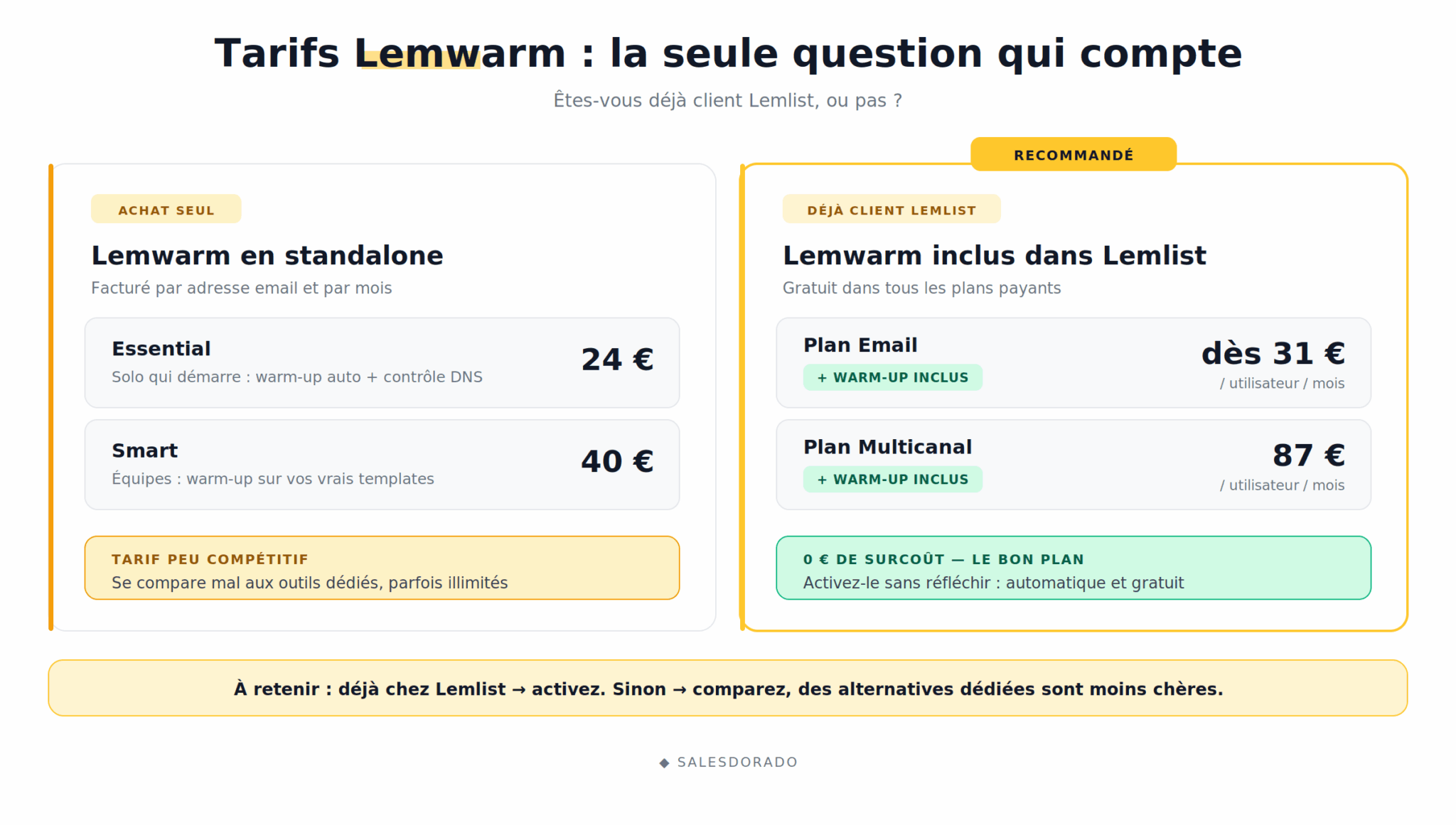
Salesdorado’s take on the right choiceThe rule is simple. If you’re already with Lemlist, turn Lemwarm on right away: it’s free and it’s a good tool, there’s no reason to go without it. If you’re not with Lemlist and you’re only looking for warm-up, the math is less obvious. The standalone price compares poorly with dedicated tools that sometimes offer unlimited volume for less. In that case, widen your comparison before deciding.