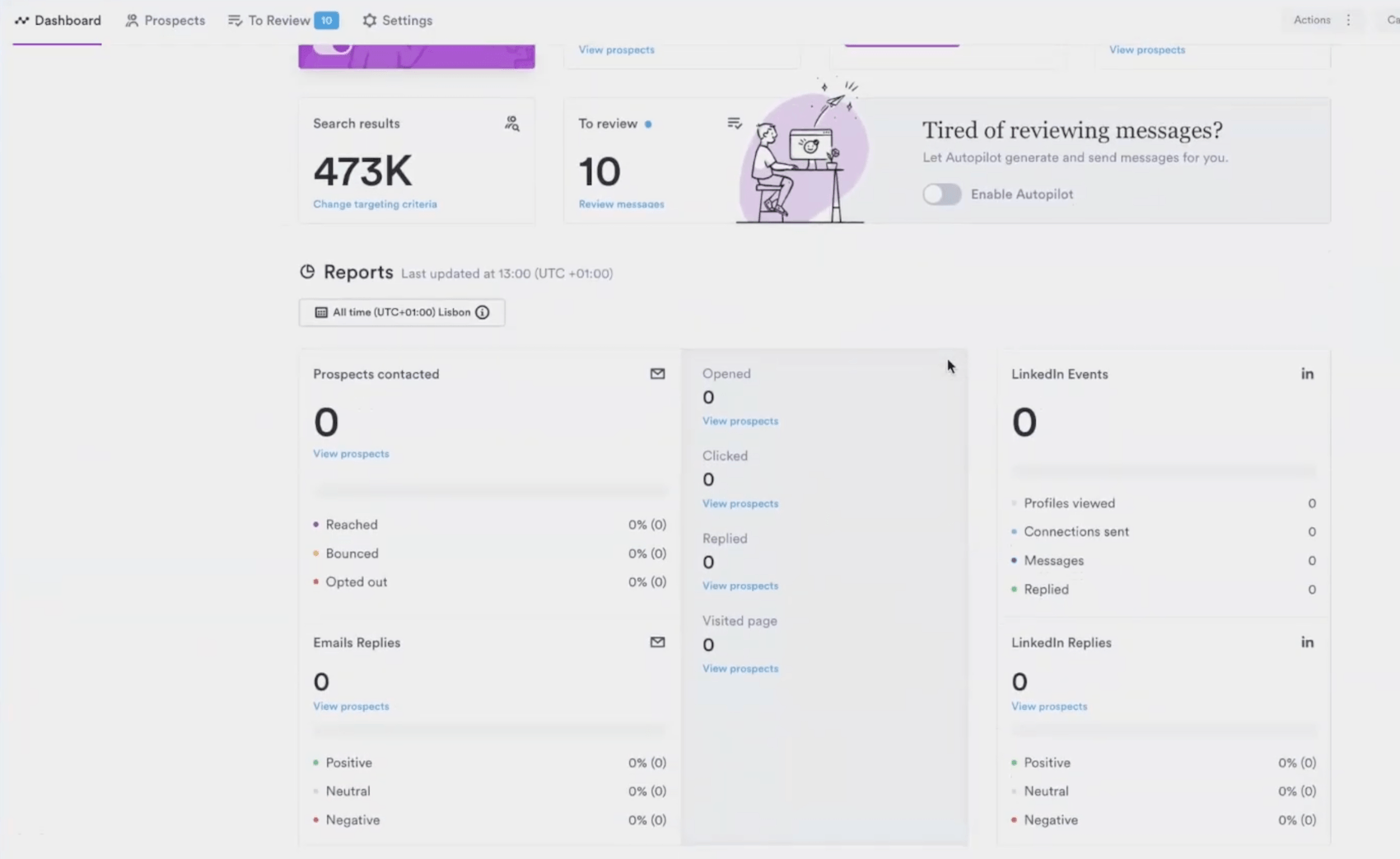
In short, Overloop (formerly Prospect.io) is an AI-powered prospecting tool that sources prospects from a database of 450 million contacts, writes the emails and LinkedIn messages, then runs the sequences for you.
It is one of the most polished bets on the European market on what we could call “prospecting delegated to artificial intelligence”, with excellent email + LinkedIn multichannel and native GDPR compliance.
On the other hand, delegating comes at a price: you lose control over the writing, and the credit system makes the real cost far higher than the €69 on display.
Under what conditions is the bet worth it? How good is the AI writing, really? How much does a prospect cost once the credit mechanics are broken down?
From Prospect.io to AI agent: understanding where Overloop is heading
Overloop’s history sheds a lot of light on what you are buying today. In 2015, Vincenzo Ruggiero launched a simple Chrome extension in Brussels called Prospect.io: an email finder paired with a cold emailing tool, which would become one of the European pioneers of the category. The tool was renamed Overloop, expanded its scope to CRM and sequences, and over the years has claimed more than 5,000 customer companies and 100,000 campaigns sent.
Then came the pivot. Rather than chasing Lemlist on the sequence-editor turf, Overloop rebuilt its product around an AI engine trained on ten years of outbound data. The positioning changes radically: it is no longer about helping you prospect, but about prospecting in your place. The sales pitch openly draws the comparison with a human SDR, promising to “free up 90% of the time” of your sales reps.
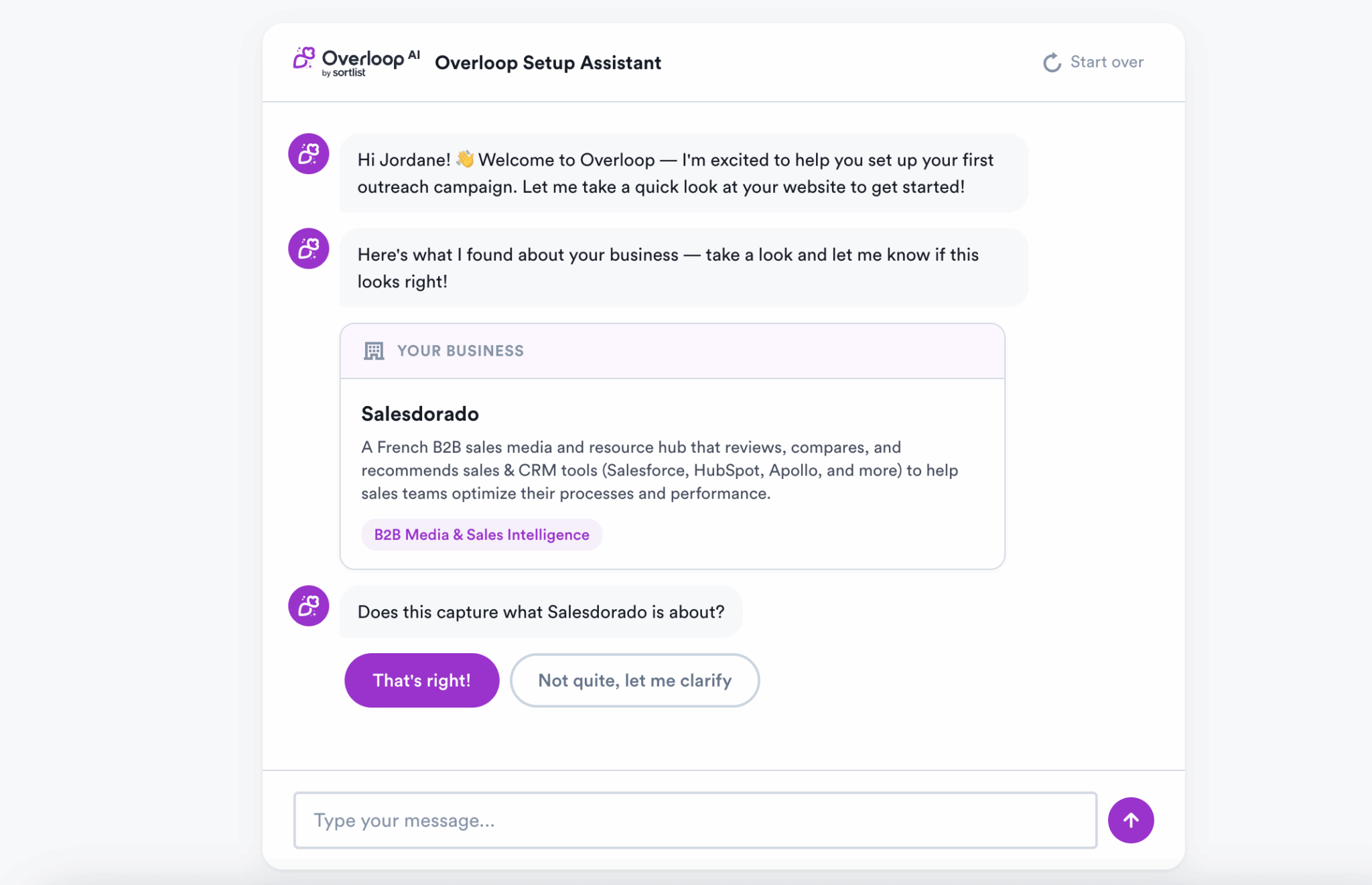
The latest episode, and not the least: at the end of 2025, Overloop was acquired by Sortlist, the Belgian marketplace that connects companies with agencies. A logical move: Sortlist claims around 600,000 buyers on the inbound side, Overloop generates the outbound, and the two share a European footing and native GDPR compliance that no American competitor can claim.
The announced roadmap includes feeding marketplace data into Overloop campaigns and a tool for detecting intent signals (funding rounds, hiring, job changes). It is promising, but for now it remains largely a promise.
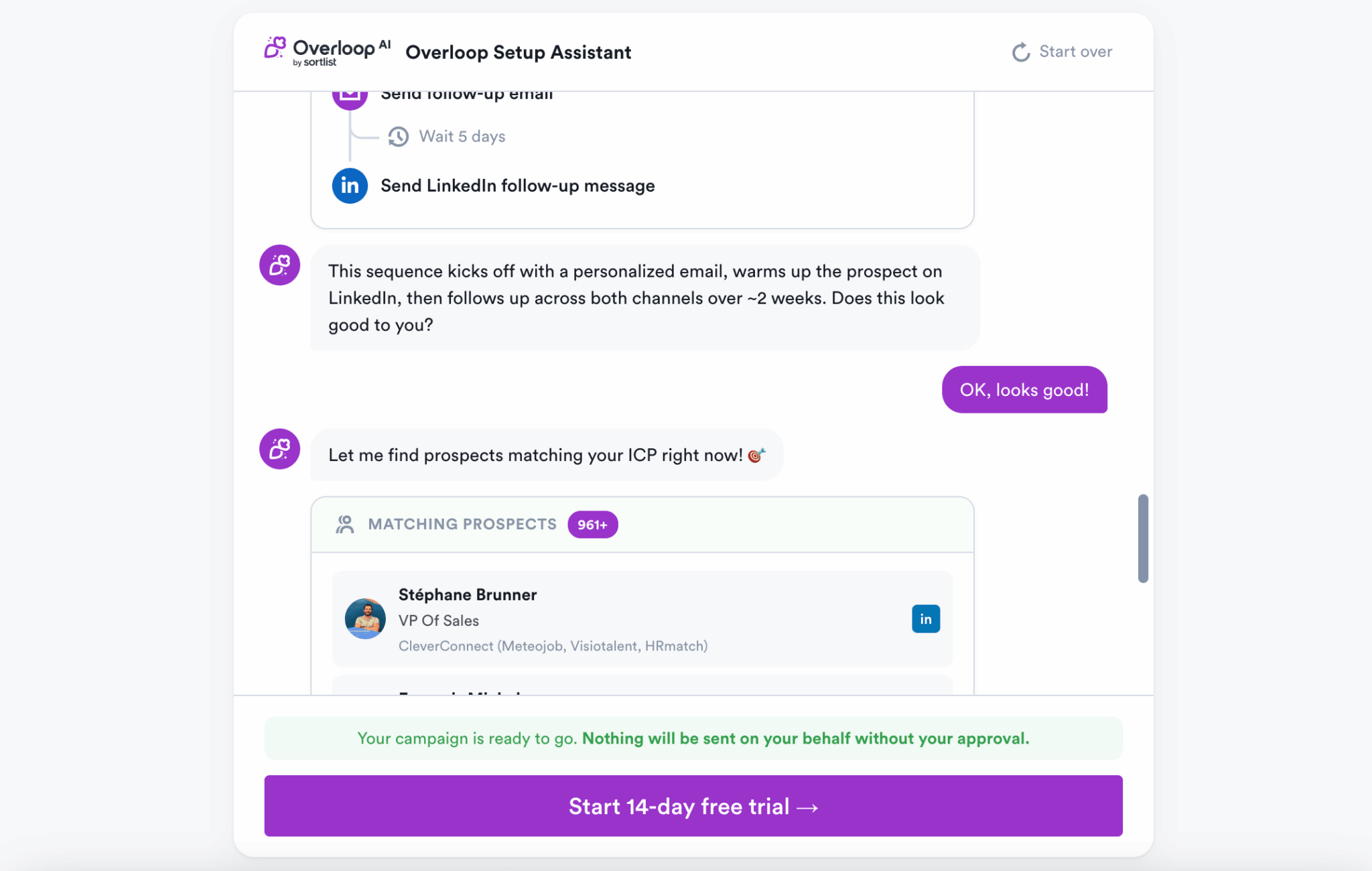
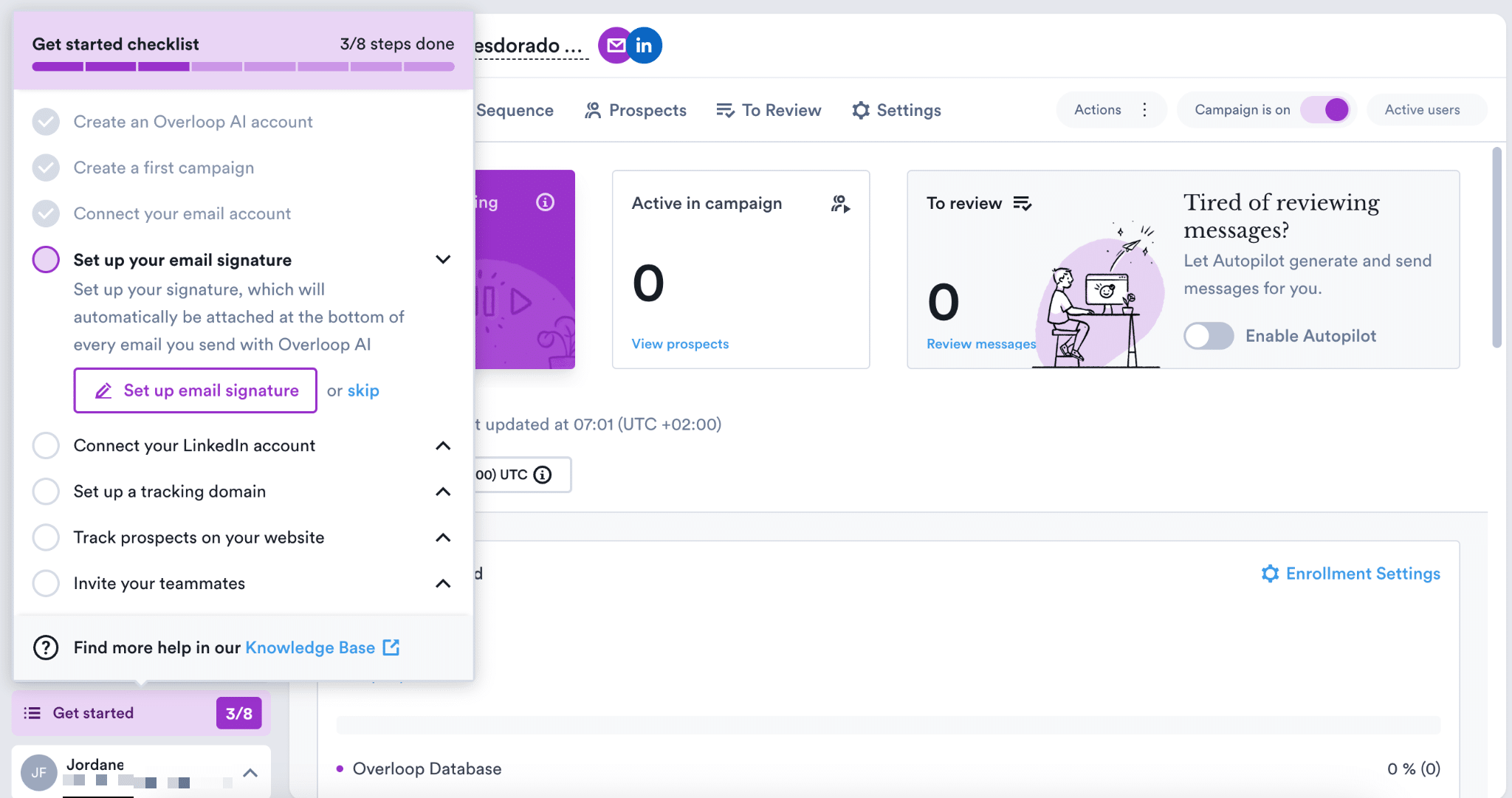
In practice, then, you are buying a product in transition. The old “classic” Overloop still coexists with Overloop AI (two separate applications, two logins on the website), and the French version of the site still has a few rough edges.

Nothing blocking, but it is the sign of a platform rebuilding itself, with the advantages (a steady product pace, the backing of a solid group) and the drawbacks (a shifting scope) that this implies.
What Overloop’s AI does in your place (and what you no longer control)
Sourcing: your ICP goes in, prospects come out every morning
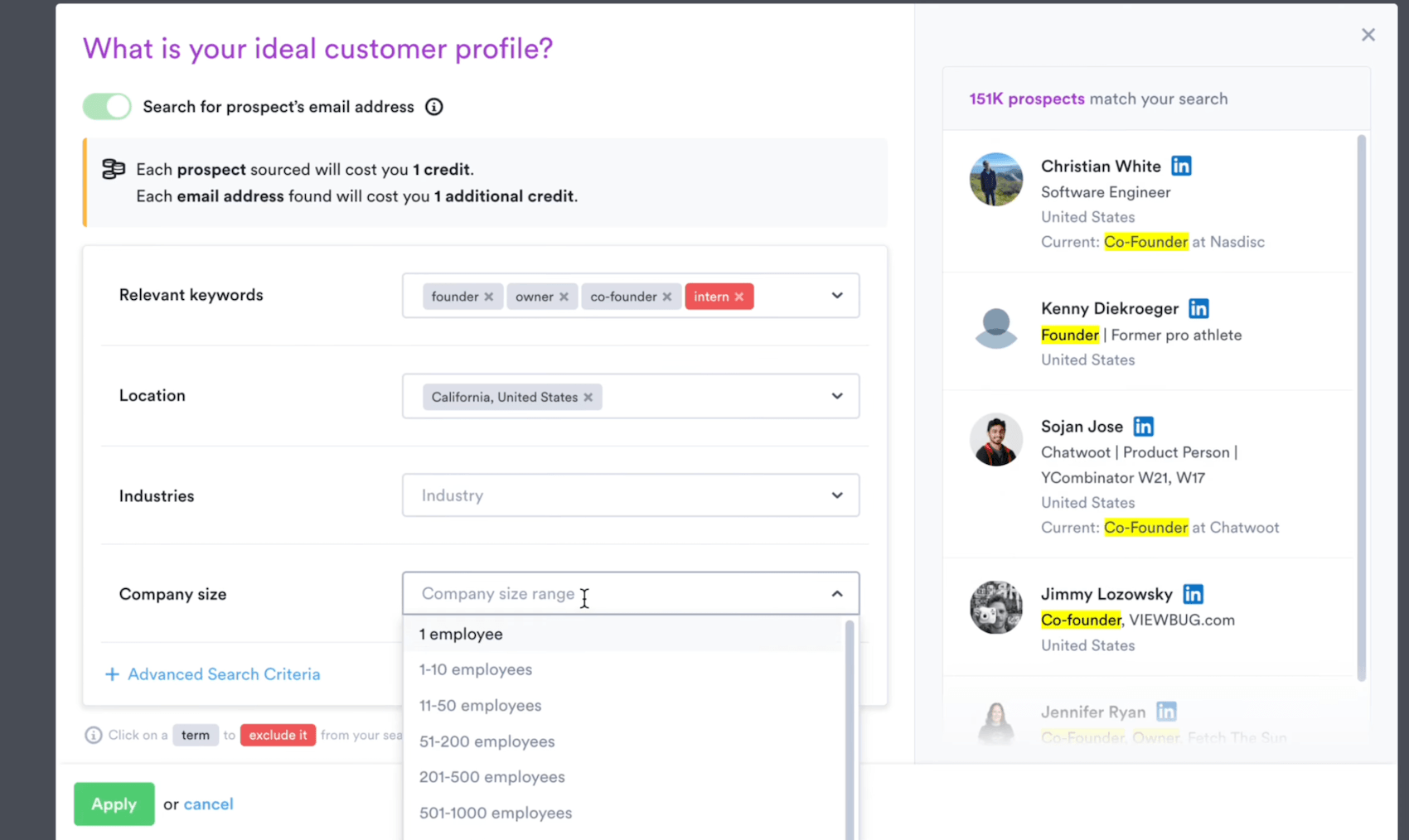
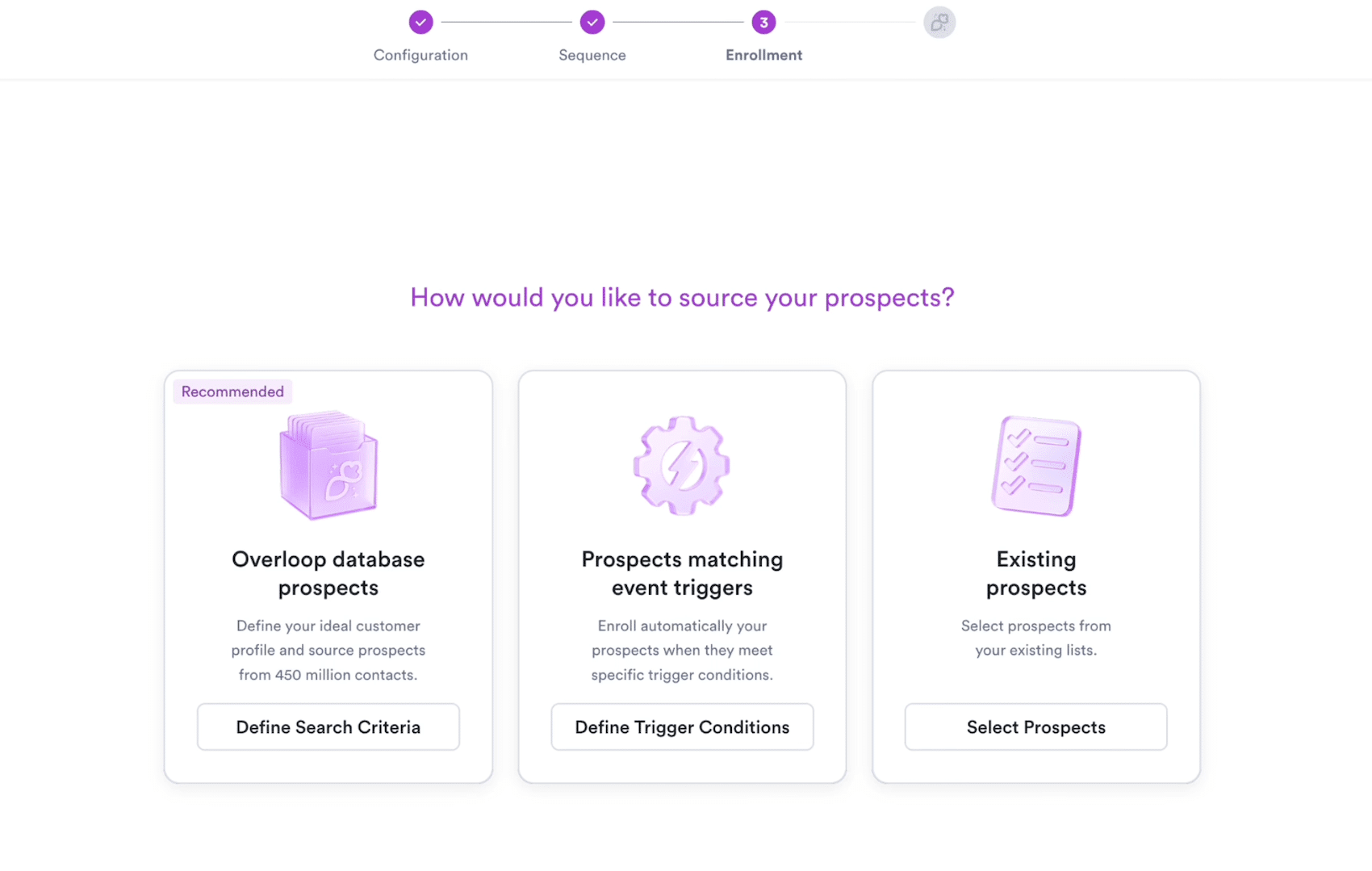
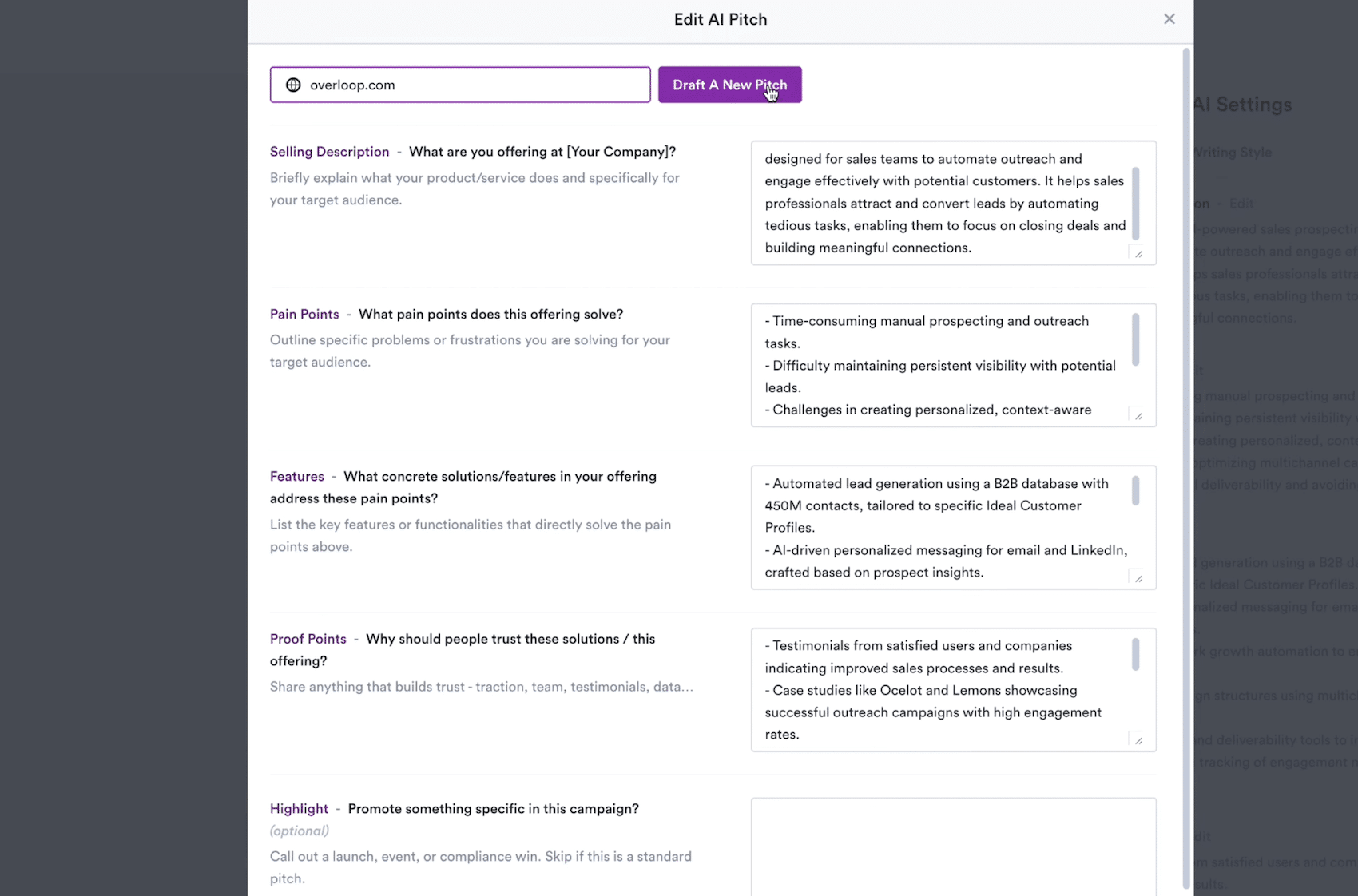
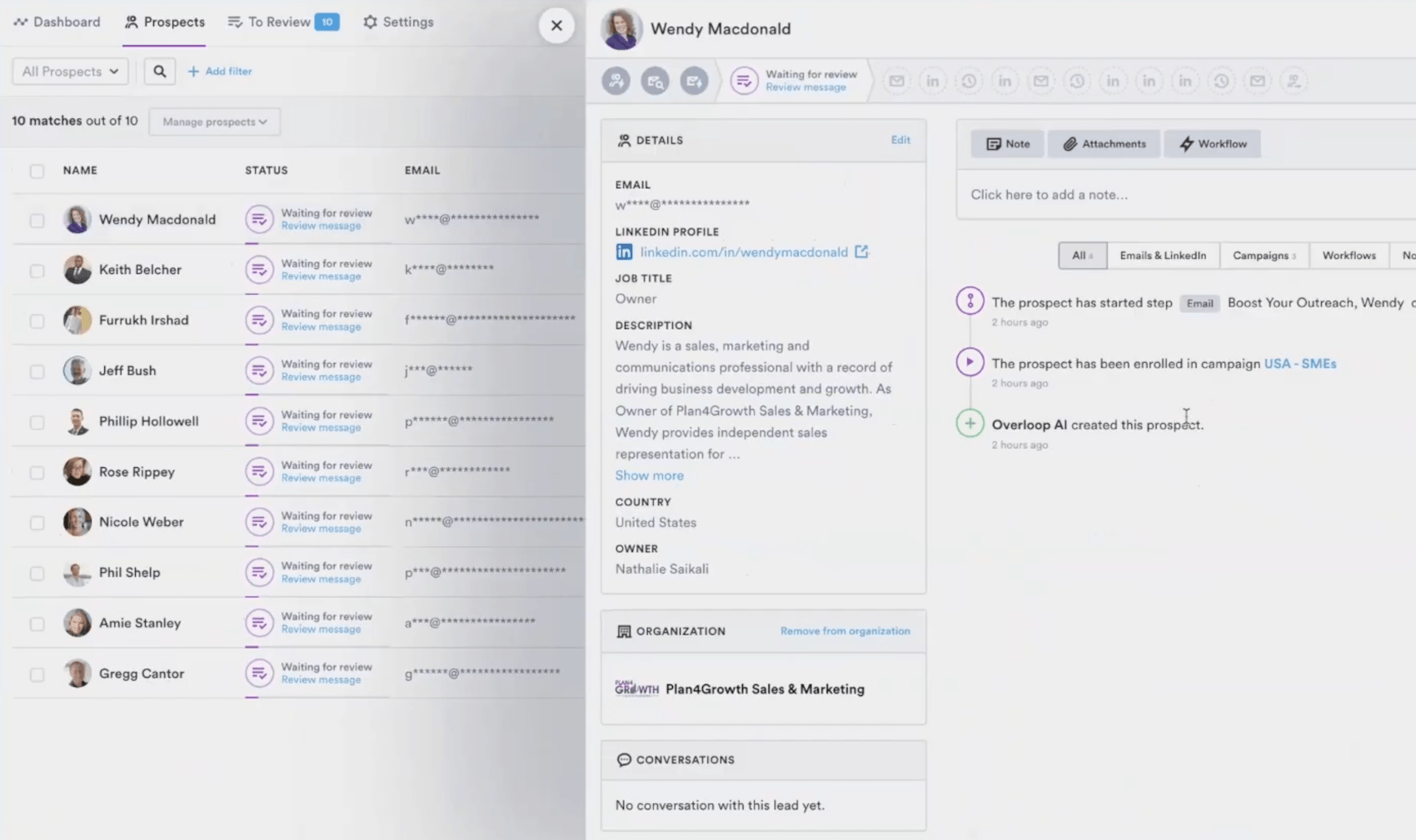
It all starts with defining your ideal customer profile: industry, company size, job function, location, seniority level. Overloop then queries its database of 450 million contacts and feeds your lists continuously, every day, without any action on your part. Each prospect comes with an email address verified in real time by the built-in email finder, which limits bounces and protects your deliverability.
If you prefer to keep control of targeting, the Chrome extension lets you add prospects directly from LinkedIn or Sales Navigator, one by one or in bulk from search results. That is actually the usage we recommend to get started: manual targeting on your side, writing and execution delegated.
One reservation about the database: contact freshness is uneven, which is the lot of every B2B database of this size, but here each outdated record costs you a credit.
Writing: one-of-a-kind messages, no templates or variables
This is the most visible break with classic tools. On Overloop you will not find first-name or company variables to insert, nor a template library to maintain.
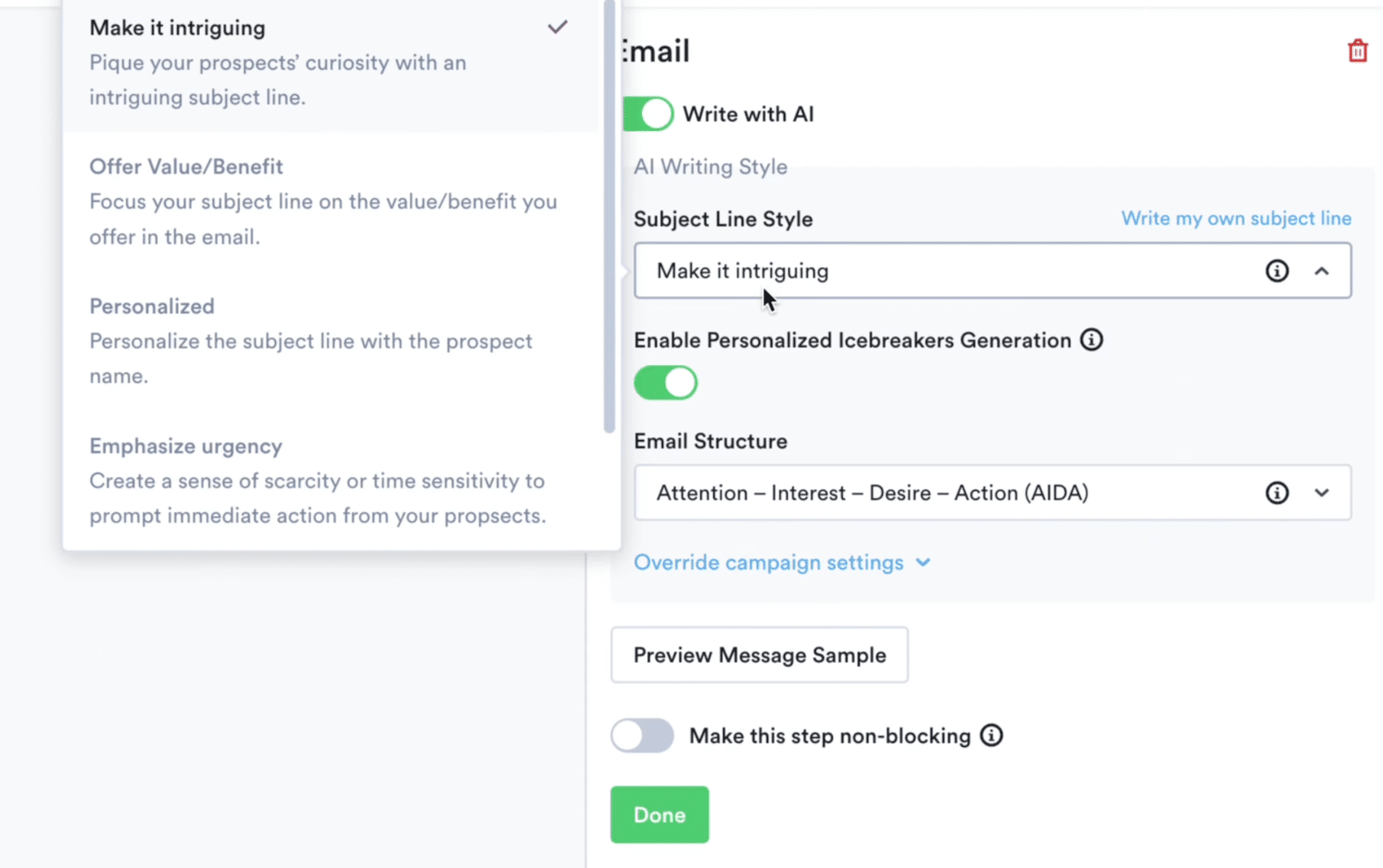
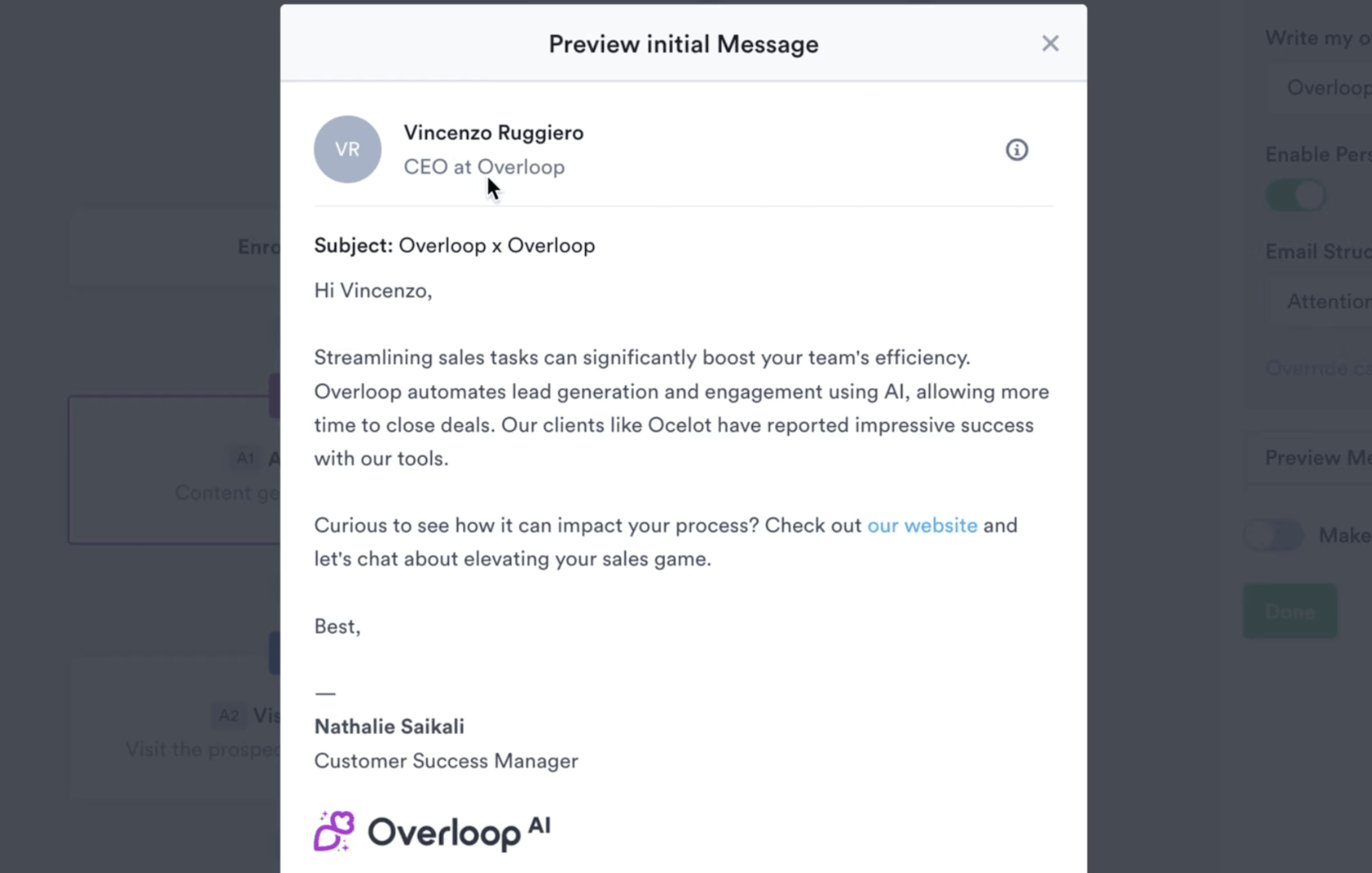
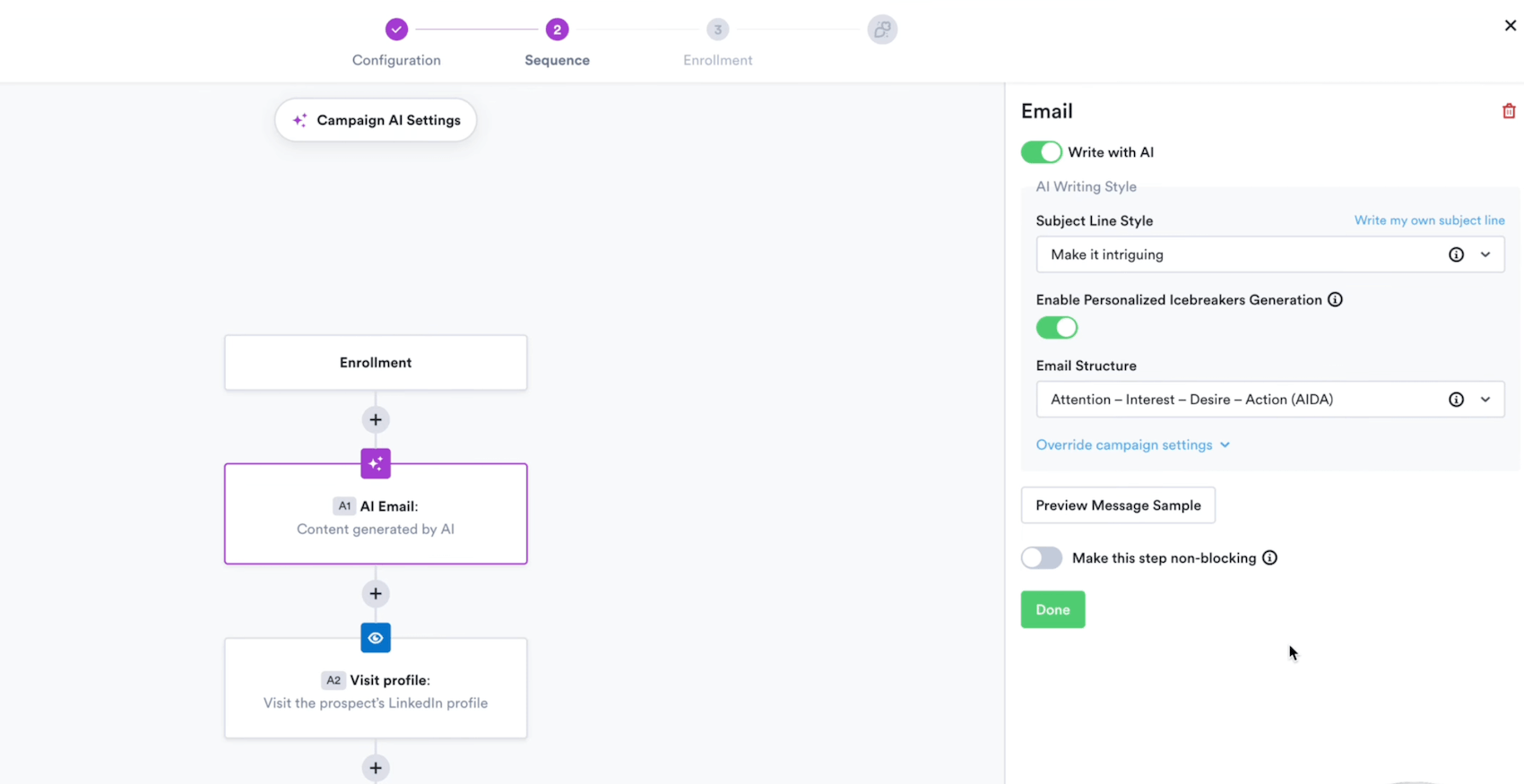
For each prospect, the AI analyzes the company website, the LinkedIn profile and the available public signals, then writes a message built on that context: a hook on recent news, a reference to the company’s positioning, an angle suited to the recipient’s role.
In principle, this is exactly the right approach: an average but genuinely contextualized message almost always beats an excellent template sent to 500 people. The time saved is massive for anyone who used to write their emails one by one.
But you have to be clear-eyed about the quality produced: it varies. Some messages hit the mark, others miss an obvious context that a human would have picked up. You can review and edit messages before sending or switch some steps to manual writing, but you cannot really “retrain” the engine when it picks up a bad habit.
Multichannel sequences: the real strong point
Once prospects are sourced and messages written, Overloop orchestrates multichannel sequences that mix emails, profile visits, LinkedIn invitations and direct messages in a visual timeline. The branching is smart: a prospect who replies on LinkedIn automatically leaves the email sequence, and a bounced email triggers a switch to LinkedIn. You can also insert manual steps, a call to make for example, for your highest-value accounts.
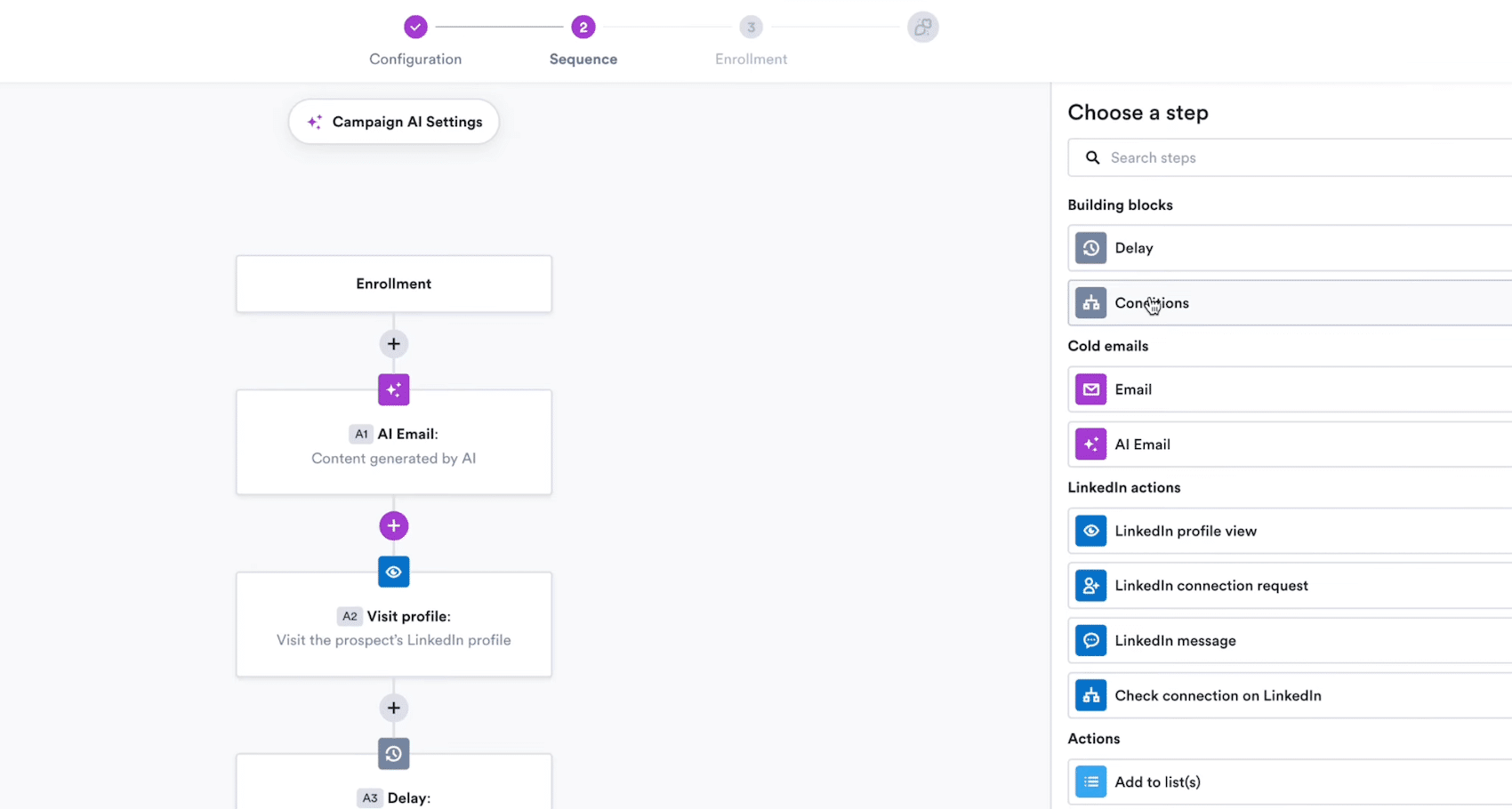
The LinkedIn automation part runs in the cloud, with delays that mimic human behavior and strict daily limits. No tool in this category can guarantee zero risk of account restriction, but Overloop’s cautious approach is at the top of the range.
Three elements round out the system and deserve a mention:
- Email warm-up is included from the first plan, whereas Lemlist, for instance, reserves it for its higher tiers.
- The unified inbox centralizes email and LinkedIn conversations in one place, with sync to your CRM (HubSpot and Pipedrive from the Growth plan, Salesforce on Enterprise).
- The built-in pipeline, inherited from the original Overloop, is surprisingly good: if you are starting from a spreadsheet, it is even one of the best surprises of the tool.
On the other hand, “pure” email is no longer the house’s area of excellence, paradoxical as that may be for a former cold emailing tool. No native A/B testing, shallower analytics than the specialists and sometimes approximate tracking. If high-volume email is your only channel, a dedicated cold mailing tool will do better.
Overloop pricing: 3 plans and a credit system
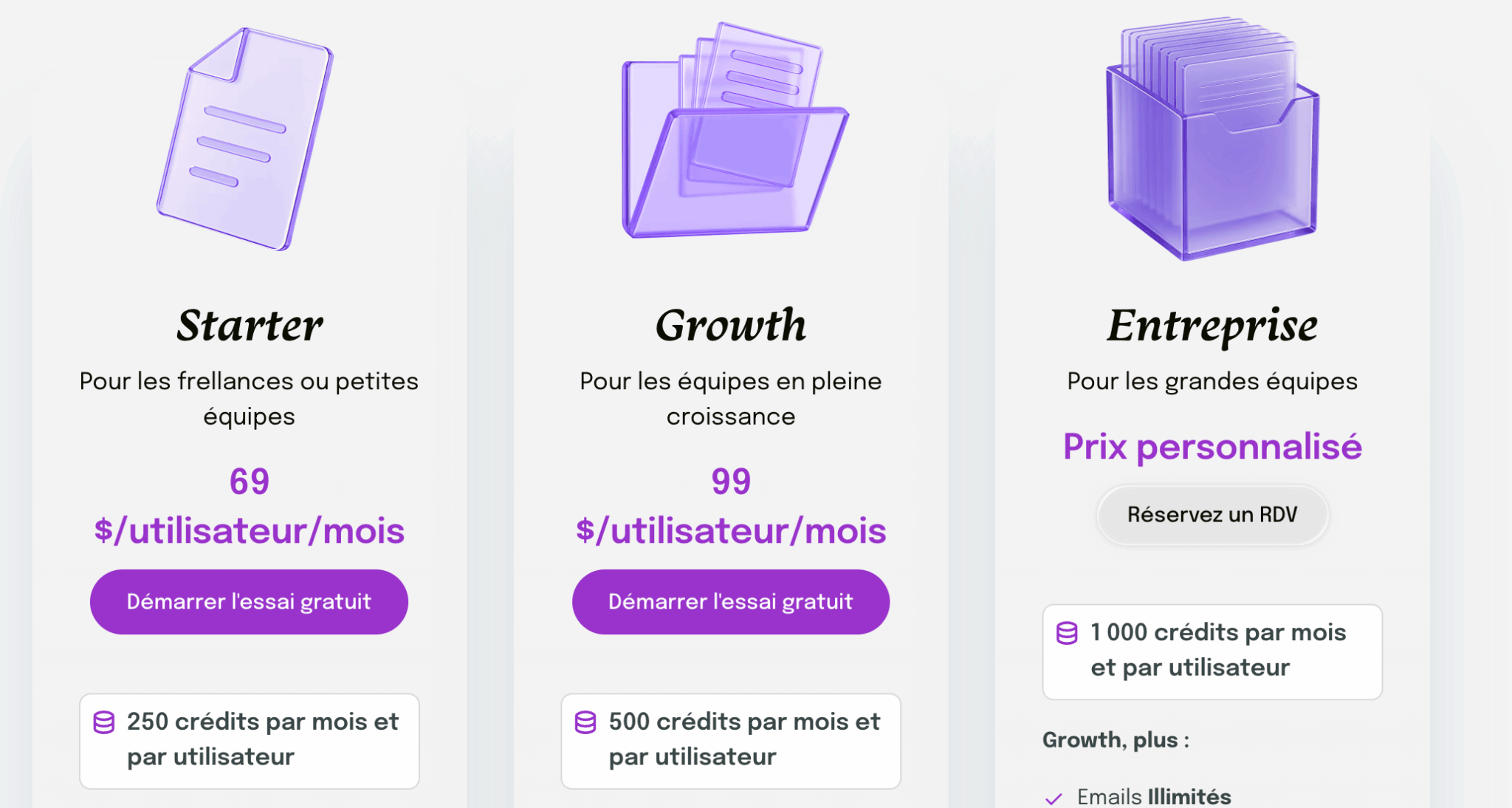
Overloop offers three plans, billed per user per month:
| Plan | Price | Credits / month | Email accounts | Active campaigns | Key takeaway |
|---|---|---|---|---|---|
| Starter | €69 /user/month | 250 | 1 | 3 | Warm-up and database included, Slack and Zapier integrations |
| Growth | €99 /user/month | 500 | 3 | 10 | Adds HubSpot, Pipedrive and the REST API |
| Enterprise | Custom quote | 1,000 | Unlimited | Unlimited | Salesforce, dedicated IP, 1:1 onboarding, dedicated CSM |
The listed prices do not tell you much until you understand the credit mechanics, which are the real core of the business model:
- Each prospect sourced from the Overloop database uses 1 credit.
- Each email address found also uses 1 credit, whether the prospect comes from the database or from your own import.
- Unused credits do not roll over from one month to the next, except with annual billing, where the full amount is available upfront for 12 months.
Let’s do the math on the Starter plan. 250 credits per month is about 12 new prospects sourced per working day, and even fewer if you also spend credits on email lookups for your imports. That is an implicit cost of about €0.28 per prospect, when a specialized email finder charges around one cent per verified address.
Add the limit of a single connected email account, even though Overloop itself recommends using several to scale up volume, and the cap of 3 active campaigns, which rules out testing several ICPs in parallel.
Starter is not a production plan, it is a validation plan.
Salesdorado’s takeThink of Starter as an extended test bench: it is for checking that the AI writing works on your market, not for prospecting seriously. The real entry point is the Growth plan at €99, and that is the figure to compare with your current stack. If you are already paying separately for a database, an email finder, a sequencing tool and a warm-up, consolidation can make sense. If you are just looking to equip one channel, it is expensive.
Overloop vs Lemlist and La Growth Machine
The three tools are often lumped together under “multichannel prospecting”, but they embody different philosophies, and that is what should guide your choice:
- Lemlist is a steering tool: you write your sequences, you maintain your templates and variables, and the tool excels at execution, with benchmark deliverability and visual personalization (personalized images and videos) as its signature. AI was added on top of a pre-AI product. It is the right choice if your copywriting is a competitive advantage you really do not want to delegate, or if you already have your own data and do not need a built-in database.
- La Growth Machine plays orchestration: very flexible multichannel sequences, waterfall enrichment and more control over each step, with similar pricing. It is the middle option for teams that want sophisticated multichannel while keeping control of the messages.
Overloop fully embraces delegation: targeting, writing and execution handed over to the engine. If you are also comparing with Apollo, the logic is different again: Apollo wins on database depth and entry price, but its LinkedIn is limited and its DNA remains American, data and compliance included.