90% of the articles about ChatSEO are written by affiliates. We read them, and they all oversell the tool. “Game changer”, “revolution”, “replaces SEMrush and Ahrefs”… Let’s be honest: ChatSEO is a (very good) ChatGPT fine-tuned for SEO with a native connection to Google Search Console. No more, no less.
The real question is not “is it revolutionary?” but “is it worth €29/month more than a well-crafted prompt in ChatGPT?”.
What exactly is ChatSEO?
ChatSEO is a French SEO tool launched in 2025, co-founded by Paul Vengeons (an SEO consultant well known in the French-speaking ecosystem) and Nicholas Dulait (product/AI profile). The tool now claims more than 20,000 users (site owners).
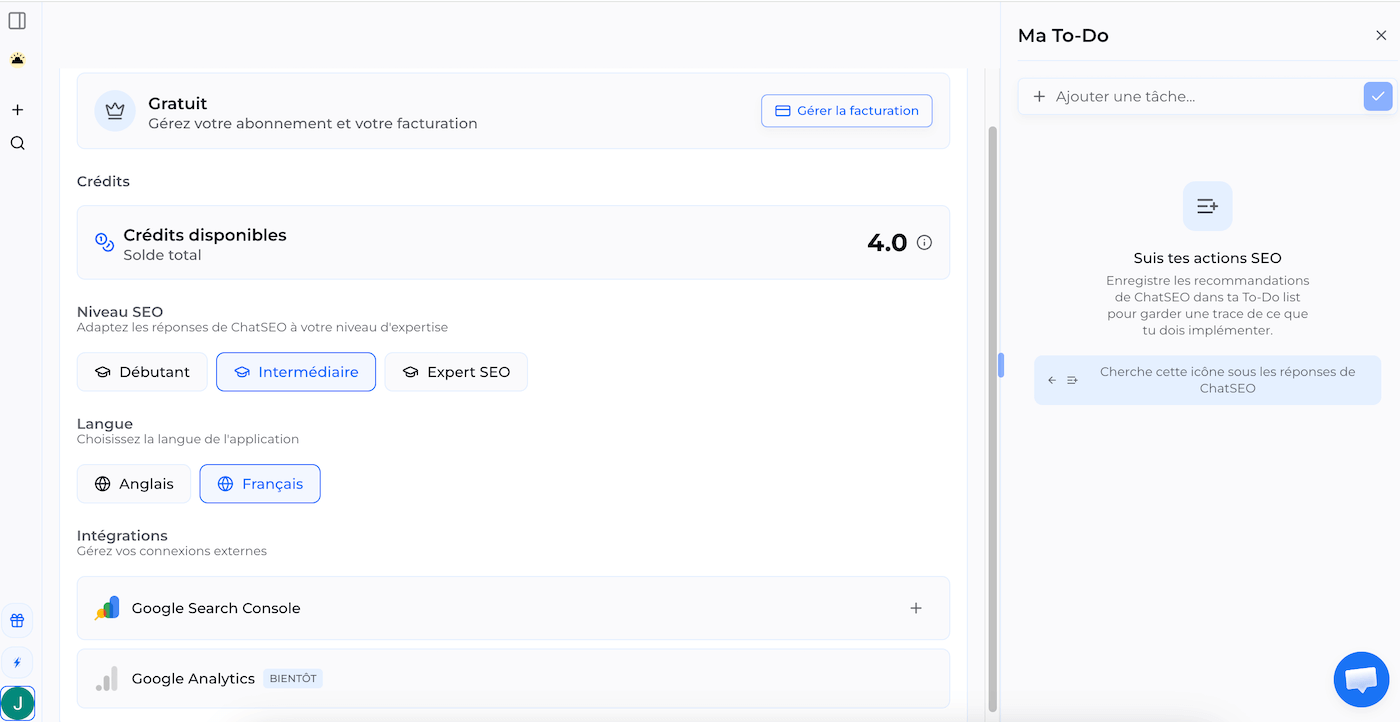
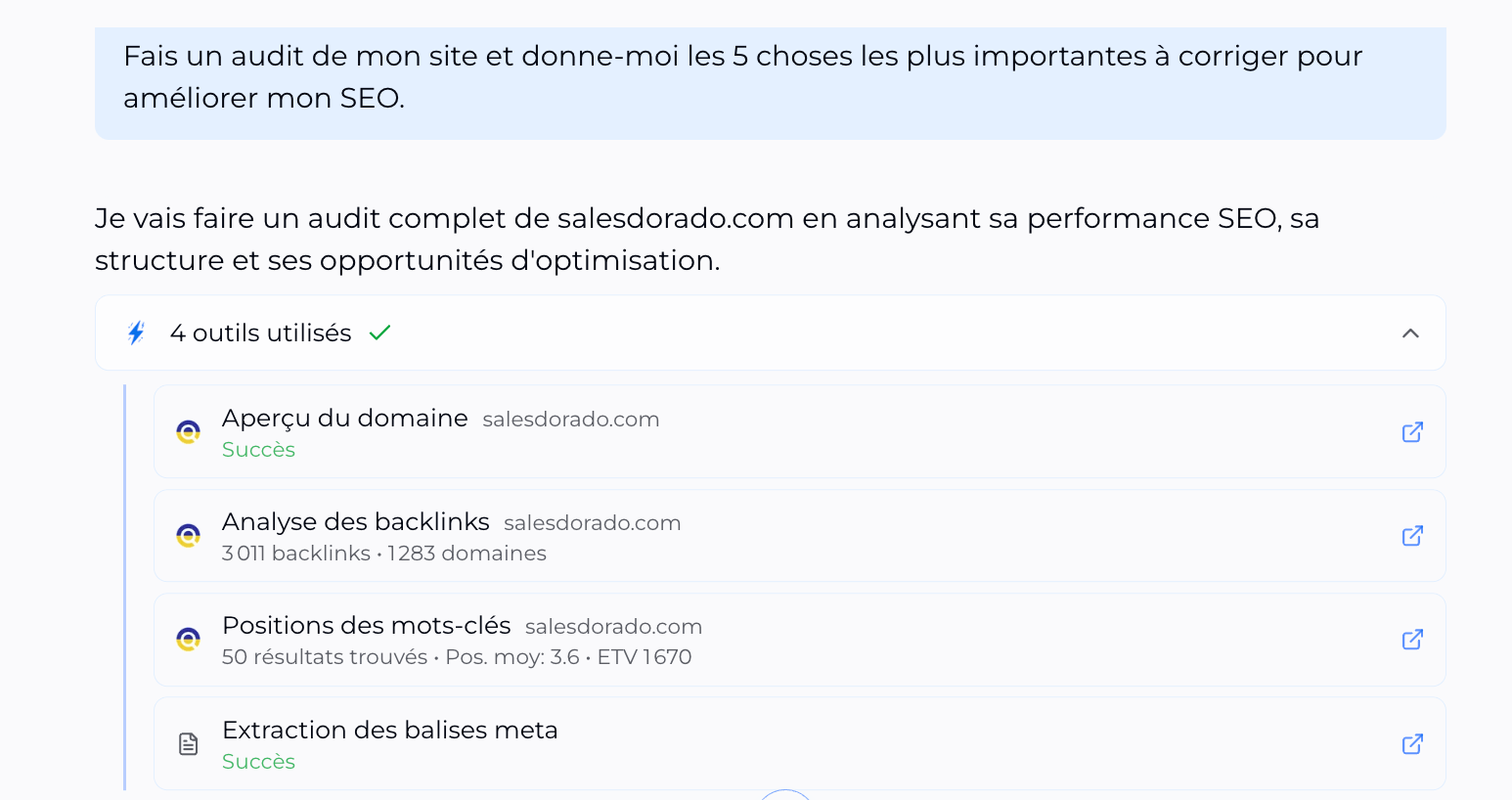
The principle is simple: you connect your Google Search Console via OAuth and ask your questions in plain language in a ChatGPT-style conversational interface. The tool analyzes your real data (positions, clicks, impressions, CTR) and answers with actionable recommendations.
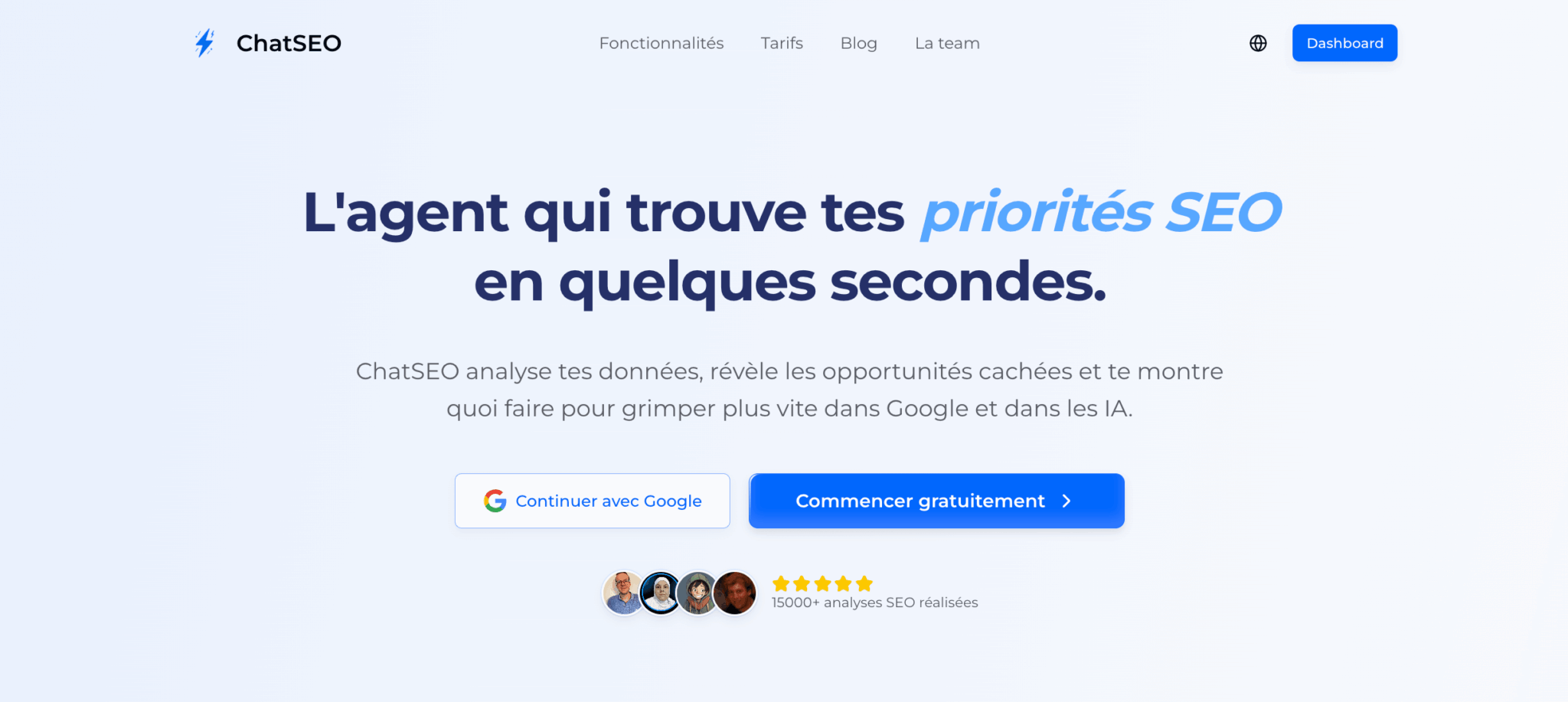
In practice, ChatSEO works like a ChatGPT specialized in SEO. You find the same interface logic: conversations, projects, a context memory that keeps track of your industry and your goals. The major difference with regular ChatGPT is the native GSC connection, which lets it analyze your real data instead of giving generic advice.
The tool also connects to DataForSEO to cross-reference your performance with market data: search volumes, keyword difficulty, competitive analysis. You get a complete picture: what works for you and what works in your niche.
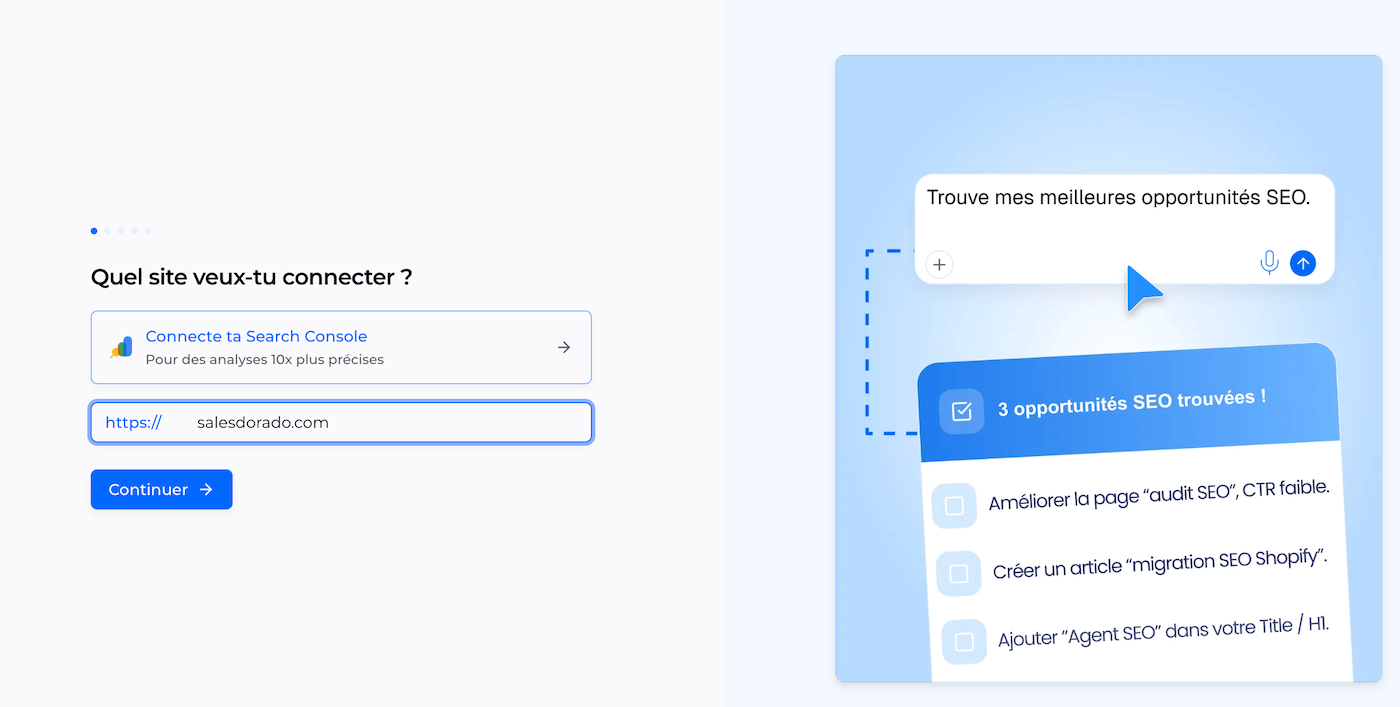
ChatSEO’s key features
Google Search Console connection: the real differentiator
This is ChatSEO’s core feature and what justifies its existence compared to a regular ChatGPT. The tool connects to your GSC via secure OAuth and retrieves your real data: exact positions, clicks, impressions, CTR, over a history of at least 90 days.
The difference with SEMrush or Ahrefs matters: those tools work on estimates based on their own databases. ChatSEO works on your real data. When the tool tells you your page ranks 8th for a keyword, that is your actual position, not an estimate.
You can ask questions like “why is my traffic dropping this month?” and ChatSEO will analyze your data from the past few months to identify the pages and keywords responsible. This is where the conversational interface makes sense: instead of browsing complex tables, you get a structured answer.
Action prioritization: the heart of the product
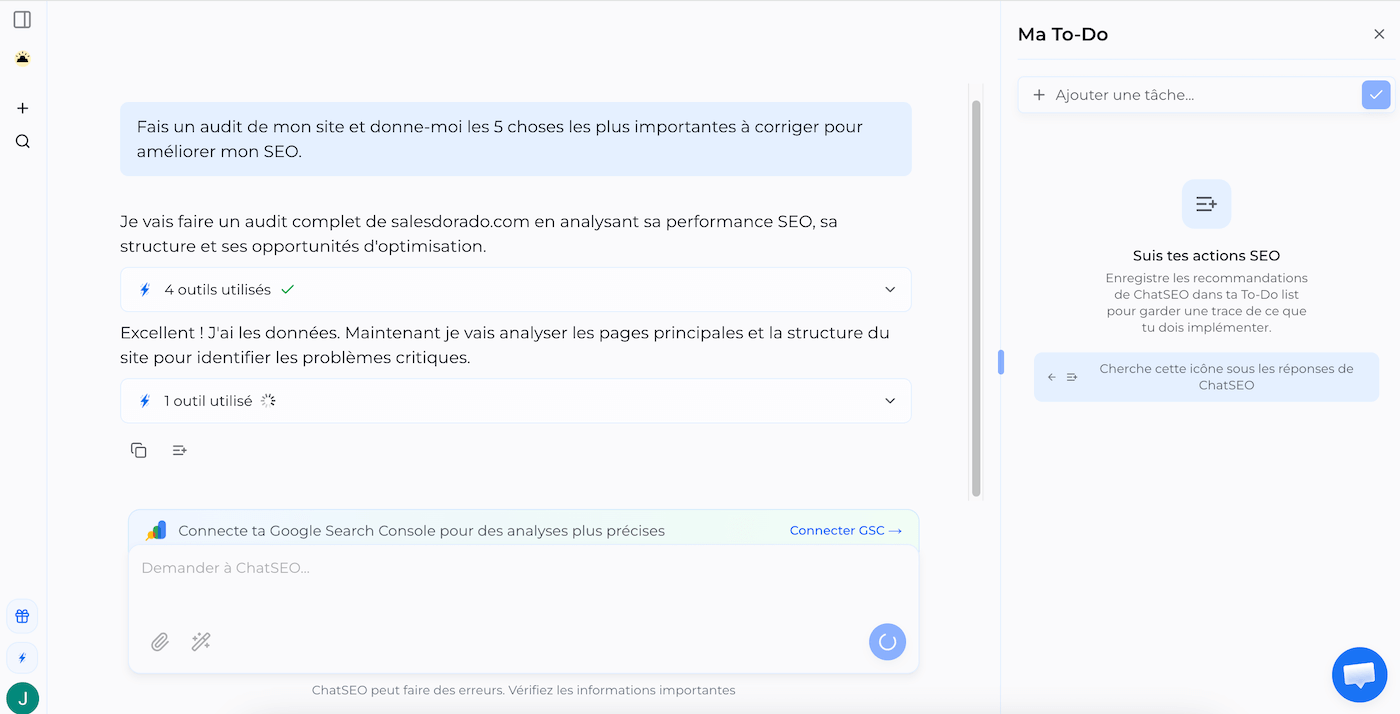
This is ChatSEO’s main marketing promise: “The agent that finds your SEO priorities in seconds.” In practice, the tool applies 80/20 logic to identify quick wins: keywords in positions 5-15 with the highest growth potential.
Instead of handing you a list of 200 possible optimizations, ChatSEO ranks actions by estimated impact. You get a structured action plan: high-impact actions to take now, important but less urgent tasks, secondary items.
For a freelancer or small business owner who doesn’t have 10 hours a week to spend on SEO analysis, it does save a significant amount of time. You know where to start instead of going around in circles in dashboards.
Competitive analysis
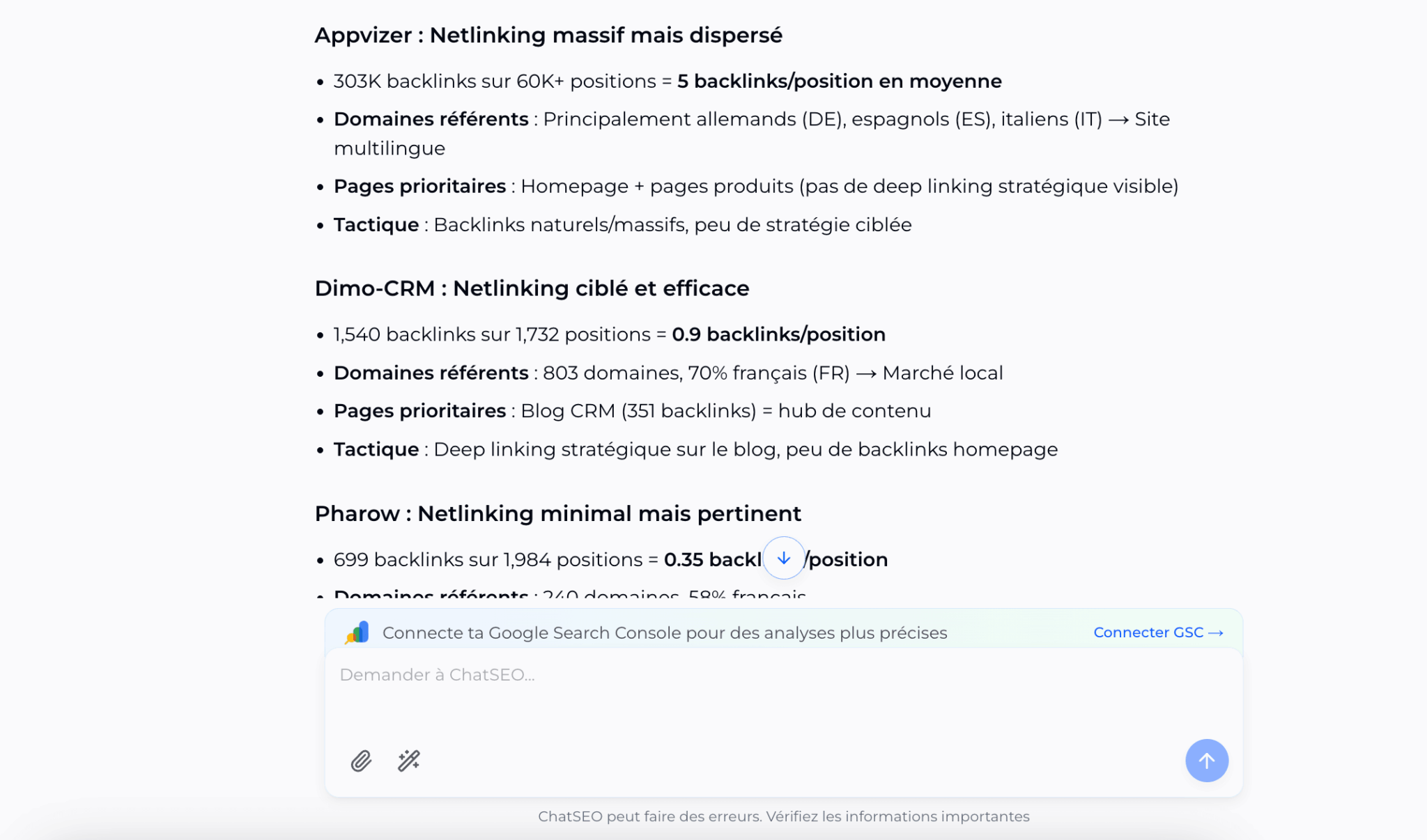
ChatSEO lets you analyze your competitors’ strategies: the keywords they rank for, the content that performs, their backlink profile. The tool can extract usable insights so you can learn from their strengths and close your gaps.
Simplified technical audit
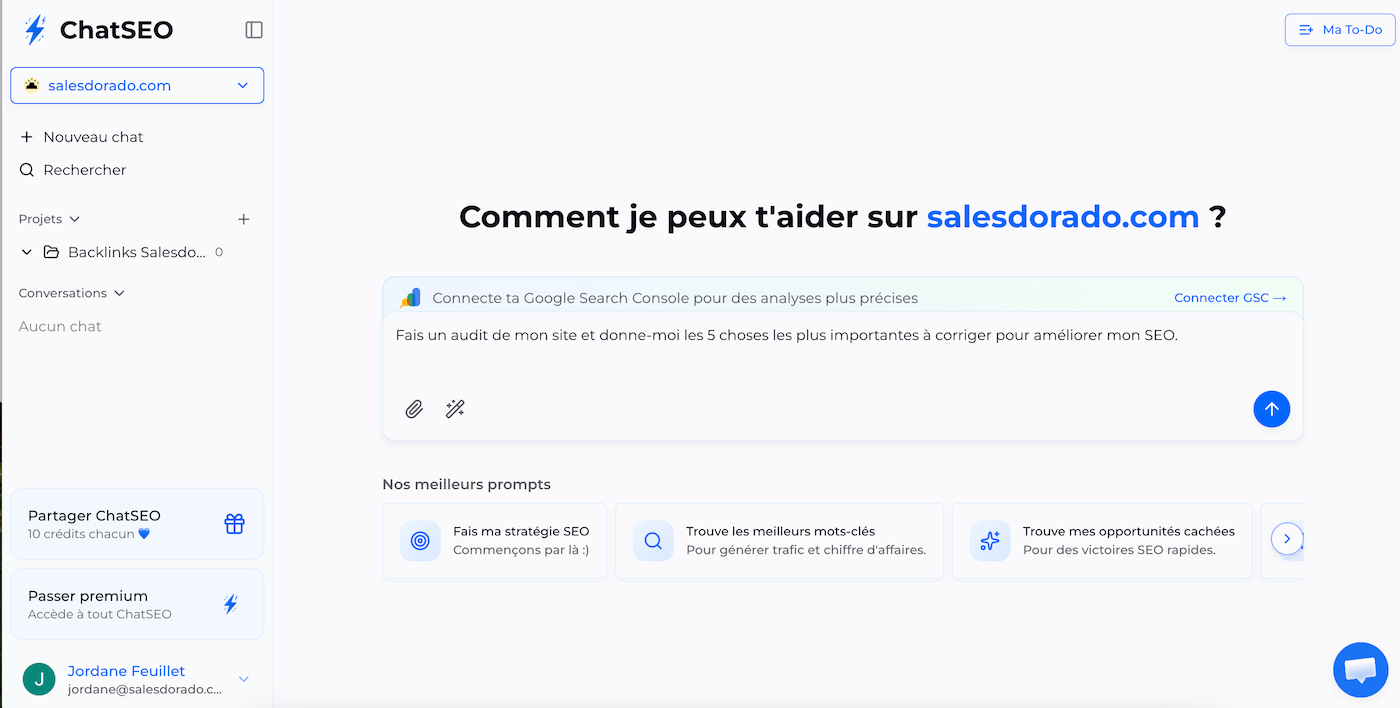
ChatSEO detects crawl errors, slow pages, duplicate meta tags, 404 errors and indexing issues. The point is not to list 2,000 errors the way Screaming Frog would, but to prioritize the fixes with the most impact.
The tool also identifies cannibalization issues: pages that rank for the same queries and compete with each other. It suggests content merges, re-segmentation or redirects.
Content suggestions
Based on your GSC history and the opportunities identified in the market, ChatSEO recommends articles or pages to create. The tool can generate structured briefs with content outlines, angles and keyword clustering.
ChatSEO pricing: how much does it cost?
ChatSEO offers three paid plans, plus an Agency plan on quote, with a 20% discount on annual billing. No commitment: you can cancel at any time.
| Plan | Monthly price | Annual price | Connected sites | Prompts/month |
|---|---|---|---|---|
| Starter | €29 | €23.20/month | 1 | 100 |
| Pro | €49 | €39.20/month | 3 | 200 |
| Ranker | €79 | €63.20/month | 10 | 400 |
One prompt equals one credit, that is one message sent, and each quota can be raised in tiers of 50 credits (€10 more per month). All three plans include full access to the analysis features, per-site context memory and the analysis + writing agents. Pro and Ranker add Google Analytics and access to the MCP server and the API. The Ranker plan adds priority support and early access to new features.
The platform offers a 7-day free trial with 30 credits, on the plan of your choice. A credit card is required at sign-up and the first charge falls on day 7, unless you cancel. It’s limited, but enough to check that the concept works.
ChatSEO promo codes
Several 10% promo codes are circulating, mostly through affiliated content creators (SEOF10, DESC10, ALEX10…). Most of the detailed articles about ChatSEO are affiliate content, which partly explains their very enthusiastic tone.
Salesdorado’s takeThe pricing is aggressive: ChatSEO costs about 25% of the price of SEMrush or Ahrefs. But watch out for the 100 prompts/month limit on the Starter plan. If you analyze several sites intensively, you can hit that limit quickly. One well-phrased prompt (“which keywords in positions 8-15 have the best potential”) is worth more than 5 vague ones.
ChatSEO vs ChatGPT: the real comparison
This is the question nobody asks in affiliate articles: why pay €29/month for ChatSEO when you can use ChatGPT with a good prompt?
| Aspect | Regular ChatGPT | ChatSEO |
|---|---|---|
| Access to GSC data | Via manual CSV export or third-party integration | Native, direct OAuth connection |
| Type of answers | Generic, based on best practices | Tailored to your site and your data |
| Context memory | Yes (GPT projects) | Yes (per site, with industry and goals) |
| Market data | Not included | Via DataForSEO (volumes, difficulty, SERP) |
| Price | ~€20/month (ChatGPT Plus) | €29/month (Starter) |
ChatSEO’s real added value is the native connection to GSC and to market data. If you’re comfortable writing your own prompts, exporting your GSC data to CSV and uploading it into ChatGPT, you can get comparable results. But it takes more manual work.
ChatSEO saves you time on that setup. You connect your site once, then ask your questions directly. For someone who isn’t comfortable with prompts or data exports, it saves a significant amount of time.
Our verdictIf you’re an experienced SEO who already masters ChatGPT and your GSC exports, ChatSEO doesn’t bring revolutionary value. If you’re a non-expert who wants SEO recommendations without wrestling with configuration, the €29/month is justified.
ChatSEO vs SEMrush vs Ahrefs
| Criterion | ChatSEO | SEMrush | Ahrefs |
|---|---|---|---|
| Monthly price | €29 – €79 | ~€119 | ~€99 |
| Conversational AI interface | ✅ Yes, native | ❌ No | ❌ No |
| GSC connection | Real data | Estimates | Estimates |
| Backlink database | Average | Very large | Excellent |
| Learning curve | None | Steep | Steep |
| Multi-country analysis | Limited | Excellent | Good |
| Best for | Small businesses, freelancers, beginners | Agencies, experts, paid search campaigns | Link building, experts |
A head-to-head comparison doesn’t really make sense: ChatSEO and SEMrush/Ahrefs don’t play in the same category. SEMrush and Ahrefs are full suites with massive databases, dozens of features and real depth of analysis. ChatSEO is an assistant that helps you use your data more intelligently.
The use cases complement each other more than they compete. SEMrush shines at multi-country analysis and paid search campaigns. Ahrefs excels at backlink analysis. ChatSEO leads on simplicity and action prioritization.
For a freelancer or small business that doesn’t need all the power (and complexity) of SEMrush/Ahrefs, ChatSEO can become the main tool for 90% of day-to-day needs. For occasional, more advanced analyses (link building, in-depth technical audit), a complementary tool is still needed.